

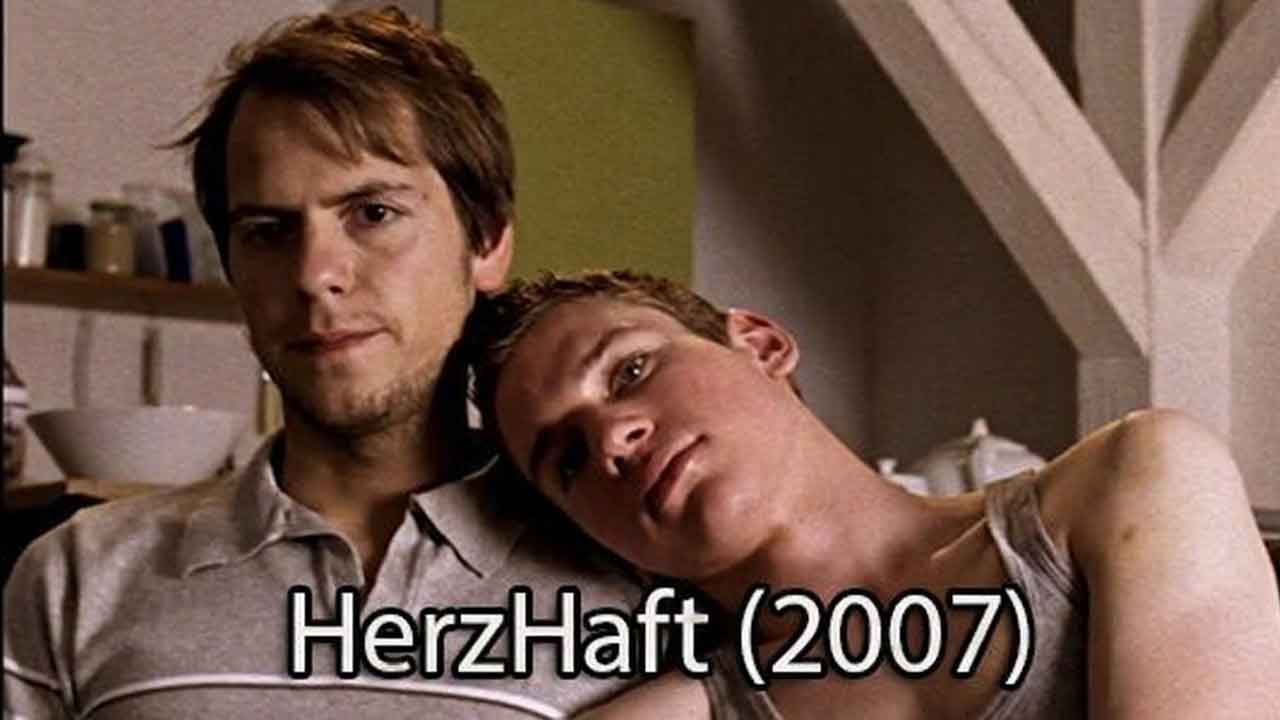



Stout-Hearted (HerzHaft) (2007): When a Secret Blows Up


Stout-Hearted (HerzHaft) is one of those short films that wastes exactly zero seconds trying to charm you. The opening feels like random small-town noise: club talk, tombola logistics, and the kind of harmless chatter people use to pretend everything is normal, right before the film drags you into a situation nobody wants to name out loud.
Forget the “forbidden love” packaging. Instead, you get a short that sits you down, locks the door, and forces you to watch adults panic while a teenager clings to the only thing he thinks looks like safety.
It starts like nothing, which is exactly the trap
In the beginning, it’s everyday chatter. Somebody needs a paper cutter to make raffle tickets, and the world keeps spinning in that dull, practical rhythm. Complaints come easily, plans get made, and normality is performed like a habit. That calm exists for one reason: to make the punch land harder.
Cut to the confrontation, and the air changes instantly. Frau Henning (Johanna Niedermüller) isn’t asking questions or negotiating terms. Rage takes over, and she burns the room down with it.
One line turns the whole story into a locked box: “He is 15.”
Everything recalibrates after that. “Complicated” stops working. “Misunderstood” dies on the spot. Even “maybe it’s love” sounds ridiculous. The reality is simpler and darker: an adult crossed a line that should never be crossed.
The confrontation is the film’s spine
Frau Henning calls Ralph (Tommaso Cacciapuoti) what people call someone when they believe their child has been exploited: “pervert,” “don’t come near him,” “never again.” Politeness isn’t the point here, and the film knows it. What you’re watching is raw parental panic, not a debate club.
No heroic monologue arrives to clean things up. Ralph doesn’t get the “I truly love him” speech with soft lighting. What he gets is the ugly version of damage control: scrambling, explaining, shrinking, and trying to survive the moment.
Ugly is the correct word.
And yes, it should be.
Felix running away is not romantic, it’s terrifying
After the blow-up, the film shows what that emotional explosion does to Felix (Ferdinand Hanisch). Anger is written all over him, but desperation is driving the car. He basically says: everything is ruined, I can’t go back, I’m staying with you.
He even admits he wrote to his mother that he never wants to see her again. That isn’t a “bold character arc.” It’s a teenager throwing knives because safer language doesn’t exist for him right now.
This is where adulthood finally gets shoved back into the frame: Ralph tells Felix it can’t happen anymore. Not later. Not tomorrow. Now.
No romantic reunion follows. No comforting promises appear. A hard boundary drops instead, delivered too late to feel clean.
The adults play the “he’s not gay” game
Here comes the painfully familiar part: adults start rewriting the story so it feels less frightening for them.
Someone insists Felix isn’t gay, like that solves anything. As if the real problem is a label and not the fact that a teenager got tangled up with a grown man who had authority over him.
Then the classic excuse arrives on schedule: “He misses his father, that’s all.”
Sure. The magical father-shaped hole that explains anything people don’t want to understand.
Instead of speeches, the film shows the damage. Felix becomes a topic, a scandal, a situation to manage. The adults argue over him like he’s a rumor, not a person.
Why this short works (even when it makes you squirm)
A story like this can easily become exploitative, or worse, sentimental in a way that blurs the moral line. Stout-Hearted avoids that trap by refusing to romanticize what’s happening.
Chemistry isn’t the focus. The relationship isn’t sold as a secret paradise. Consequences take center stage instead, along with panic and that desperate community instinct to contain the mess as fast as possible.
Because it’s only 15 minutes, the hit feels immediate. You don’t get time to build a cozy opinion. The film makes you react in real time, just like the characters do.
Small cast, sharp impact
Frau Henning (Johanna Niedermüller) is the storm of the film. She doesn’t feel like a “written character” so much as a parent who hasn’t slept since the moment she found out.
Felix (Ferdinand Hanisch) is played like a wound trying to walk: furious, clingy, dramatic, and heartbreakingly believable.
Ralph (Tommaso Cacciapuoti) works best when the film lets him be small. Not charming. Not misunderstood. Just cornered, trying to manage damage.
Meanwhile, the supporting presence around them (Bettina Ernst as Bettina, Tobias Münchinger as Raphael, Jens Edelmann as Vater auf Sportplatz) helps the world feel like a real community: plenty of opinions, zero right words.
What the film is really about
On the surface, it’s a taboo relationship and the explosion when it’s discovered.
Underneath, it’s about how fast adults choose narratives over truth.
They want Felix to be “not gay.” They want a neat reason like “missing father.” They want Ralph to be either a monster or a mistake, anything that lets them stop thinking. Order matters more to them than understanding.
Felix wants one thing: to not feel abandoned.
That’s the tragedy here. It’s not “love is hard.” A kid in chaos will run toward whatever feels like shelter, even if that shelter is the wrong place.
So, should you watch it?
Looking for comfort? This isn’t comfort cinema.
Want a short film that treats a difficult subject with cold, unromantic honesty? Then yes. It’s tense, uncomfortable, and it doesn’t hand you easy emotional rewards. What it does is drop you into a situation, force you to sit there, and end before you can tidy it up in your head.
Stout-Hearted is fifteen minutes long, and it leaves you with that aftertaste of reality: messy, unresolved, and not interested in your comfort.








1 comment