


Jitters – Órói (2010): A Quiet Icelandic Coming-of-Age Punch


Jitters (Órói, 2010) is one of those coming-of-age movies that doesn’t try to be “important” with a megaphone. It just sits you down, hands you a teenage heart that’s beating too fast, and says: “Here. Hold this. Don’t drop it.”
And the heart in question belongs to Gabríel (Atli Óskar Fjalarsson), a 16-year-old Icelandic kid who goes to Manchester, kisses another boy for the first time, and comes back home like someone swapped his internal wiring overnight. Not in a dramatic soap way. In that quiet, terrifying way where you’re still the same person, but suddenly your body is telling the truth out loud.
Manchester: one kiss, and the world tilts
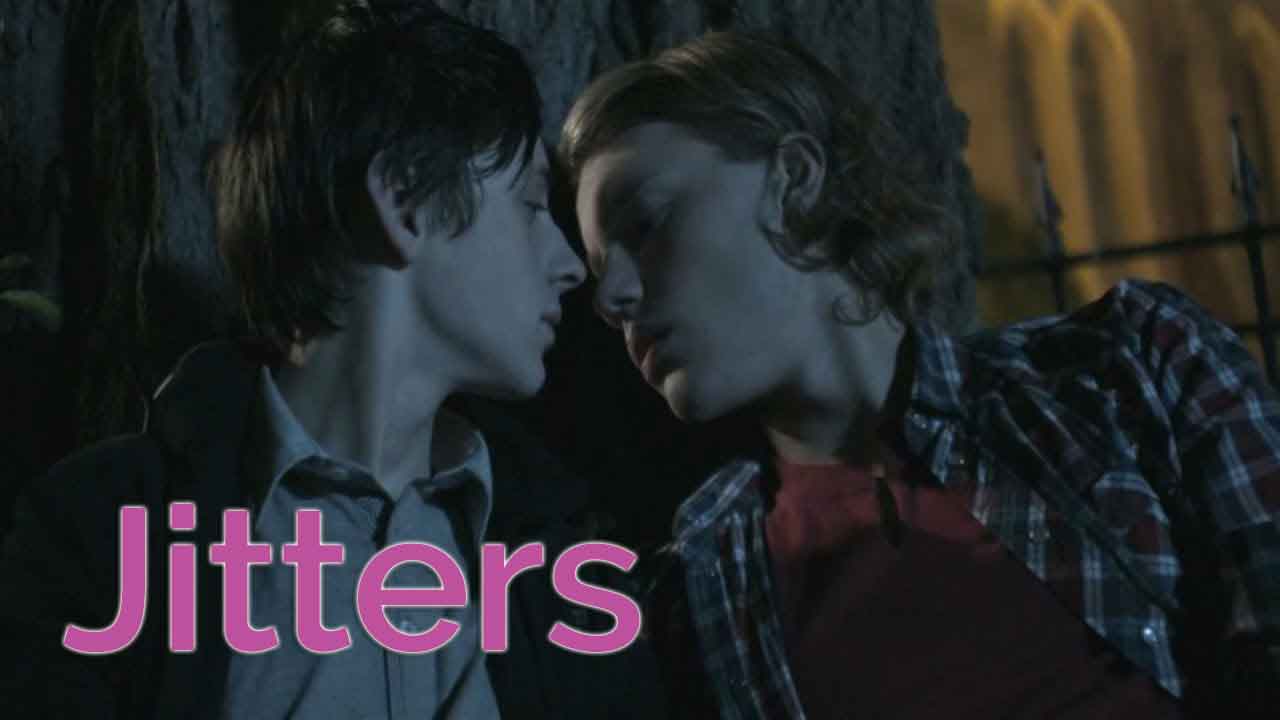
So Gabríel goes to Manchester and meets Markús (Haraldur Stefansson). It’s not a big cinematic “love at first sight” moment with violins. It’s more like: two boys, a vibe, a little closeness, a little curiosity, and then that kiss.
And that’s when the title makes sense. The “jitters” are not just butterflies. It’s the whole messy package: excitement, fear, denial, and the instant panic of “What does this mean about me?” The kiss doesn’t destroy Gabríel’s life. It just removes his ability to pretend he’s not feeling something real.
He returns to Iceland carrying that secret like it’s a hot stone in his pocket. He can’t throw it away. He also can’t stop touching it.
Back home: teenage life, but with a knife hidden in it
Back in the small-town ecosystem, life looks normal from the outside. There are parties. There’s drinking. There’s gossip that spreads like it has its own Wi-Fi network. There are parents, teachers, and that suffocating feeling that everybody knows everybody’s business.
Gabríel tries to slide back into his usual routine, but he can’t. Not because he’s “changed” into a different person. He’s still a teenage boy doing teenage boy stuff. It’s just that now, inside his head, there’s a new loud sound: Markús. That kiss. That possibility.
And because this is high school, the universe immediately adds extra pressure. People don’t simply “notice” you. They analyze you. They label you. They turn you into a rumor because it’s more entertaining than dealing with their own lives.
Stella: the other story that hurts like hell
Now here’s what makes Jitters better than a lot of “first gay kiss” movies. It doesn’t pretend the main character is the only teenager with problems. It follows a whole group, and one of the most painful threads belongs to Stella (Ilva Holmes).
Stella’s situation is rough, and the movie doesn’t romanticize it. You see control, pressure, emotional chaos, and the kind of environment where a teen can start feeling like they’re trapped in a room with no windows. While Gabríel is spiraling internally about identity and desire, Stella is dealing with something darker and heavier.
And the film does what real life does: it lets multiple kinds of suffering exist at the same time. That’s why it stings. You don’t get to watch Gabríel’s story in a vacuum. You keep being reminded that being a teenager is basically living in a constant storm, except nobody gives you an umbrella and everyone expects you to smile anyway.
The rumor machine: “Gabriel is gay” is not just a sentence
At some point, the thing Gabríel fears the most happens. It gets said out loud. Not gently. Not privately. It becomes public property: “Gabriel is gay.”
And I’m not going to pretend this movie is about a spectacular, cinematic collapse. It’s worse than that. It’s about the smaller humiliations and the quiet shifts. The looks. The jokes. The sudden distance from people who were fine with you yesterday.
It’s also about the strange moment when your secret stops belonging to you. Even if you were not ready. Even if you were still negotiating with yourself in the dark.
Markús: the “I want you” that collides with fear
When Markús enters the Iceland part of the story, things get complicated in that very believable teenage way. There are mixed signals. There’s jealousy. There are moments where Markús seems ready to step forward, and then he pulls back like the ground is hot.
Because Markús has his own mess. He’s not walking around like a confident movie boyfriend who exists solely to support the protagonist. He’s a teen too. He’s scared too. He’s also trying to fit into expectations, including the “safe” option of being with a girl.
So you end up watching two boys who clearly feel something, but are both half-running from it. It’s awkward. It’s frustrating. It’s also painfully honest.
There’s a line in the film where one of them admits: “You’re the first guy I’ve kissed.” And that sentence hits because it’s simple. No speeches. No labels. Just truth.
Adults in the background: present, but not fully reachable
One of the smartest things Jitters does is how it shows adults. They’re there. They’re not cartoon villains. But they often feel far away, like they exist behind a glass wall.
You’ve got parents like Haraldur (Gísli Örn Garðarsson) and Hulda (Ingibjörg Reynisdóttir), and you can sense that they love their kid, but love doesn’t automatically translate into understanding. Especially when the kid himself hasn’t figured out the words yet.
And then there’s the weight of community expectations. The “what will people say” energy. The unspoken rules. That’s part of the tension too. Not hatred necessarily. More like… pressure. Social gravity.
The tragedy: when the teen storm becomes irreversible
I’m going to be blunt: the film has a tragedy, and it lands hard.
Without turning this into a plot dump, the situation around Stella escalates, and the story goes into territory where you stop watching cute teen drama and start feeling that cold dread of “No. Please don’t let this happen.” There’s an emergency. There’s aftermath. There’s a funeral with the kind of formal words that feel almost cruel in their calmness.
And here’s what I respected: the film doesn’t use tragedy as cheap shock. It uses it as a reminder that teen pain is not “small” just because it happens to young people. Sometimes it’s huge. Sometimes it’s fatal. Sometimes it’s ignored until it’s too late.
The ending: quiet courage
The ending of Jitters isn’t a fireworks finale where everyone claps and the whole town suddenly becomes progressive. Thank God.
It’s something much more realistic: a small act of courage. Gabríel introduces Markús to his mom and to Bjoggi at dinner and simply says: “This is my friend, Markús.”
Now, if you’re expecting a big “coming out” speech, you might think: That’s it?
But in this film, in this world, for this boy, that moment is huge. It’s a step toward ownership. It’s Gabríel choosing not to hide completely anymore. It’s him letting someone real sit at the table with him.
Final thoughts
Jitters is tender, sad, and genuinely well-written. It captures that teenage confusion where everything is amplified: love feels like life or death, shame feels like exposure, and one kiss can rearrange your whole future.
Also, credit where it’s due: the cast sells the authenticity. Atli Óskar Fjalarsson plays Gabríel with that perfect mix of sweetness and defensive confusion. Haraldur Stefansson gives Markús a believable push-pull. And Ilva Holmes as Stella brings a painful weight that makes the film feel bigger than just a “first gay kiss” story.
If you want a coming-of-age movie that feels real, not polished into a fantasy, this one does the job. It’s messy. It’s human. And yeah, it gives you jitters too.