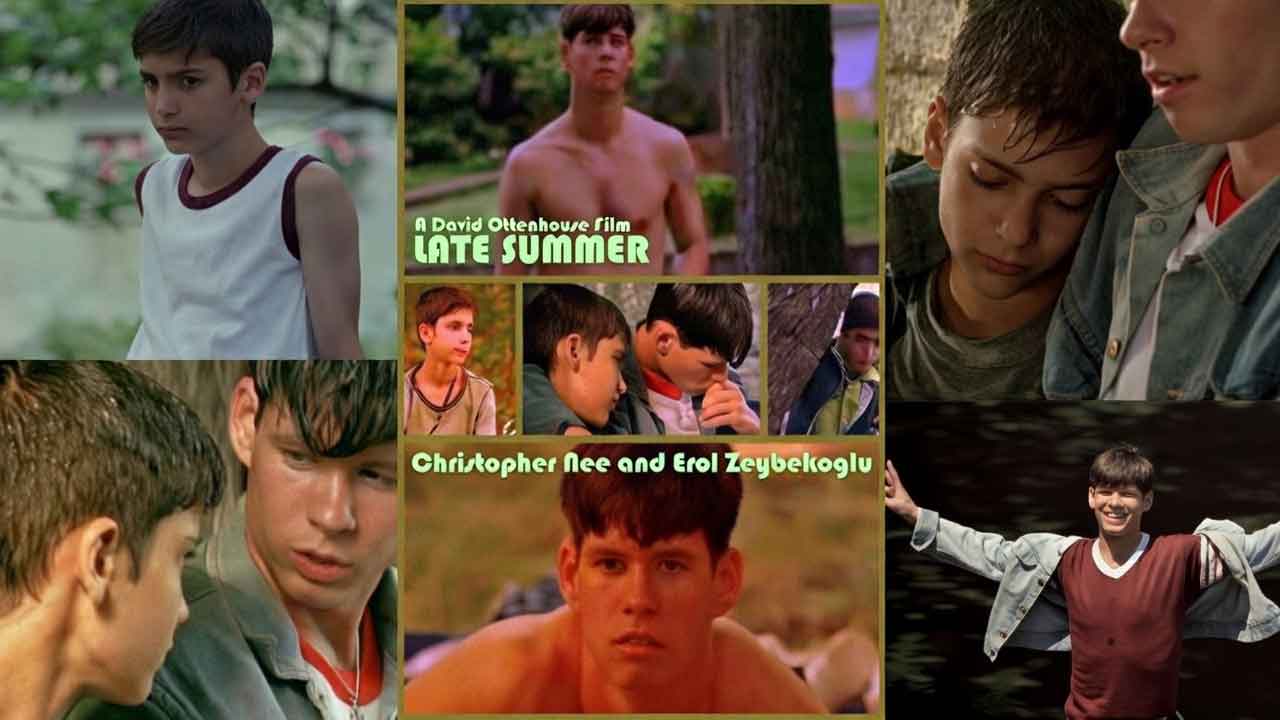



A gallery wants Adam’s first great photograph – but the story behind it isn’t art for sale. It’s a late summer memory where grief, secrets, and a “magic lens” turned childhood into something sharper.


Some films don’t start with a kiss or a breakup. They start with a gallery handshake.
“Hi, Adam.” A buyer is interested. A curator smiles. And then the artist says the one thing that instantly turns a simple photo into a loaded confession: “It’s one of the first photographs I ever took. It’s… my cousin Josh.”
And that’s the trap this short sets for you in the first minute: the image looks calm, almost innocent, but the memory behind it is not for sale, not for display, and definitely not as clean as the lighting in that gallery.
A summer that feels like a bruise
Adam arrives at his relatives’ house after losing his father. He’s the “little buddy” everyone is careful around, the kid everybody promises to watch. And of course, the person who claims him first is Josh, the older cousin with that dangerous mix of charm and confidence. Josh has secret places, secret rules, secret jokes. Josh also has a philosophy, delivered like wisdom but really functioning like a key in a lock:
Fear will screw you up. If you feel no fear, nothing can hurt you. It’s “magic.”
What Josh is really doing is teaching Adam how to be led. How to keep secrets. How to follow. How to trust the wrong person because he sounds like he knows what he’s talking about.
“It’s magic” – and it’s also grooming language
The film is smart about how it builds this dynamic without having to shout. It uses small steps. A cigarette. A “secret place.” A promise. A warm, floaty explanation about how the world will make sense and you’ll be “cool.” It’s the kind of talk older kids use when they want a younger kid to stop thinking and start nodding.
And the adults? They’re present, but not present enough. Mom notices the smell of cigarettes. She warns Josh. She asks the right questions. But she’s also busy, polite, and human, which means she believes the performance. Josh flatters. Josh redirects. Josh smiles. The house stays calm.
Meanwhile, Adam is grieving. And grief makes you hungry for belonging. Josh offers him a version of it: you and me, secret world, no fear.
Boyhood chaos, cruelty, and that one line you don’t forget
The middle of the film feels like a messy scrapbook of boyhood: a group roughhousing, a weird “say hotel” humiliation game, laughter that isn’t fully playful, and the kind of casual cruelty that kids invent when nobody is watching closely enough.
Then the film crosses the line from awkward to alarming with one stupid, telling shout: “Hey, stop looking at my balls.”
It lands because it’s not just a crude joke. It’s a panic flare. It’s the moment you realize the group’s vibe is not innocent curiosity, but power and shame, weaponized. Adam is learning the rules of masculinity the way boys often learn them: through embarrassment, through policing, through “don’t look, don’t feel, don’t admit anything.”
Sex talk as pressure, not education
There’s a stretch where Josh talks about sex in a way that’s blunt, performative, and deeply inappropriate for Adam’s age and emotional state. He frames it like knowledge, like he’s doing Adam a favor. He uses the language of “love” while describing body stuff with too much detail, too much confidence, too much control.
That contrast is the point. The film isn’t trying to be shocking for sport. It’s showing how manipulation can hide inside “cool older cousin” energy, and how the word “love” can be used like a mask.
The camera, the “magic lens,” and the first photograph
One of the best ideas in Late Summer is how it links Adam’s awakening to photography. Josh introduces the notion of a “magic lens” that lets you see what was always there but you couldn’t see. It’s a gorgeous metaphor and an unsettling one, because it works on two levels:
- Art level: Adam becomes the kind of person who captures moments, who frames emotion, who turns confusion into images.
- Memory level: Adam starts to “see” what Josh is doing, but not necessarily in time to stop it.
There’s also something painfully true about how a camera can be both protection and proof. When you can’t control what’s happening, you can still try to hold onto a fragment of it. A picture becomes a way to say: this happened. This was real. I survived it.
When the summer stops being a summer
The last act shifts into a sharper, more chaotic tone. There’s a moment of flying, adrenaline, boys pushing boundaries, and Adam wanting to capture it: “I want to take a picture while I’m flying.”
And then everything snaps.
The screams. The panicked “don’t touch him.” The laughter that sounds wrong in the same breath as fear. The film doesn’t need to spell out every detail for the punch to land. You feel the sudden collapse of safety, the way childhood can flip from “adventure” to “trauma” in ten seconds.
Back to the gallery: why it’s not for sale
When we return to the gallery, the framing is almost cruel in its calmness. Buyers want the story. The artist offers just enough. The photo is “one of the first.” It’s his cousin. It’s not for sale.
Because what would you be selling, really? Nostalgia? Pain? A lesson learned too early? A moment that shaped your entire relationship with your body, with desire, with trust?
Late Summer is a short film about queer awakening, yes. But it’s also about grief and vulnerability, and how easily “being seen” can turn into being used. It doesn’t scream its message. It just shows the pattern, step by step, the way these memories usually come back: not as a tidy narrative, but as flashes, sensations, a smell on someone’s clothes, a sentence that still burns.
Why it works
- The structure: the gallery frame turns the story into a confession without turning it into a lecture.
- The dialogue: Josh sounds exactly like a teenager who thinks he’s a philosopher and uses that to control the room.
- The tone shift: it starts soft and ends jagged, like memory does when you hit the part you’ve been avoiding.
This isn’t a comforting short. It’s not meant to be. It’s the kind of film that leaves you staring at a still image and thinking: “So that’s what was really happening.”