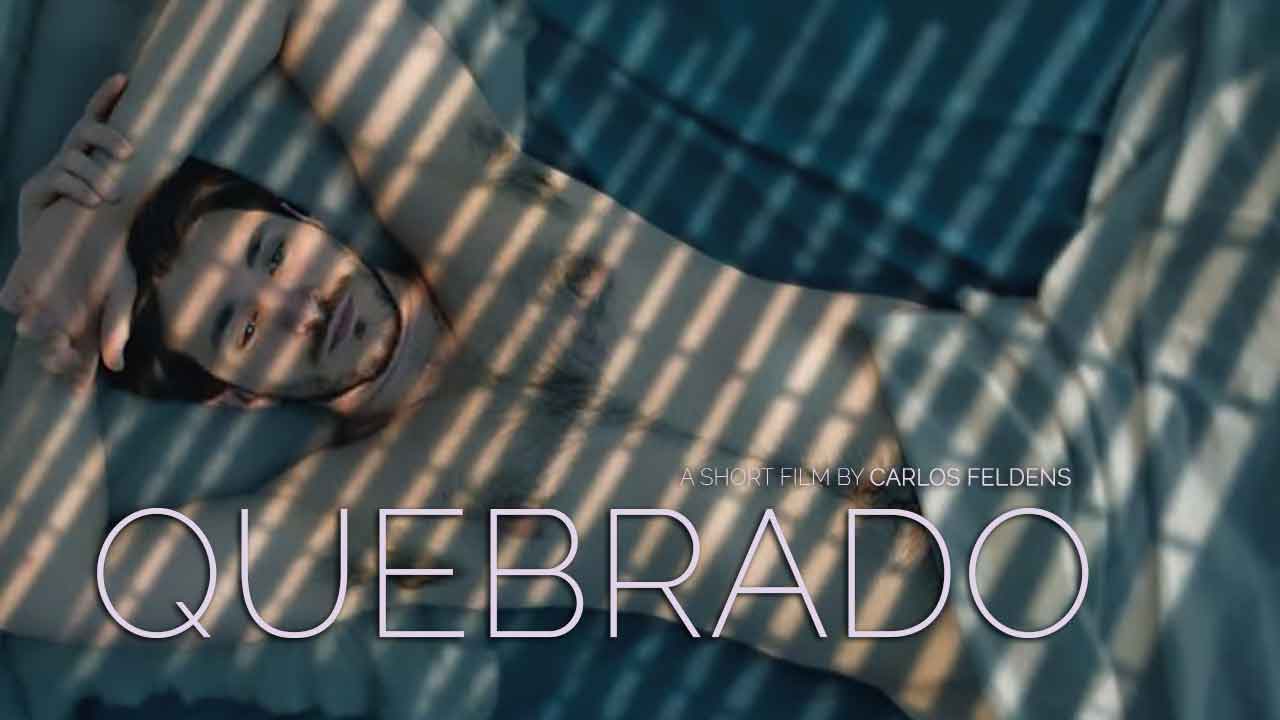



Quebrado (2025) – A Quiet Film with a Heavy Punch


Quebrado (2025) Review: a “late-night run” that is really a survival tactic
Some short films sprint. Quebrado doesn’t sprint. It jogs right next to you, pretends it’s fine, smiles politely, and then casually drops a brick on your chest.
Lucas is the kind of guy who can still perform “normal” on the outside. He has a routine, a home, a partner who cares, and the sort of everyday responsibilities that are supposed to keep a person anchored. Mila is pregnant, and she’s not buying Lucas’ sudden love for cardio at ungodly hours. When she asks, “Why go running that late?”, his answer is quick and practiced: “That’s my usual time.” Sure, Lucas. Sure.
Because what the film makes clear, without turning into a lecture, is that this isn’t fitness. It’s flight.
A park, a glance, and the kind of loneliness that looks like desire
Lucas drifts toward a cruising spot, the kind of place where people go when they want anonymity, no questions, and a quick way to feel something that isn’t dread. Quebrado is smart about how it handles these scenes. It’s not trying to scandalize you. It’s showing you a coping mechanism that happens to look like sex from a distance.
And then Lucas meets a guy who’s clearly been around this particular block before. The vibe starts like most cruising conversations do: recognition, a little teasing, a little testing. The guy mentions he saw Lucas at the park, asks if he’s heading there, and Lucas denies it. But the conversation keeps pulling Lucas in because it’s doing what Mila can’t do in that moment, and what Lucas’ family definitely won’t do: it’s looking straight at him and saying, “I see you.”
There’s a point where Lucas admits something that’s basically the thesis of the whole film: he ends up going when he’s not doing so great. Not because he’s having fun. Not because he’s living his best spicy life. Because he’s trying to shut his brain up for ten minutes.
When “relief” comes wrapped in shame
Here’s the part that makes Quebrado sting.
It captures something a lot of people don’t want to talk about: sometimes desire doesn’t look like joy. Sometimes it looks like a person trying to outrun shame, and still getting caught.
There’s a moment in the park where Lucas’ face says everything the script can’t. It doesn’t read like simple desire. It reads like self-punishment dressed up as pleasure – the kind that comes from being taught that wanting is a sin, and that every yes your body whispers must be paid back with shame.
And when it’s over, the film doesn’t give you that movie cliché of a satisfied exhale. Lucas gets dressed like a man trying to erase what just happened, and the look on his face says it plainly: he did what he needed to do, and he still hates himself for it.
That’s the cruelty of internalized shame. Not the act. The aftertaste.
The real horror is not the park
The film’s most important move is this: it doesn’t treat Lucas’ sexuality as the problem. The problem is what was done to him because of it.
We get the outlines of a history that will be painfully familiar to a lot of LGBTQ+ people, especially those who grew up around religious pressure and “respectability” politics. Lucas talks about being young, noticing men, trying to force attraction in the “approved” direction, and then getting punished for not fitting the script. He describes how hard it was to accept himself, and how once he started, the world around him refused to follow.
Then the film names the monster out loud: conversion therapy.
Not “therapy,” not “help,” not “guidance.” Conversion therapy is abuse that wears a clean shirt and uses polite words. It’s a system built to teach someone to hate themselves so thoroughly that they’ll do the work of erasing their own life for free.
Lucas mentions coming home shattered. He mentions a boy who killed himself. And the film doesn’t milk it for melodrama. It just lets that fact sit there, ugly and undeniable, like a stain you can’t scrub out of the room.
Later, Lucas repeats a line that sounds like a broken record because that’s exactly what trauma is: “I feel wrong.” Over and over. Not because he is wrong, but because someone trained him to hear that message in his own voice.
The line that broke me a little
There’s a moment where the guy, after hearing Lucas’ story, asks something brutally honest: “How do you have sex after everything I just said?”
Lucas answers: “You don’t.”
That’s the film in two sentences. Sex is not the villain here. The villain is what happens when sex becomes the only place you feel allowed to exist, and even then you can’t fully show up. When pleasure is the only escape hatch, but you’re still trapped inside shame.
The end card that refuses to let you look away
And just in case anyone tries to walk away thinking, “Well, that was sad for Lucas,” the film closes with facts.
It says conversion therapy still occurs in more than 80 countries. It points out that this still affects roughly 700,000 LGBTQ+ people in the United States alone. It reminds us that in Brazil it has been banned by the Federal Council of Psychology since 1999, reaffirmed in 2018 as unethical – and yet the practice keeps getting promoted, often through faith-based groups.
Let’s say it plainly: conversion therapy is cruel. It ruins lives. It is not “debate,” it is damage. Any community that claims to care about people while pushing this practice is lying.
Quebrado (2025) – In Pieces, In Public, In Your Head
Quebrado is a short film that uses quiet scenes and small conversations to show a very big wound. It doesn’t need big speeches. It just needs Lucas, a night, a park, and the ache of a person who was taught to fear his own truth.
If you’re looking for a neat plot with clean closure, this isn’t that. If you want something honest, heavy, and painfully relevant, Quebrado lands its punch and walks away without apologizing.
Recommendation: Watch it. And if you’ve ever been told you’re “wrong,” watch it with the knowledge that the film is on your side, even when the world wasn’t.