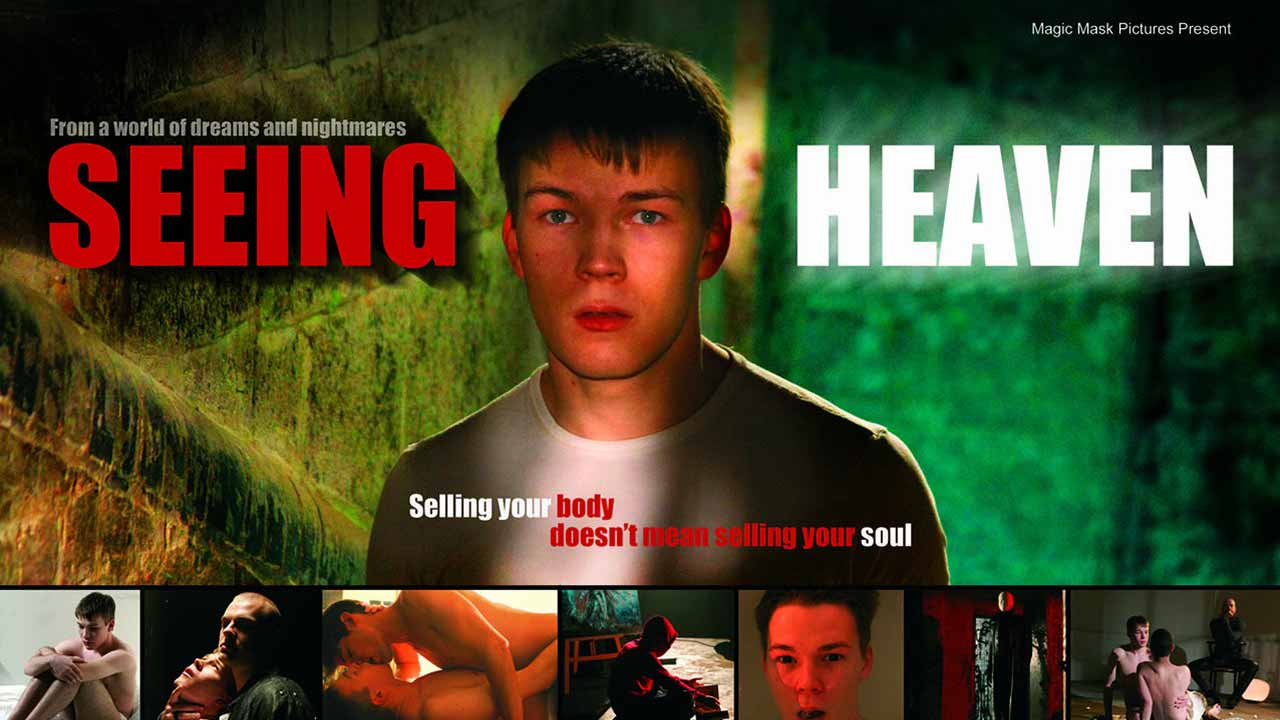




Seeing Heaven (2010) Review – A Dark Gay Psychological Thriller
Seeing Heaven (2010) is not a movie you put on for comfort. It is the kind of film that quietly drags you into an uneasy headspace and then leaves you there to sit with it. And honestly, that is exactly what it is trying to do.
We follow a young man who works as an escort and occasionally performs in gay porn. His life already runs on survival mode, but things turn genuinely strange when he starts having visions that feel too specific, too shared, too real to be just dreams. Somewhere in that fog there is a missing twin brother, and the line between reality, guilt, desire, and paranoia begins to blur.
A dark world built on beautiful bodies
The film walks into the adult industry without glamour. There is nudity, there are sex scenes, but they are not there to entertain. The vibe is cold, transactional, and sometimes downright sad. Bodies look perfect, sure, but they are treated like product. People talk about art, freedom, expression, while the atmosphere keeps whispering the same thing: nobody is safe here, and nobody is really seen as human for long.
That is where Seeing Heaven lands its best punch. It is a story about what happens when your value is reduced to what you can perform, what you can sell, what you can take.
Psychological thriller first, erotic drama second
If you come expecting a typical “gay erotic” narrative, this will feel like a trap. This is closer to a psychological thriller. The twin motif is not a gimmick. It works like a symbol of split identity: who you are, what you do to survive, and what you try not to feel while doing it.
The pacing is slow, but deliberate. The film builds mood instead of chasing plot. As it goes on, you start doubting what is real, what is memory, and what is fear dressed up as fate. Some viewers will call that confusing. Others will call it honest, because this kind of life rarely comes with neat explanations.
Uncomfortable, messy, and kind of the point
The ending does not tie everything up with a bow. It leans into ambiguity and leaves you with a rough aftertaste. That will annoy some people. For me, it fits the story: a film about isolation, exploitation, and mental collapse should not feel clean.
Seeing Heaven is a gay-themed drama-thriller that refuses to romanticize anything. It is not fun. It is not light. But it has a clear intent, and it commits to it.
If you want a soft queer romance, skip it. If you are curious about darker stories where desire, work, and self-worth collide, this one has a reason to be in the archive.