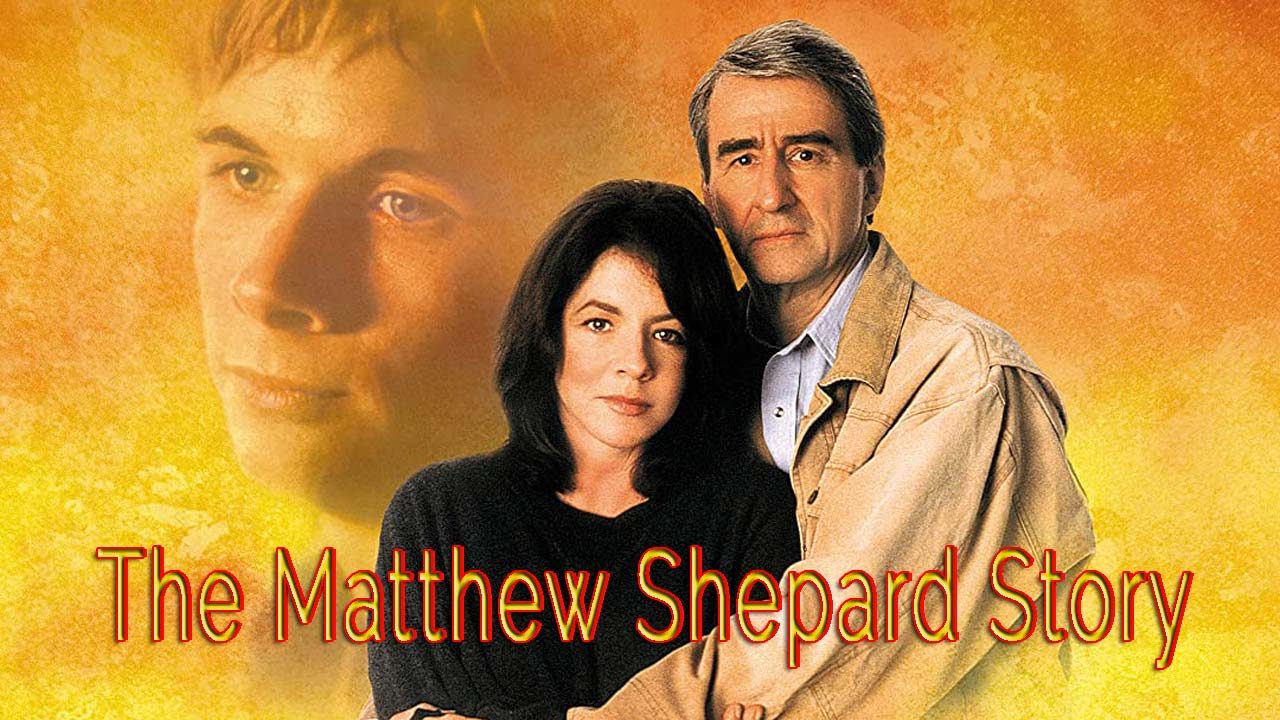




The Matthew Shepard Story (2002) – grief, justice and a queer kid in the middle of America
Some films exist to comfort you. This one exists to tell you the truth.
The Matthew Shepard Story is not interested in being stylish or clever. It focuses on a very simple and very brutal fact: a young gay man in Wyoming was beaten, tied to a fence and left to die, and his parents are now trying to survive what is left of their lives.
A hate crime with a human face
From an LGBT perspective, the key thing this film does is strip away the distance. Matthew is not an abstract victim, not a symbol on a poster, not an icon in a rainbow collage. He is a son, a brother, a kid who forgets his pills, rehearses lines from a school play, falls in love with the wrong boys, and stumbles through life like the rest of us. The script jumps between the trial in Wyoming and memories of Matthew growing up, which means that every time the court describes what happened to him, you already know the person behind the name on the file.
What really hits hard is how ordinary the homophobia looks. It is there in jokes, in casual slurs, in advice like “be careful who you come out to”, in bosses who want him to stop acting “like such a pansy”. None of this looks cinematic. It looks familiar. The film quietly suggests that this background noise of hate is exactly what makes the extreme violence possible.
:contentReference[oaicite:0]{index=0}
Closets, compromises and the price of safety
One of the strongest threads in the story is the constant negotiation between safety and honesty. Matthew’s mother and father love him, but even they sometimes want him to “tone it down”, to choose his battles, to hide a little in order to survive. His friends in Denver and at school know exactly how hostile the environment is, and they have different strategies: humor, sarcasm, activism, or simply leaving town.
From a queer point of view, this is painfully real. The film shows that coming out is not one dramatic moment but a series of tiny choices: who do I tell, how much do I say, how much of myself do I edit so that other people stay comfortable. Matthew is constantly navigating that line. He wants a real life, not a life made of compromises, and the tragedy is that the world around him is still not ready to let him exist without punishment.
Parents, guilt and the impossible question of justice
The emotional core of the film is not Matthew himself, but Judy and Dennis. They are the ones forced to sit in court and listen to every detail of what was done to their child. They are the ones who have to decide whether to demand the death penalty for Aaron McKinney. The film spends a lot of time inside that dilemma: will killing the killer heal anything, or will it just add one more body to the pile.
This is where the story becomes deeply political in a quiet, human way. The father is hungry for revenge and believes that a death sentence will send a message about hate crimes. The mother is torn between that desire and the feeling that Matthew’s legacy should be something more than another execution. In the end, their decision about mercy becomes a statement about what kind of world they want to build for queer people: a world that responds to dehumanization not by doubling down on it, but by insisting on a different way of being strong.
Community, activism and the birth of a symbol
The film also touches on how Matthew, very much against his will, became a symbol. We see friends, activists and ordinary queer folks who recognize their own fear and experiences in his story. There are protests, ugly signs from religious extremists, and on the other side Matthew’s Angels, people who literally use their bodies to block hate speech and protect his family. None of this is subtle, but it is effective. It reminds you that every individual hate crime sits inside a much larger fight for visibility and dignity.
What I appreciated is that the film never forgets that the “symbol” was once a living, annoying, lovable, complicated boy. It lets him stay a person, even while acknowledging how his death pushed hate crime legislation and LGBT awareness forward in the United States.
Does it work as a film for queer viewers
Is it perfect as cinema? No. The direction is fairly straightforward, sometimes even stiff, and you can feel the TV movie format. But as a piece of queer history and emotional testimony, it is powerful. It is the kind of film you might not watch for fun, but you are quietly glad it exists. For younger LGBT viewers, it is a window into how recent and raw this history really is. For older ones, it is almost like watching a chapter of their own lives being replayed.
In the end, The Matthew Shepard Story leaves you with a complicated mix of anger, sadness and a strange fragile hope. It does not promise that homophobia will disappear, or that justice always wins. What it does say is that telling the story matters. Remembering Matthew matters. Refusing to accept hate as normal matters. And for a quiet TV movie without big spectacle, that is a lot.