


A school lesson turns into a courtroom, and two boys realise the real danger isn’t what they feel – it’s what everyone else thinks they’re allowed to do about it. Phil tries to keep everyone happy, Matthew refuses to shrink, and the seaside escape feels like freedom for about five minutes. Then the world catches up.


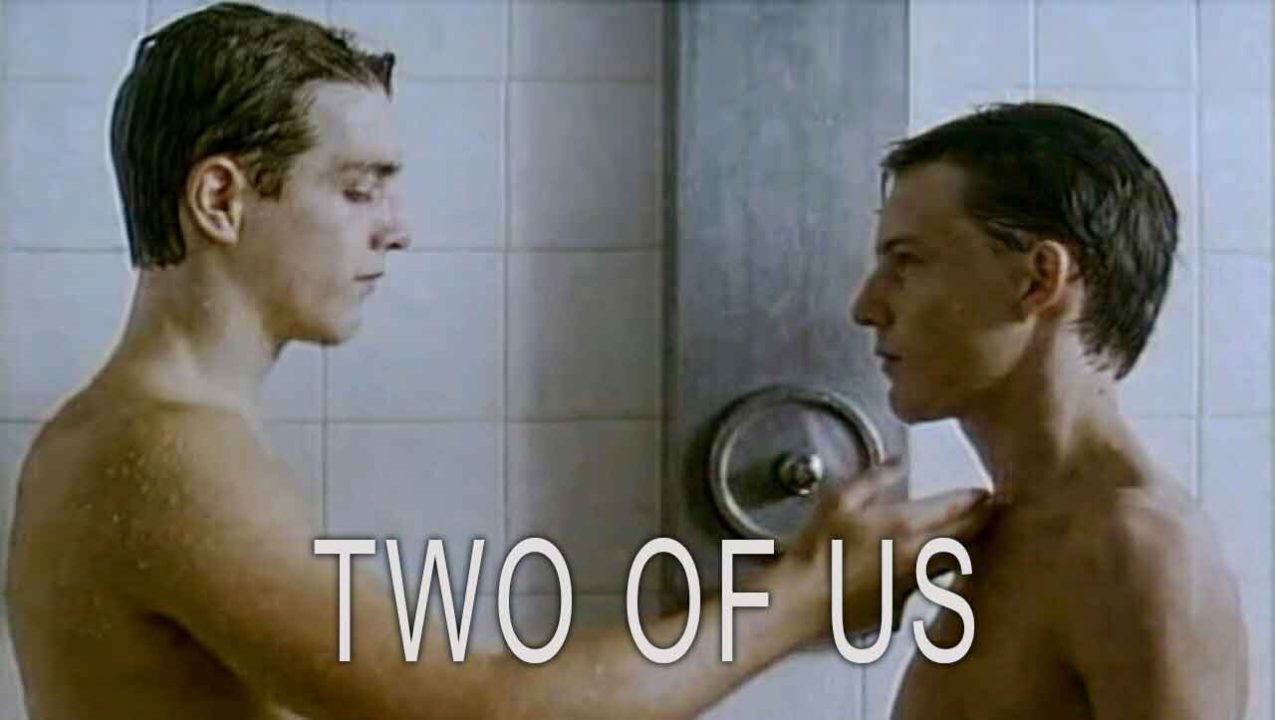
Two of Us (1987) is one of those BBC TV films that doesn’t look like it’s about to wreck your mood – and then it does, calmly, with a straight face. It’s set in that everyday hellscape called “school,” where a classroom discussion can turn into a public trial in under ten seconds. And in the middle of it sit Phil and Matthew: two teenagers trying to breathe normally while everyone around them insists on making their feelings a headline.
A classroom that feels like a cage
The opening is painfully effective because it’s so ordinary. A teacher tries to frame homosexuality as a topic for discussion, and the class turns it into a circus – slurs, jokes, pseudo-history, the whole “civilized society persecutes them” speech delivered like a warning label. The moment lands because it mirrors how bullying often works: not as one big dramatic act, but as a shared hobby. Even the teacher’s “help” comes with that old-school poison – the idea that a doctor might “straighten him out.” It’s the kind of line that sounds responsible until you realize it’s just homophobia in a suit.
Phil’s problem isn’t desire – it’s panic
Phil is the boy who wants everyone to be happy at the same time, which is basically a teenage superpower with a built-in self-destruct button. He has a girlfriend, Sharon, and he also has Matthew – the friend everyone calls “bent,” the friend who gets targeted so often that even breathing near him feels like a risk. Phil’s way of coping is to joke, dodge, and pretend the truth can be managed like a timetable. But the more he tries to control it, the messier it gets.
Matthew, meanwhile, has already been pushed into the role of “the gay kid” by everyone else, whether he asked for it or not. He’s sharper, more direct, and more tired of playing polite. When Phil hesitates, Matthew pushes – not because he wants drama, but because he wants something simple: to be treated like a real person, not a rumor.
Sharon isn’t a villain – she’s a fuse
It would be easy to write Sharon off as “the annoying girlfriend obstacle,” but the film gives her enough realism to be genuinely uncomfortable. She feels Phil slipping away, she senses there’s something he won’t say, and she reacts like many teenagers react: with jealousy, anger, and a need to force clarity out of confusion. When Phil finally cracks and tries to explain, it doesn’t become a neat coming-out scene. It becomes a fight. Words turn into weapons. Nobody looks good. That’s the point.
Running to the seaside, without the postcard filter
When the boys end up at the coast, the film briefly shifts into a different mood – like they’re trying to invent a small country where no one throws things at them. It’s not romantic in the glossy sense. It’s romantic in the exhausted sense: a place where holding hands feels like an act of survival.
That’s where Susie enters the story – a drifter who understands the rules of being unwanted. She’s funny, sharp, and oddly gentle in the way she talks about labels, desire, and the exhausting expectation that people must “choose” a clean identity to make everyone else comfortable. She doesn’t magically fix anything, but she exposes something crucial: the boys aren’t chasing a fantasy. They’re chasing normality.
Labels, fear, and the need to be ordinary
One of the film’s strongest threads is how language can either rescue you or trap you. Phil tries to hide behind a label that feels safer – “not gay, bisexual,” as if the right word could stop the bullying. Sharon treats the whole thing like betrayal. Matthew is furious because he’s the one paying the price in real time. And behind all that noise sits the most honest line the film keeps circling: they are not a summer joke, not “just mates,” not a phase. They’re ordinary teenagers with ordinary needs, asking for an ordinary life.
Why it still hits
Two of Us isn’t polished. It’s not trying to be stylish. It’s a TV film with a simple look and a direct spine. But it gets under your skin because it understands the real enemy: not desire, not love, not “being different,” but the daily pressure to apologize for existing. The violence here isn’t just fists – it’s the constant social permission to humiliate.
If you want a film that shows what it felt like to be young, queer, and cornered in the late 80s UK – without turning the characters into symbols – this one still matters. Quietly, stubbornly, and with more bite than it first appears.