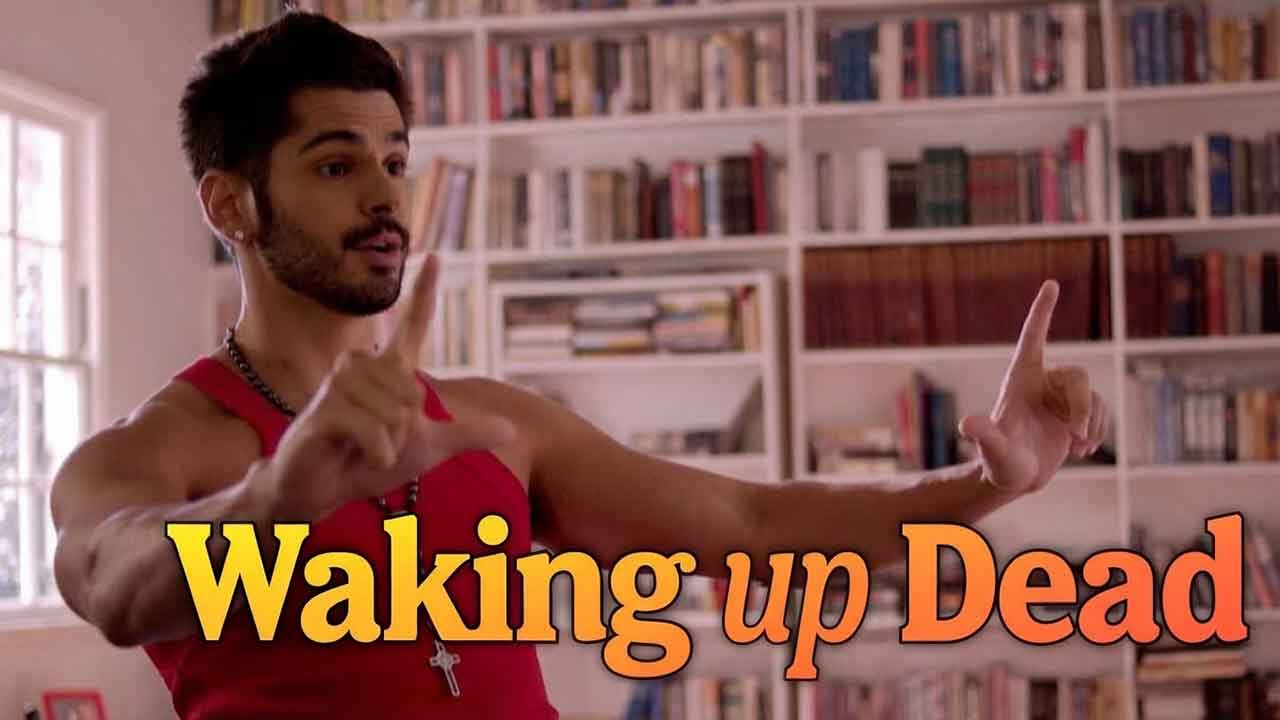



Danny Maldonado is one audition away from a comeback, one call away from getting his ex back, and one mistake away from falling apart again. “Waking Up Dead” is a darkly funny queer LA spiral where Hollywood promises miracles, but your past shows up with receipts.


Waking Up Dead (2022) – A Queer Hollywood Meltdown With Lipstick, Bruises, and Bad Decisions
Waking Up Dead is one of those LA stories where the city doesn’t exactly punch you in the face. It lets you do the punching yourself, then hands you a mirror and says: “Congrats, champ. You did it again.”
Our guy Danny is an actor who keeps telling himself he’s “right there” – one role away from the comeback, one audition away from dignity, one phone call away from getting his ex back. The problem is, Danny treats life like it’s a casting room: he performs, he pleads, he charms, he spirals, and then he storms out when he doesn’t get the part. He’s funny, exhausting, and painfully believable.
The opening vibe is pure chaos. Danny’s trying to flirt, trying to hustle, trying to keep his pride alive while the world keeps reminding him he’s not the hot new thing anymore. His agent (and her long-suffering assistant) are basically a comedy duo from hell: supportive in theory, brutal in practice, and always ready to drop a “they like you… but they’re going younger” line like it’s a weather report.
And because this is Danny’s life, even strangers can’t recognize him correctly. People “loved him” in the wrong movie, the wrong show, the wrong everything. It’s hilarious for about five seconds, and then it turns sad, because you can see how badly he needs to be seen. Not as a face on a screen, but as a person.
On top of that, his finances are circling like vultures. Debt collectors keep calling, and Danny keeps doing what Danny does best: pretending the phone is a poisonous animal that will go away if you don’t make eye contact. Meanwhile, he’s getting jumped, getting roughed up, getting bruised in ways that are both physical and personal. And he still keeps talking like the universe owes him a reset.
His breakup with Eddie is the emotional engine under the whole mess. Danny can’t stop checking the rearview mirror. He’s convinced that if he just books something big, Eddie will magically reappear and say, “Wow, you changed.” Which is adorable in the way a sinking ship is adorable when it insists it’s “just taking a quick bath.”
He crashes at his friend Tony’s place, and that contrast is brutal. Tony’s building a life: a home, a family, a future. Danny’s building… a speech about how he’s going to meditate and step away from the industry. He says it with the same sincerity people use when they promise they’re quitting cigarettes, while already lighting the next one.
The film gets extra sharp when it introduces Raven, a life-coach-influencer type with thousands of followers and the spiritual depth of a scented candle. Raven isn’t evil. Raven is just the kind of person LA manufactures by the thousands: confident, branded, and always ready to turn someone else’s crisis into a motivational quote. Danny wants comfort, not growth, so naturally he argues with Raven like he’s arguing with gravity.
Then the story quietly slides in the heavy stuff. Danny’s sister, Sabrina, keeps calling. Their mother is dying. Danny keeps dodging it. He hasn’t spoken to his mother in decades, and the reasons aren’t cute. Addiction, abandonment, old trauma that never got properly named. Danny’s anger is real, but it also functions as a very convenient hiding place.
And this is where Laya enters, almost like the film’s unexpected conscience. She’s a realtor who shows up with paperwork and ends up watching Danny unravel. Laya has her own loss, her own grief, and she drops one of the film’s most human lines of advice: go to your mother’s funeral. Not because it fixes the past, but because it stops you from leaving someone alone in the final moment. Danny hears it, absorbs it, and then does what he always does when life asks him for something real: he lashes out.
Of course, right after that, Danny gets the career phone call he’s been praying for. A big creator wants him. The role opens up. He’s “in.” It’s the exact wish-fulfillment moment that Hollywood movies usually treat like the finish line. But Waking Up Dead is not here to pat anyone on the head. It’s here to show you the ugly truth: sometimes you get the opportunity… and you still sabotage it. Because you don’t actually know how to live without the drama that’s been driving you.
And yes, Danny blows it. He bails. He crashes. He gets dropped again. The film doesn’t wrap him in a redemption bow. It lets him fall back into the cycle: chasing validation, chasing intimacy, chasing something to numb the noise in his head. There’s even a late-night attempt to reach Eddie that ends in silence, and Danny’s next move is not inspirational. It’s human, messy, and depressing in the way relapse often is: not a big dramatic event, just a quiet surrender.
What I liked here is the tone. It’s dark, but it’s not pretending to be “important cinema” with a lecture. It’s sharp, sometimes mean, often funny, and then it hits you with a real emotional bruise when you least expect it. Danny isn’t written to be lovable. He’s written to be recognizable. If you’ve ever watched someone chase a dream while quietly self-destructing, this film will feel familiar.
Waking Up Dead doesn’t ask you to forgive Danny. It asks you to understand him, and then it asks the harder question: how many times can someone “start over” before they realize the problem isn’t luck, the problem is the person holding the steering wheel?