

A legal victory can look clean in history books, but Church & State shows the panic, ego, faith, anger, money, love, and exhaustion underneath it.


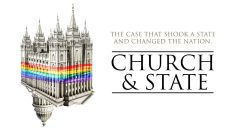
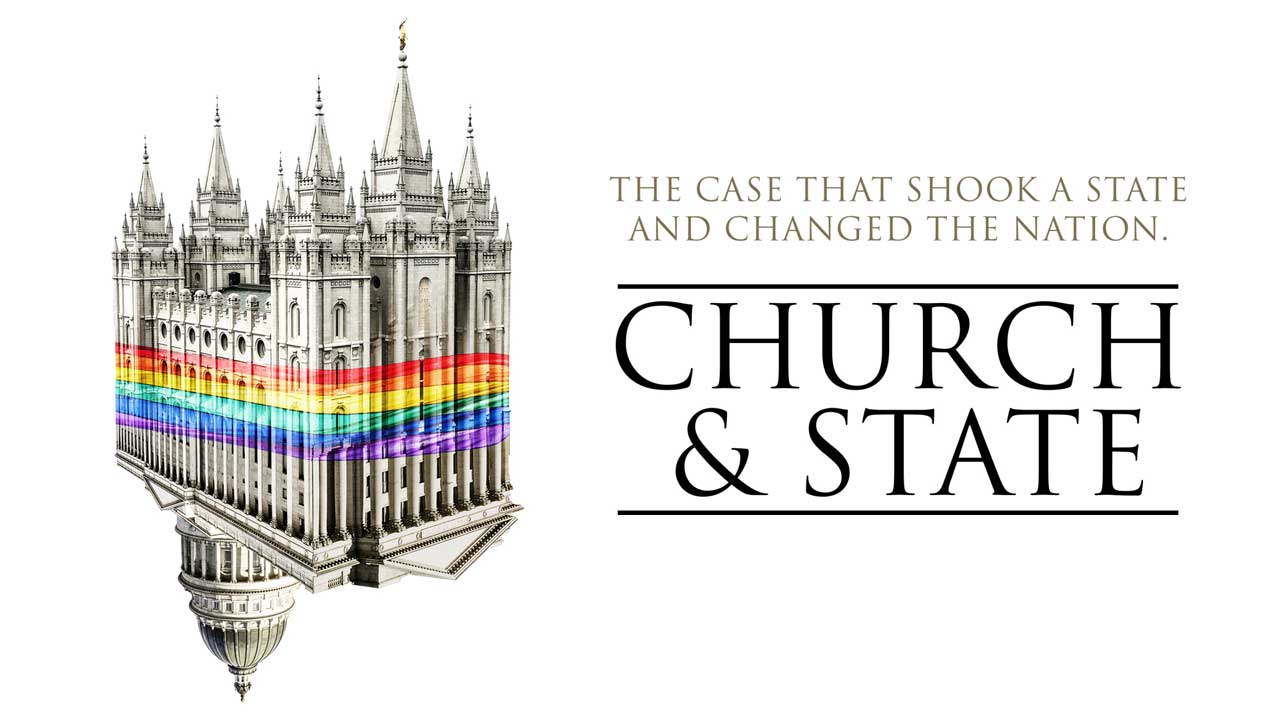
Church & State (2018) is the kind of documentary that sounds, on paper, as if it should be mostly about courtrooms, constitutional language, and political procedure. A federal judge strikes down Utah’s ban on same-sex marriage, the state fights back, lawyers argue, activists organize, history moves forward. But the film is much more interesting than that. It is not just about the law changing. It is about the people who had to push the law until it finally admitted they existed.
Directed by Holly Tuckett and Kendall Wilcox, Church & State follows the legal battle around Utah’s Amendment 3, the constitutional ban that defined marriage as only between a man and a woman and refused to recognize same-sex marriages from elsewhere. In 2013, a federal court ruling suddenly made gay marriage legal in Utah, one of the most conservative and religiously shaped states in America. That surprise victory sent shockwaves far beyond Salt Lake City. But the film is not content to simply celebrate the headline. It wants to know how that victory happened, who paid for it emotionally, and why Utah was such a strange and powerful place for this particular domino to fall.
At the center of the story is Mark Lawrence, founder of Restore Our Humanity, a man who does not come across as a polished activist built for television panels. Thank God for that. Mark is messy, stubborn, funny, wounded, and sometimes impossible. He has survived illness, lived through the AIDS years, watched other people become braver than he felt he could be, and carries the kind of regret that can either sink a person or turn into fuel. When he decides that gay marriage should come to Utah, he is not backed by a grand national organization or a smooth political machine. He starts with willpower, coffee shop meetings, and the slightly mad confidence of someone who has no idea that he is supposed to wait for permission.
That is one of the film’s best insights. History is often written later as if it were planned by sensible adults in clean rooms. Church & State shows something much closer to reality. The people who move things forward are sometimes underfunded, irritated, scared, proud, and barely holding the machine together with tape and caffeine. Mark’s determination is both heroic and difficult. The film does not turn him into a saint, which makes him far more compelling. He can be abrasive. He clashes with others. His anger, especially toward national LGBTQ organizations that initially doubted or pushed aside the Utah effort, is not always comfortable to watch. But it feels honest. Activism is not a group hug with better lighting. Sometimes it is a room full of people who want the same thing and still manage to hurt each other on the way there.
The documentary is especially strong when it explains why Utah matters. This is not just any state refusing same-sex couples the right to marry. Utah’s political and cultural life is shown as deeply shaped by the Church of Jesus Christ of Latter-day Saints. The film does not argue that Utah is literally a theocracy, but it repeatedly shows how thin the wall between church influence and state power can become. Politicians may speak the language of law, children, voters, and tradition, but the documentary keeps pulling us back to the religious architecture underneath. The title is blunt, almost too obvious at first, but by the end it feels exactly right. Church and state are supposed to be separate. In Utah, the film suggests, they often seem to share the same hallway.
That religious background gives the film some of its heaviest material. Church & State looks at Mormon teachings around family, eternity, marriage, and homosexuality, and it makes clear how painful those teachings can become when turned into law. The idea of the eternal family sounds beautiful if you already fit inside it. If you are gay, it can make you feel like a spiritual threat to your own parents, your community, and even the afterlife your family imagines for itself. That is a chilling thing for a young person to carry. The film understands that anti-gay politics are rarely only about policy. They enter the home, the body, the dinner table, the church pew, and the small private fear of not belonging anywhere.
Peggy Tomsic, the lead lawyer in the Kitchen case, gives the film its strongest emotional anchor. She is sharp, calm, and formidable in the courtroom, but her role is not just professional. Her own family is directly affected by the lack of marriage equality. She wants to marry Cindy, and she wants the full legal ability to protect and adopt Marcelino, the child she has loved and helped raise for years. Through Peggy, the film cuts through all the abstract arguments about tradition and “the meaning of marriage.” The question becomes very simple: what happens to a child when the law refuses to recognize one of his parents? What happens to a family when the state treats love as paperwork it can deny?
The courtroom scenes are surprisingly alive. Legal documentaries can become dry very quickly, but this one has a built-in absurdity because the state’s arguments often seem trapped between religion and secular performance. Utah wants to defend a religiously shaped definition of marriage without sounding religious in federal court. That tension is almost comic, until you remember that real families are waiting outside the room. When Judge Robert J. Shelby’s ruling arrives earlier than expected and there is no immediate stay, the film shifts into something electric. Couples rush to marry. Courtyards fill. People who had been told for years that they were second-class suddenly stand in line for recognition. It is chaotic, beautiful, and deeply moving.
One of the loveliest things about Church & State is that it understands marriage not as a trophy, but as a form of public safety. When the couples marry, the joy is not only romantic. It is legal, social, parental, and human. It says: we are here, our families are real, and you can no longer pretend we are temporary arrangements waiting for your permission. That is why the state’s later attempts to pause, question, or possibly undo those marriages feel so cruel. Once people have been recognized, even briefly, asking them to step back into legal uncertainty is not a technical matter. It is emotional violence dressed as procedure.
The film is not perfect. Its style is fairly conventional, built from interviews, archival clips, news footage, and legal chronology. It sometimes tries to cover a lot at once: Mormon history, anti-gay doctrine, the plaintiffs, Mark’s personal life, Peggy’s family, courtroom strategy, national LGBTQ politics, and the public backlash. At moments, I wanted a little more space with the couples themselves, especially Derek and Moudi, and Kody and Laurie, whose lives carry the case but sometimes sit slightly behind the bigger political machine of the documentary. The film also leans strongly toward its argument, so anyone looking for a detached “both sides” treatment should probably look elsewhere. Personally, I do not mind that. False neutrality is often just cowardice wearing a tie.
What makes Church & State memorable is its refusal to make victory look clean. There are tears, cheers, weddings, and historic rulings, yes. But there are also unpaid legal bills, bruised egos, broken relationships, exhausted activists, and people who end the journey feeling more abandoned than celebrated. That bitterness gives the film weight. It reminds us that civil rights victories are often remembered as beautiful after enough time has passed, but while they are happening, they can feel like panic, debt, betrayal, and sleepless nights.
By the end, Church & State becomes less a film about whether same-sex couples should marry, and more a film about who gets to define reality for everyone else. A church may define marriage for its believers. A state may regulate marriage through law. But when the state adopts one religious vision as civic truth, families outside that vision become collateral damage. This documentary is angry about that, and it should be.
It may not be the most formally elegant documentary about marriage equality, but it is one of those films that understands the human mess underneath a legal milestone. Rights do not arrive like polite guests. Sometimes they kick the door open, trip over the furniture, and leave everyone arguing over who gets thanked in the speech. Church & State knows that history can be sacred and ugly at the same time. That is exactly why it feels alive.