


In this town, “normal” is just a mask. And once it slips, the horror is not what’s hiding in the dark – it’s what people were willing to ignore in plain sight.


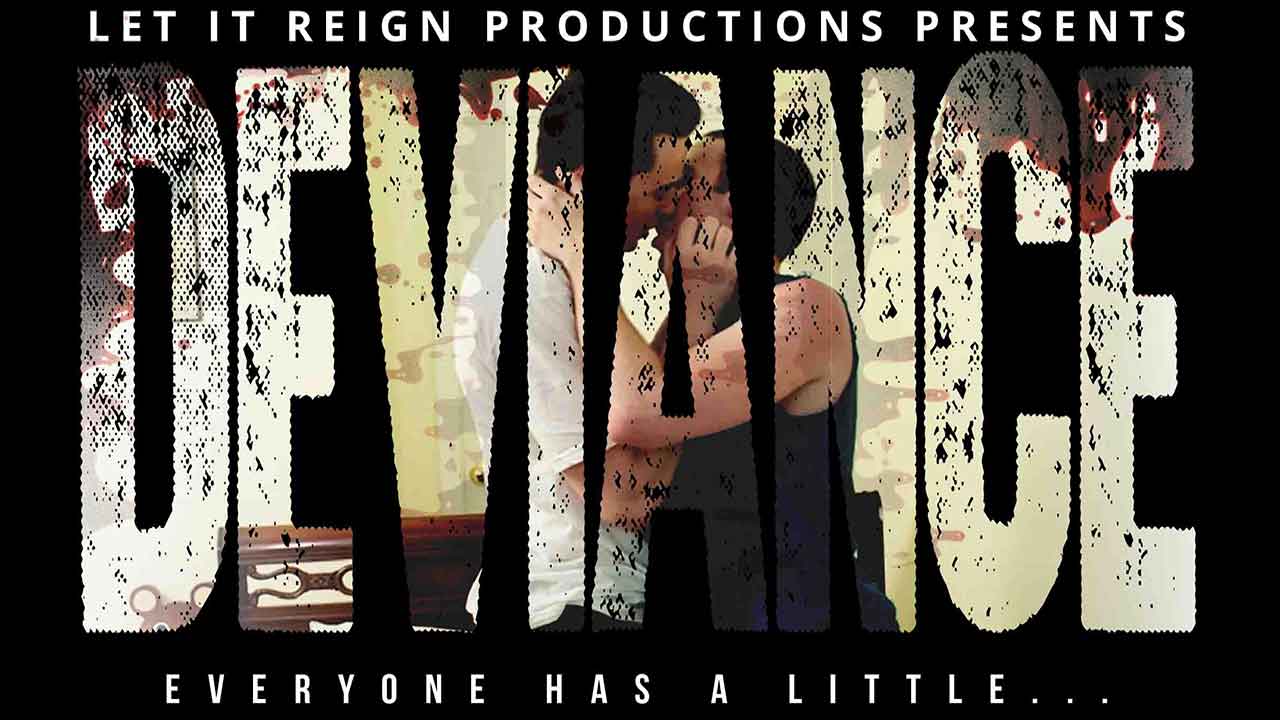
Deviance (2017) is a lean little horror-thriller (about 78 minutes) that lives off one big idea: in a small town, secrets do not disappear, they ferment. And when they finally burst, they do not burst politely.
The setup is blunt and kind of perfect: two young men carry their own private rot, and the town around them is the perfect petri dish for it. Two very different lives, two very different masks, and one shared problem: keeping what they have done hidden.
A town where “normal” is just a costume
We meet Connor O’Reilly, the guy who looks like he should have an easy life in this kind of town: young, confident, “big man on campus” energy. But right away, the film shows you how fragile that armor is. A locker-room moment turns ugly fast, with the kind of casual homophobia small towns treat like background noise.
And here’s the trick “Deviance” pulls: it does not treat cruelty as a random event. It treats it like a climate. Something you grow up breathing. Something that shapes what people do when they are scared, ashamed, or desperate.
Connor’s spiral: running away is not the same as escaping
Connor’s storyline becomes the more outwardly chaotic one. At a certain point, the movie stops pretending this is just teenage drama and shows you how survival can turn into self-destruction. He ends up doing sex work, and the film does not romanticize it. It is messy, humiliating, and dangerous in a very everyday way.
There is a painful moment where someone tries to pull him back from the edge, offering him a place to stay, something stable, something human. Connor answers with cold facts, like he is reading the weather report. It is one of those small scenes that quietly explains a lot without a speech.
Milton’s story: when “faith” becomes a weapon
Then there’s Milton Mason, and his arc is the one that crawls under your skin. Milton is not presented as a cartoon villain or an innocent lamb. He is a person under pressure, and the pressure is brutal.
After trouble at school, the family response is basically: “We will handle him.” And “handling” means turning religion into a cage. The film shows how scripture can be used like a hammer, not a comfort. The message is simple and terrifying: obey, deny, pretend. And if you can’t pretend, you will be punished until you do.
This is where the film is quietly nastiest, and I mean that as a compliment. It does not need jump scares when it can show you a home where love is conditional and “help” looks a lot like control.
Where the thriller kicks the door in
For a while, “Deviance” plays like two parallel tragedies with occasional overlap. And then it starts tightening the knot. There are missing-person hints, tense conversations, and that creeping sense that something is wrong in a way that does not have a clean explanation.
Then the film drops a brutal reveal that changes the temperature of everything you watched before. Suddenly, it is not just about internal shame. It is about what shame can grow into when it is fed long enough, protected by silence, and excused as “normal.”
The film’s biggest strength: it refuses to be comforting
What I appreciated is that “Deviance” does not offer the audience an easy moral map. It shows you how people can be victims in one scene and dangerous in another. It shows you how the town’s “normal” creates blind spots, and how those blind spots become hiding places.
There is also an emotional beat that hits harder than you expect: Connor tries to leave again, someone confronts him, and he blurts out something raw and honest. The response is immediate shutdown. That’s the whole town in one moment: affection shows up, panic slams the door, everyone pretends it never happened.
Performances, vibe, and what to expect
The lead performances carry the film’s uneasy tone well, because neither character is played like a tidy concept. The movie also leans into low-budget closeness: small rooms, familiar streets, conversations that feel a little too private to overhear. It works for this story, because the real horror is not a monster. It is a community that teaches people to hide, then acts shocked when hiding turns into something monstrous.
Heads-up: this one deals with homophobia, implied sexual exploitation, and violence, plus the whole “conversion” mindset that is basically psychological horror on its own. If you want a comforting queer thriller, this is not it. If you want a dark indie film that stares straight at the damage and refuses to blink, it might work for you.
In short: “Deviance” is mean, bleak, and occasionally messy (in that indie way), but it has a point, and it commits to it. And once the big reveal lands, you will not watch the earlier scenes the same way again.