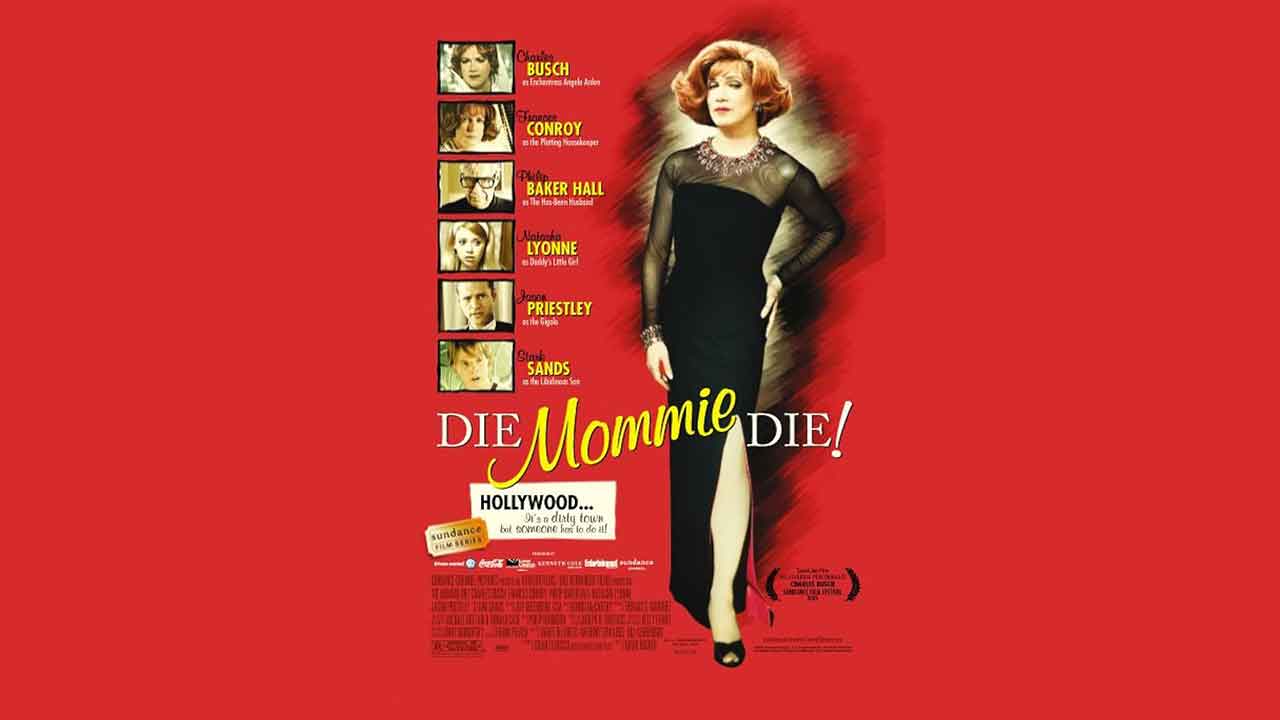



Some families pass down heirlooms. This one passes down trauma, fabulous insults, and the kind of secrets that don’t stay buried. Die, Mommie, Die! is camp with teeth – hilarious, cruel, and oddly sad under the lipstick.


Die, Mommie, Die! (2003) is the kind of movie that looks you straight in the eye and says: “Yes, we’re doing this.” And by “this,” I mean melodrama so thick you could spread it on toast, a family dynamic that should come with a warning label, and a murder method so absurd it becomes… poetry.
The setup is deliciously cruel. Angela Arden is a faded pop diva with a mansion full of roses, grudges, and people who hate each other in fluent, practiced sentences. Her husband, Sol Sussman, is a Hollywood producer with constipation, cash problems, and the emotional warmth of a cancelled credit card. Their children are split into two different kinds of damage: Edith, the daddy’s-girl flamethrower, and Lance, fragile and furious, living in a house where love arrives mostly as a punchline.
Then there’s Tony Parker – the pretty younger “lover,” tennis-club smooth, rumored to be trouble, and (of course) walking around like he owns the air in the room. The film uses him like a match near spilled perfume: everybody wants something, everybody is lying, and you can practically hear the future lawsuit forming.
Camp that bites, not camp that begs
People throw the word “camp” around like confetti, but Die, Mommie, Die! knows exactly what it’s doing. This isn’t “wink-wink, aren’t we silly.” It’s weaponized style. The dialogue snaps. The insults land. The emotions are huge on purpose, because the movie is playing in the tradition of those old psycho-biddy melodramas – big women, bigger secrets, and a house that feels like it was built out of unresolved trauma. :contentReference[oaicite:8]{index=8}
Charles Busch (who wrote it and plays Angela) performs like he’s auditioning for the role of “Icon” in a world that stopped hiring icons. The voice, the posture, the theatrical timing – all of it is calibrated to the millimeter. It’s funny, yes, but it’s also sharp. The jokes aren’t there to soften the cruelty. They’re there to underline it.
The murder is… yes, that murder
I won’t pretend the film is subtle. It’s not. The story takes Sol’s most undignified problem and turns it into a murder device. There’s a scene where the household “help” goes from domestic routine to something that feels like a crime committed by Broadway. And the movie somehow sells it because it commits fully, without blinking. :contentReference[oaicite:9]{index=9}
From there, the plot becomes a beautiful mess: suspicion, inheritance drama, shifting alliances, and a family that treats grief like a competitive sport. Everyone is a suspect. Everyone is also, in their own way, a performer. That matters, because this film is obsessed with performance – on stage, in marriage, in family roles, in gender, in the version of yourself you present when the world is watching.
Queer energy in a mansion full of knives
There’s a reason this movie clicks with queer audiences. Not because it’s “about” one thing, but because it understands the survival skill of turning pain in:contentReference[oaicite:10]{index=10}enly gay and emotionally raw. Tony moves through the house like temptation with good hair. Edith’s sexuality is messy and weaponized. And Angela (or what we think is Angela) is built out of desire, rage, loneliness, and the hunger to be seen as the star of her own life.
The film doesn’t ask you to treat these people as role models. It asks you to treat them as characters. Loud ones. Dangerous ones. Hilarious ones. The queerness is not a lecture. It’s part of the bloodstream, part of the house’s rhythm: the flirtation, the shame, the performance, the secret-keeping, the sudden cruelty, the sudden tenderness.
The twist is pure soap opera genius
Half the fun is how the film keeps escalating until the truth starts leaking through. The “who did it” becomes “who is she,” and the story turns into an identity nightmare with lipstick. The movie pulls a twin-switch, then drags you through a flashback that explains how desperation turns into reinvention, and how reinvention turns into a crime. It’s ridiculous. It’s also oddly sad in the way only camp can be: laughing at the horror while admitting the horror is real.
And yes, there’s LSD. Because of course there is. The film uses it like a truth grenade – not to be “edgy,” but to push a confession out of a character who built her entire life on denial.
So… is it actually good?
It depends on what you want. If you want realism, you’re in the wrong mansion. If you want a tight, grounded thriller, this isn’t that. But if you want a wicked black comedy that treats melodrama like an art form, it’s an absolute treat. It’s the rare camp film that doesn’t apologize for being camp. It respects the genre it’s spoofing, and that respect is why the parody works.
Also, it’s short enough (around 90 minutes) that it never overstays its welcome. It throws the biggest lines, the nastiest family dynamics, and the wildest plot mechanics at you, then bows like a diva: “Thank you, thank you, I’ve suffered enough for your entertainment.” :contentReference[oaicite:11]{index=11}
Who should watch it
- If you love glamorous trainwrecks and dialogue that could cut glass.
- If you enjoy camp that has teeth, not just glitter.
- If you have a soft spot for “rich people behaving badly” stories that turn into full-blown Greek tragedy cosplay.
Verdict (without calling it a verdict): Die, Mommie, Die! is a trashy little jewel – theatrical, vicious, and weirdly human underneath the mascara. Come for the poisoned absurdity. Stay for the loneliness hiding behind the punchlines.