


Nothing says “we’re fine” like rehearsing your happiness in the car. One tiny lie hits a family dinner and grows teeth fast.


Nothing says “we’re fine” like rehearsing your happiness in the car.
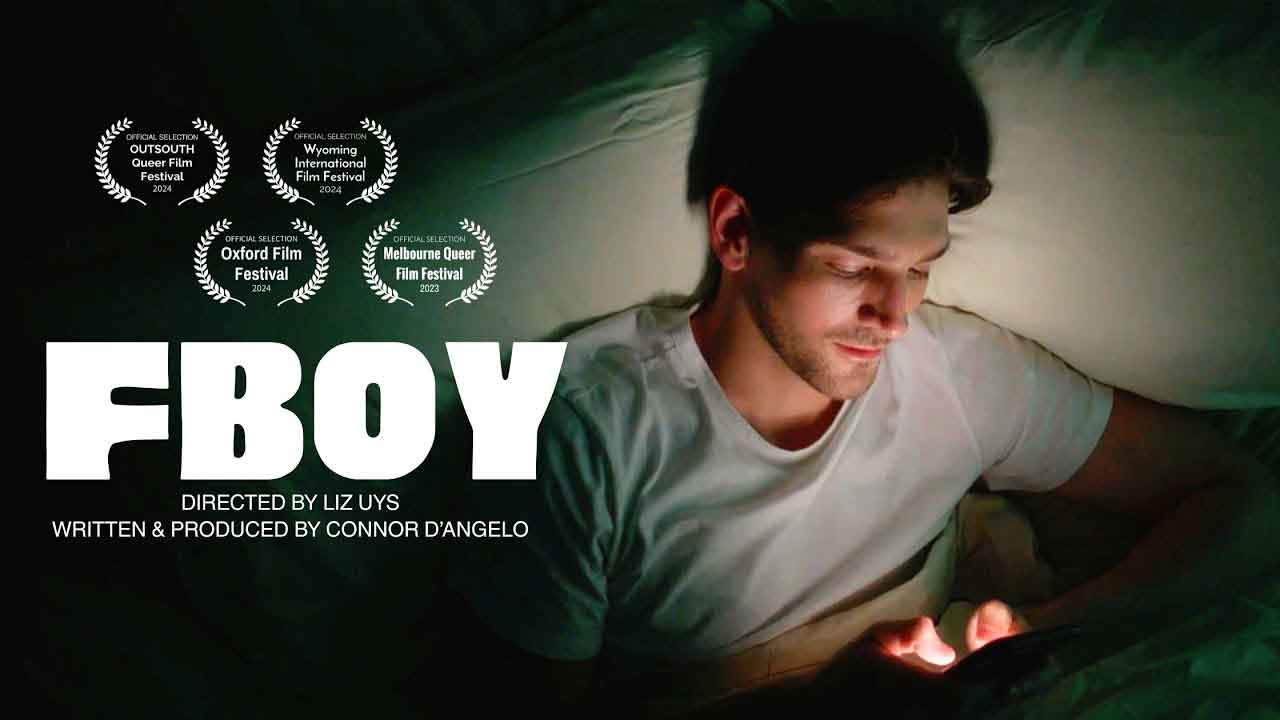
FBOY takes one tiny lie, seats it at a family dinner, and lets it grow teeth.
There’s a very specific kind of panic that only happens when you’ve agreed to “keep things easy” – and then someone’s mom starts asking questions with direct eye contact. FBOY is a short, sharp comedy that knows exactly where modern queer dating gets messy: not in sex, not in jealousy, but in the exhausting theatre of pretending you’re emotionally ready.
The opening: casual, funny, and already a red flag
The film starts with Finn doing what he does best: charming his way through the moment and slipping out before anything becomes “a thing.” A hookup, a quick joke about names, and then the line that basically sets the whole film on fire: he has a boyfriend, and yes, the boyfriend is “okay” with this. Except “okay” is clearly doing heavy lifting.
Right after that, we get the plan for the night: act like the happiest couple alive. The fact that it needs to be said out loud tells you everything.
Monogamy vs “cookie cutter”: the argument they’ve already had 20 times
Finn isn’t written as a cartoon villain. He’s not evil, he’s just allergic to decisions. He throws out the usual defenses: he doesn’t want a “vanilla” relationship, he doesn’t want something “cookie cutter.” Lucas pushes back with something even scarier: he actually wants the simple version. And suddenly you’re not watching a fight – you’re watching two life plans bump into each other in real time.
The dinner: supportive parents, one loud friend, and a trap disguised as fun
Dinner should be the safe part. The parents are warm, the vibe is “we love you,” and there’s even that slightly awkward “tell us about your LGBT lifestyle” moment that lands exactly like it does in real life: well-meaning, clumsy, and still weirdly invasive.
Then Ricky shows up like a glitter bomb in human form and introduces “conversation cards.” You can feel the film smiling as it loads the gun: a harmless party game that “helps you get to know people,” which is exactly the last thing you want when your relationship is held together by vibes and denial.
The five-year question: where the mask slips
The most brutal part is how small the trigger is. Someone asks Finn where he sees himself in five years. Finn, on autopilot, serves the fantasy: settle down, maybe married. Lucas hears it and you can practically watch him blink in pain because that’s not their reality – that’s Finn performing for the table.
From there, the night finally turns honest. Lucas refuses to keep lying to Finn’s parents. Finn tries to pivot, as usual. But this time, the escape hatch is locked.
The breakup: not dramatic, just inevitable
What I like is that the film doesn’t go for soap opera. It goes for clarity. Finn admits he wants “more,” and that Lucas already seems sure of who he is. Lucas answers with the line that quietly murders half of modern dating: it’s okay to still be figuring yourself out, but he can’t be collateral damage while you do it.
And then it ends the way a lot of real breakups end: someone leaves, someone’s family tries to comfort the person who stays, and the room feels too quiet for the amount of emotion that just happened.
Why it works
FBOY is a comedy, but it has teeth because it’s honest about the “soft” kind of selfishness. Finn isn’t trying to hurt anyone. He’s just trying to avoid growing up in public. The dinner forces him to do it anyway, and Lucas finally chooses self-respect over staying polite.
It’s short, fast, and it sticks because it understands this simple truth: commitment isn’t a game. But people sure love playing games until the questions get real.