There’s a specific kind of loneliness you only notice at night, when the rain hits the window and your phone starts to feel like a second heartbeat. Florence (2022) opens exactly there: coffee, scrolling, a “new job” message, and a voice telling us that whatever happened next didn’t just shift a mood – it rewired a whole identity.
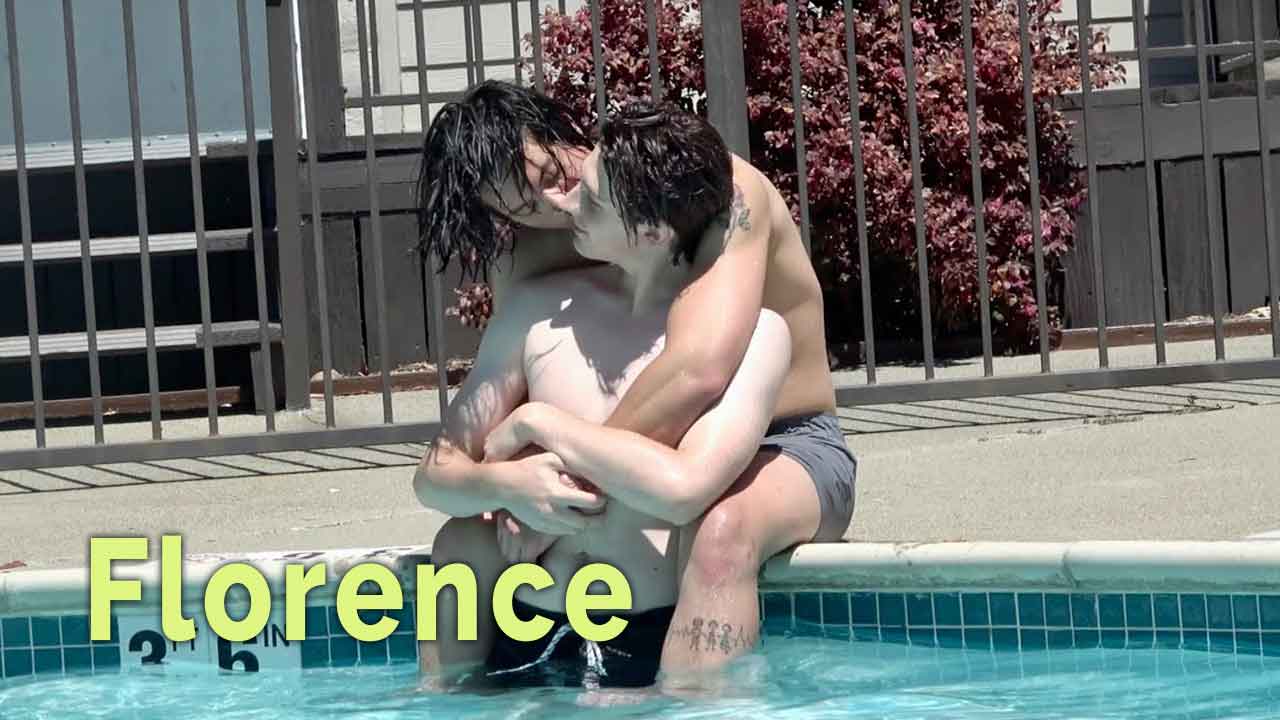
On the surface, this is a short film about a young guy (Matthew, “Maddie”) who wants to experiment, be careful, and not end up as someone’s searchable mistake. He meets Justin on Grindr, they go to a scenic spot that screams “first date montage,” and the chemistry comes in fast. But Florence is not interested in being just another cute meet-cute with a back seat detour. It’s interested in something messier: what happens when intimacy starts as a role, and then refuses to stay one.
A romance that starts like a fantasy and flips into a prank with teeth
The early scenes are sweet in a way that feels intentionally simple. Maddie is shy, cautious, and painfully aware of how ugly “coming out” stories can get. Justin is confident, charming, and slightly too smooth – but not in a cartoon villain way. More like the guy who knows exactly what to say because he’s said it before. The film lets you enjoy the tenderness… and then quietly plants the suspicion that something is off.
When the twist lands, it’s both hilarious and brutal: Justin isn’t just a boyfriend. He’s a hired “helper,” recruited by Maddie’s father through Craigslist to push his son out of the closet. It’s one of those premises that sounds absurd in a pitch, but the film makes it work because it’s grounded in something very real: parents who love their kid, panic anyway, and make the worst possible decision while convincing themselves they’re being supportive.
Performance, identity, and the worst kind of “support”
The smartest thing Florence does is refuse to paint anyone as a one-note monster. The parents are warm and affectionate in Maddie’s birthday scene, and for a moment the film gives you that rare, soothing fantasy of a perfect coming-out. Then it yanks the rug: the same father who says “you can trust us with anything” turns around and tries to control the story when it stops being convenient.
And that’s where the title vibe clicks. “Florence” becomes more than a name. It’s a mask, a transformation, a role someone steps into – voluntarily or not. Maddie is learning to be himself. Justin is literally being paid to be someone else. The film asks the uncomfortable question: if something begins as an act, does it automatically become fake? Or can the performance accidentally reveal the truest parts of you?
Small lines, big payoff
Because this is a short, it lives and dies on moments. Florence delivers with little human details: Maddie’s fear of being outed, the way he negotiates boundaries without fully understanding his own needs, and Justin’s smooth confidence that slowly turns into genuine vulnerability when everything collapses.
Also, that pineapple. If you know, you know. It’s the kind of ridiculous, perfectly timed detail that keeps the film from drowning in melodrama. The humor doesn’t undercut the emotion – it gives it air. It makes the pain land harder because it feels like real life: awkward, funny, sweet, and suddenly devastating.
By the time the story comes around to its closing confession, Florence has earned the right to be romantic again. It’s not pretending the betrayal didn’t happen. It’s saying people can be stupid, scared, and still capable of changing. And it leaves you with a surprisingly tender aftertaste: the idea that love can start in the wrong place, but still end up honest.
Bottom line: Florence is a compact, emotional short with a wild premise that actually has something to say. It’s funny in the right places, sharp about the risks of being young and closeted, and brave enough to explore how “help” can become control. Sweet, messy, and worth your time.