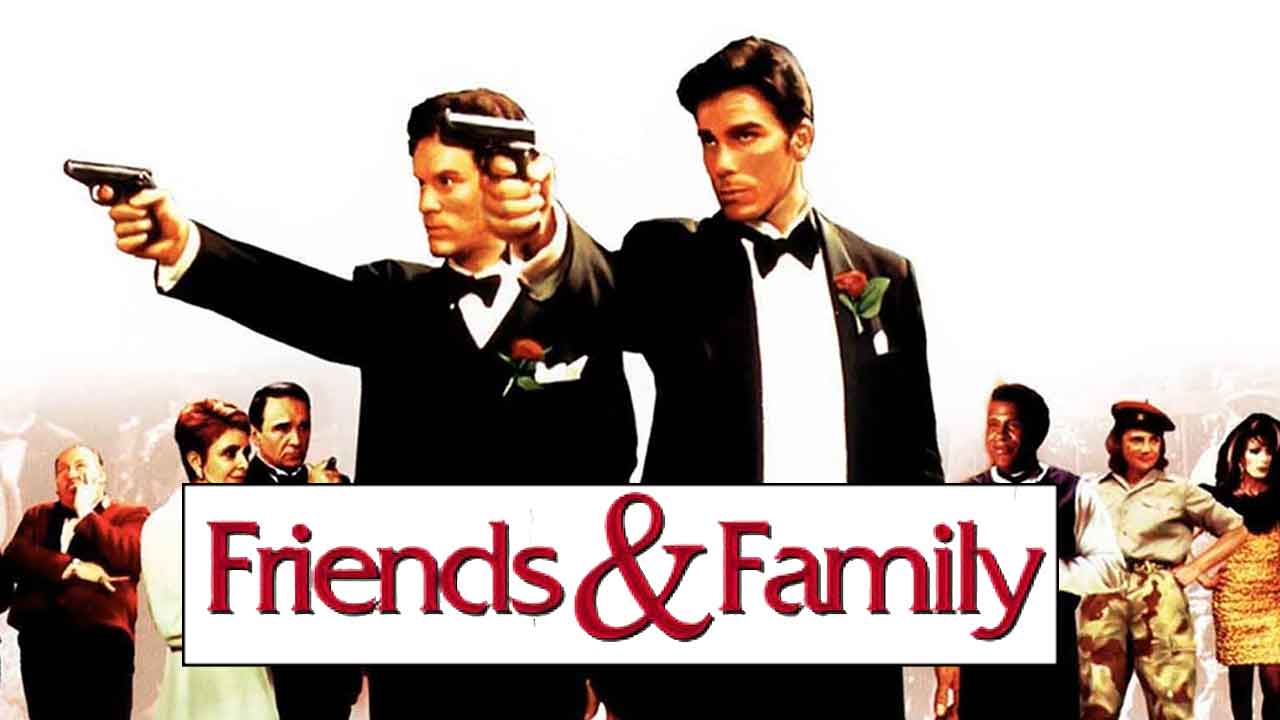




They already know he’s gay - the real problem is what he does for a living. Two New York boyfriends try to host a “nice family visit” while hiding mob business, and the apartment turns into a parade of lies, guests, and very bad timing. If your parents ever showed up at the worst moment, this one will feel painfully familiar.


“Friends & Family” (2001) is the kind of movie that sounds like a terrible idea when you describe it out loud and then somehow turns into a perfectly watchable little chaos sandwich. The pitch is basically this: two stylish New York boyfriends are also mob “problem-solvers”, and they’re trying to keep that small detail away from visiting parents, suspicious law enforcement vibes, and a party that keeps growing like a creature fed after midnight.
It’s a gay mafia farce, yes. But it’s also a “please don’t ask questions at dinner” family comedy, and those two genres go together better than they have any right to. The whole thing plays like a sitcom that accidentally wandered into a crime movie, realized it was underdressed, and decided to commit anyway.
Two men, one closet, and it’s not the one you think
The main couple is Stephen Torcelli and Danny Russo, living that polished Manhattan life where everything is tasteful, coordinated, and suspiciously expensive. The twist is that they’re not just good at matching throw pillows. They’re also good at matching problems to solutions, the kind of solutions that make people stop talking forever.
Now here’s where the film gets its best joke: the parents already know their son is gay. That part isn’t the scandal. The scandal is the other identity, the “we work for people you do not want to meet” part. So instead of the usual coming-out panic, you get a completely different kind of panic: the kind where you’re begging your boyfriend not to threaten anyone in your living room while your mom compliments the curtains.
The visit that turns into a full-blown circus
Stephen’s parents come over for a family moment (birthday vibes, family vibes, the whole “we’re just dropping by” lie). And like every “quick visit” in human history, it immediately becomes a long visit. You can feel the tension in the apartment: Stephen is trying to be a good son, Danny is trying to be a good boyfriend, and both of them are trying to be someone who doesn’t have to hide evidence behind decorative candles.
The humor comes from the constant balancing act. Every sentence has two meanings. Every phone call is a potential disaster. Every knock at the door could be a relative, a neighbor, a mob guy, or someone with a badge and a very interested face. And of course, once the film lights the fuse, it doesn’t stop. The plot keeps adding people, misunderstandings, and loud social situations like it’s collecting ingredients for a disaster casserole.
It’s a comedy, but it knows what it is
Let’s not pretend this is subtle cinema. It’s broad. It’s theatrical. It uses stereotypes the way a cartoon uses bright colors: on purpose, for speed, and to make sure you get the joke from the other side of the room. Sometimes that works, sometimes it feels a little dated, but the film isn’t trying to be a dissertation. It’s trying to be a high-energy mess that keeps moving before you have time to overthink it.
And honestly, that’s part of its charm. The movie has this “we know we’re ridiculous” confidence. It’s not ashamed to be a small, fast, light comedy. It’s like the filmmakers looked at the concept and said: okay, we’re doing this, so let’s do it with a straight face and let the situation be the punchline.
The couple dynamic is the real engine
The best part is the relationship itself. Stephen and Danny don’t feel like two characters glued together by plot. They feel like a couple who already has routines, habits, and that private language of “don’t say that now” looks. Their chemistry carries a lot of the movie’s momentum, because the story is basically watching them try to keep their worlds from colliding, while the universe keeps bringing a hammer to the glass.
There’s also something weirdly refreshing about the fact that the film doesn’t treat their relationship like a tragedy waiting to happen. The conflict is external. The movie isn’t asking “can they be together?” It’s asking “can they survive one weekend of family time without someone getting arrested, shot, or emotionally scarred for life?” That’s a different kind of romantic tension, and it’s a fun one.
A very New York kind of chaos
Everything about this movie feels New York: the energy, the pace, the sense that five different dramas are happening at once in the same block. People show up uninvited. Conversations overlap. Plans change every ten seconds. And when the film throws a party into the mix, it becomes a pressure cooker where every secret is one spilled drink away from being public.
It’s also the kind of film where you can almost see the director grinning behind the camera whenever the situation gets more impossible. The fun isn’t in realism. The fun is in escalation. You’re watching a tower of lies, and instead of carefully removing blocks, the characters keep adding new ones like they’re trying to win a stupid prize.
So what do you do with a movie like this?
If you’re in the mood for something serious, introspective, or emotionally crushing, this is not your film. But if you want a quick, noisy, occasionally silly comedy that mixes gay couple life with mob nonsense, “Friends & Family” has that weird early-2000s vibe that feels like a time capsule. It’s not aiming for perfection. It’s aiming for entertainment, and it gets there often enough to justify the ride.
Think of it as a light queer comedy with a crime twist, built around the very relatable fear that your parents will visit at the worst possible moment. Most of us don’t have mob problems. But we do know what it feels like when family walks in and your life suddenly looks complicated. This movie just turns that feeling up to eleven and lets it run around the apartment.