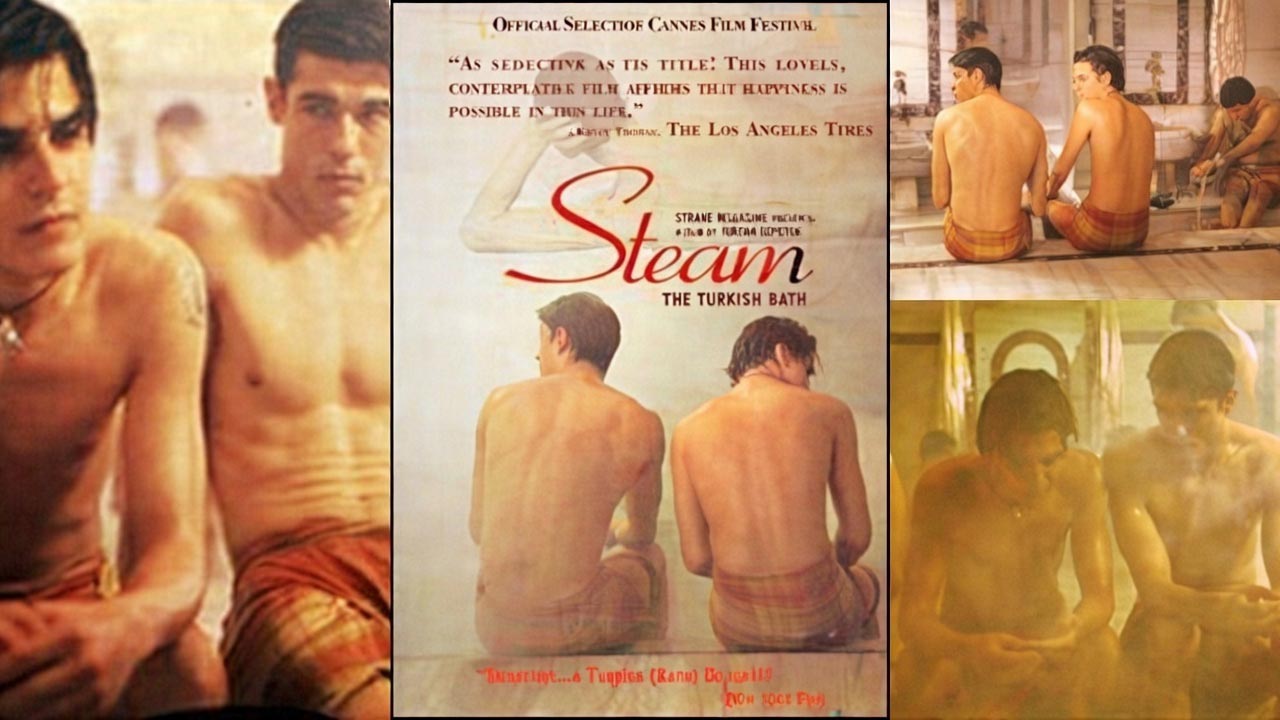




A crumbling hamam in Istanbul does what Rome never could: it slows Francesco down, strips away the noise, and leaves him face-to-face with desire he can’t file under “later.”


Steam: The Turkish Bath (Hamam, 1997) – When Istanbul Turns the Heat Up on Your Life
Some films don’t seduce you with plot twists. They seduce you with temperature. Steam: The Turkish Bath is one of those movies that feels like warm stone under your feet – slow, humid, intimate – and weirdly honest about what happens when a person finally stops performing their own life.
Francesco lives in Rome with Marta, and on paper they look like the kind of couple people envy: successful interior design firm, tasteful clothes, polished dinner conversations. In reality, their relationship is running on fumes. Marta is cheating with their business partner, Francesco is married to his workload, and the apartment is full of that cold silence that arrives when affection has been replaced by routine.
Then an unexpected inheritance drags Francesco to Istanbul. He goes there thinking it’ll be quick: sign the papers, sell the property, fly back. But Istanbul doesn’t care about your schedule. And what he inherits isn’t a neat little apartment – it’s a crumbling hamam, a traditional Turkish bath, watched over by Osman, his wife, and their son Mehmet (Memo).
The Hamam: a Place That Strips You Without Asking
The hamam in this film isn’t just a location – it’s a metaphor with steam. You enter, you sweat, you get scrubbed, and layers come off. Not just clothes, but habits, defenses, the “I’m fine” mask. That’s what happens to Francesco. Against his lawyer’s advice (and against every sensible business instinct), he decides not to sell. He stays. He restores the bath. And as the tiles come back to life, so does he.
It’s subtle, but you can see it: his face clears, his voice softens, he becomes friendlier, less tense. Istanbul doesn’t magically fix him – it simply gives him a rhythm where he can breathe again. And once he starts breathing, he starts feeling.
Mehmet: Desire That Feels Like Recognition
Mehmet isn’t written like a fantasy prop. Yes, he’s beautiful, but the real attraction is his calm presence. Francesco’s awakening isn’t treated like a shocking revelation – it’s more like recognition, as if his body quietly says: “Finally.”
There’s a line in the film that captures the mood of the hamam perfectly: “Hamam are strange places where morals get loose together with the bodies.” And that’s exactly the point. This is not a nightclub-outing gay plot. It’s a story about intimacy happening in daylight, through trust, proximity, and a space that allows you to be seen.
Marta Arrives: and Finds a Different Man
When Marta comes to Istanbul to end the marriage and confess her affair, she expects a fight. Instead, she finds a man who’s changed – and it irritates her because she can’t decide if it’s real or just a phase. Their confrontation is sharp and brutally human, not melodramatic. She isn’t a cartoon villain. She’s just someone who arrived late to a truth that was already moving.
And Francesco, for once, speaks like a person instead of a professional: he admits Rome made him miserable. He admits Istanbul has made him kinder. He admits that Mehmet gives him courage, listens to him, understands him. He’s not “experimenting.” He’s choosing a life.
Not Just Romance: Money, Power, and Danger
The film stays sensual, but it’s not naive. There’s a real-world tension running underneath: developers, pressure, local power, and the kind of danger that shows up when you refuse to sell what someone else wants. Francesco’s decision becomes more than personal – it becomes a stance. And the movie makes sure you feel the cost of that stance.
Why This Film Still Works
Steam: The Turkish Bath doesn’t lecture you about sexuality. It doesn’t ask you to clap for “representation.” It simply shows transformation as something physical and emotional: a man walks into a city to sell property, and the city sells him a new version of himself.
If you like films where desire is quiet, where atmosphere does half the storytelling, and where a place can change a person more honestly than therapy ever could – this one will stay on your skin for a while. Like steam.