

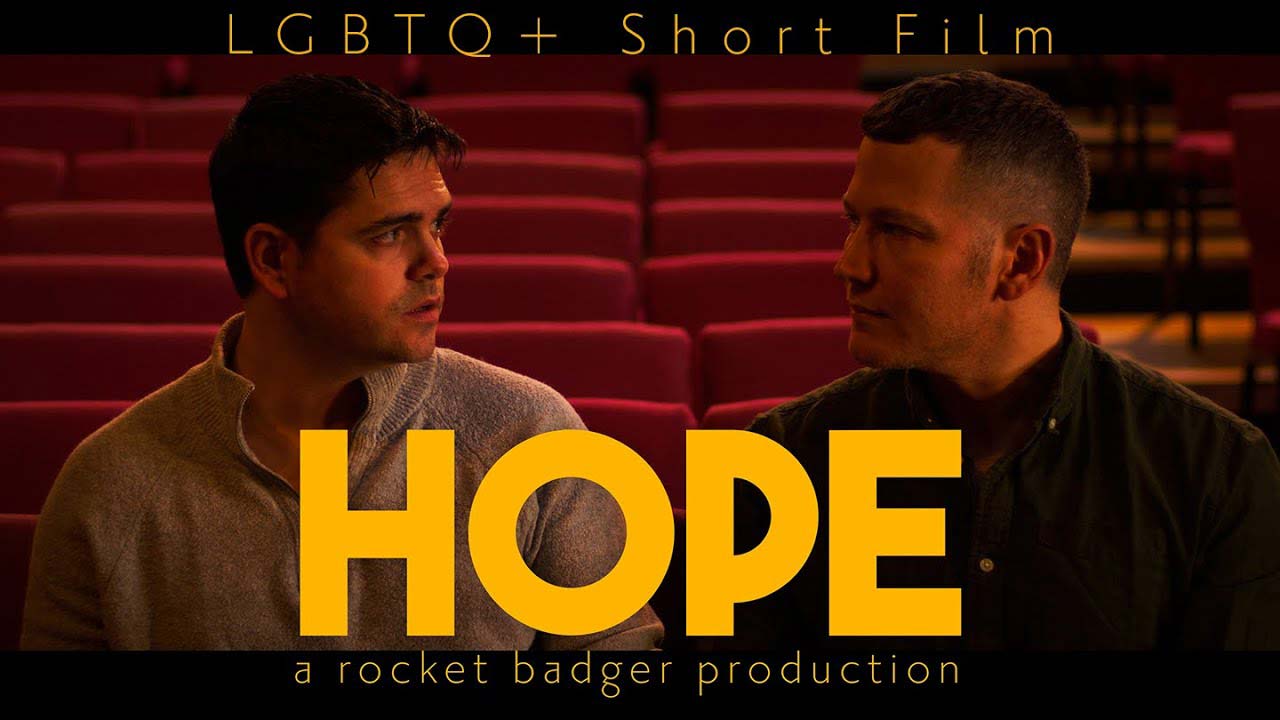


Hope by Katie Parker is a moving gay short film that explores themes of faith, identity, and the search for one’s place in the world we live in. In just 21 minutes, the story of the complex relationship between religion and LGBTQ+ identity is woven together.
Billy (Rich Dee) is a bisexual man struggling with homophobia in society and the religious community he belongs to. His chance encounter with Lucas (Kyle Brookes), a gay man who carries his own religious trauma, takes place in the quiet sanctuary of a church. Their conversation becomes a transformative experience, as they share their life circumstances that are troubling them and the dilemmas of finding the right path to accommodate their own homosexuality while maintaining their social status in society.
“The world wants you to be one or the other. But you know better than anyone that it’s not. So why choose to live?
This line from Lucas to Billy sums up the central struggle: navigating a world that demands conformity while yearning for an authentic life.
Rich Dee and Kyle Brookes are truly brilliant, showing all their confusion, fears, and emotions. Dee portrays Billy’s inner conflict between his upbringing and his true self. Brookes’ Lucas, meanwhile, exudes a quiet strength, his vulnerability surfacing in moments that feel both intimate and universal. Their chemistry is magnetic, and the viewers of this gay short film simply want to follow the story until the end.
“I think he would be disgusted by all the wars, the violence, the hatred, but I don’t think he would be too concerned about love, no matter what kind.”
This line from Lucas reflects the film’s compassionate perspective on faith, love, and humanity. It challenges rigid dogma while embracing the transformative power of love in all its forms.
And haven’t we all said a similar line to ourselves at least once?
Hope explores the problem most gay people have in fitting into an environment that doesn’t accept them or simply silently rejects them. Billy has his own perspective on religion and the way he interprets it.
The film also offers a thoughtful critique of social binaries. Billy’s reflections on his bisexuality confront the rigid categories imposed by others, giving voice to a struggle that is rarely explored in depth.
“You think you belong nowhere, but “Maybe that’s because you belong everywhere.”
This statement serves as a powerful reminder of the beauty in transcending narrow definitions of identity.
Katie Parker adds layers of meaning to the film. The church, a symbol of both comfort and conflict, is at the center of the narrative. Its vast, sacred spaces contrast with the intimacy of Billy and Lucas’ conversations, who throughout the film demonstrate a mutual trust that transcends their understanding of each other.
The paintings and frescoes in the church seem to encourage them to create what the church should stand for, which is love.
At a time when debates about faith and LGBTQ+ inclusion are as relevant as ever, Hope serves as a reminder that we must continue to fight against prejudice and false moral codes imposed by church fanatics. It joins the ranks of films like Prayers for Bobby and Disobedience em>, yet it stands out for its focus on portraying bisexuals and gay men who, despite having somewhat different perspectives on what surrounds them, find mutual understanding, empathy, and, at least for me as the writer of this review, love.
Katie Parker’s Hope is more than just a short film – it is a deeply lived call to compassion, individuality, and acceptance.
“Love is not about fitting into a mold. It’s about creating a space where you can thrive.”
This film will resonate with many gay men who have experienced struggles with their sense of belonging in the gay world and society at large. It is a story of hope, love, and the courage to find their place in a world that imposes false dilemmas and moral and religious norms.