


Some couples lose the spark. Sam and Dustin have a funnier problem: the spark is everywhere, just not always where they need it.


There is a very specific kind of dinner party where people pretend they are just making conversation, but what they really want is a full report on somebody else’s sex life. In *Just Between Us*, Sam and Dustin are that couple at the table. They are married, gay, comfortable, open, and therefore suddenly treated like a fascinating museum exhibit by their straight friends. You can almost hear the polite curiosity turning into, “So how does this actually work?”
The funny thing is that Sam and Dustin do not seem bothered by the idea of openness itself. This is not one of those stories where an open relationship is presented as a moral trap waiting to destroy everyone by the final scene. The film is smarter, kinder, and much more relaxed than that. Sam and Dustin are not in crisis because other men exist. They are in trouble because somewhere inside all the freedom, flirting, hookups, pool invitations, and outside attention, they have quietly stopped paying enough attention to each other.
That is a much more interesting problem.
Ben Baur plays Sam with a wonderful mix of confidence and panic. He is funny because he knows what he wants, until he suddenly realizes he may not know how to ask for it. Matthew Bridges gives Dustin a warmer, steadier energy, the kind of husband who has learned when to comfort, when to tease, and when to let Sam spiral for a moment without turning it into World War III. Together, they feel like a real couple, not just two actors placed in a “gay marriage” situation. There is history in the way they look at each other. There is also fatigue, affection, and that tiny married-couple telepathy where one eyebrow says an entire paragraph.
The setup is simple. After a dinner party where their open marriage becomes the evening’s spicy topic, Sam begins wondering when he and Dustin last had sex with only each other. Not with a guest star. Not with a bartender. Not with some gym fantasy. Just the two of them. The answer is not catastrophic, but it is enough to make him nervous. And once that thought lands, the film becomes less about sex and more about attention. Desire is still there, but it has become oddly misdirected. They have kept the door open, but maybe forgot to sit together in the room.
What I liked most is that Zac Hug does not punish them for wanting a playful marriage. There is no heavy lecture hiding under the comedy. The film does not say, “See, this is why open relationships fail.” It says something more human: every relationship needs maintenance, even the fun ones. Especially the fun ones, maybe. Because when a relationship gives you permission to explore, you can accidentally start treating exploration as the main event and your partner as the person who helps organize the schedule.
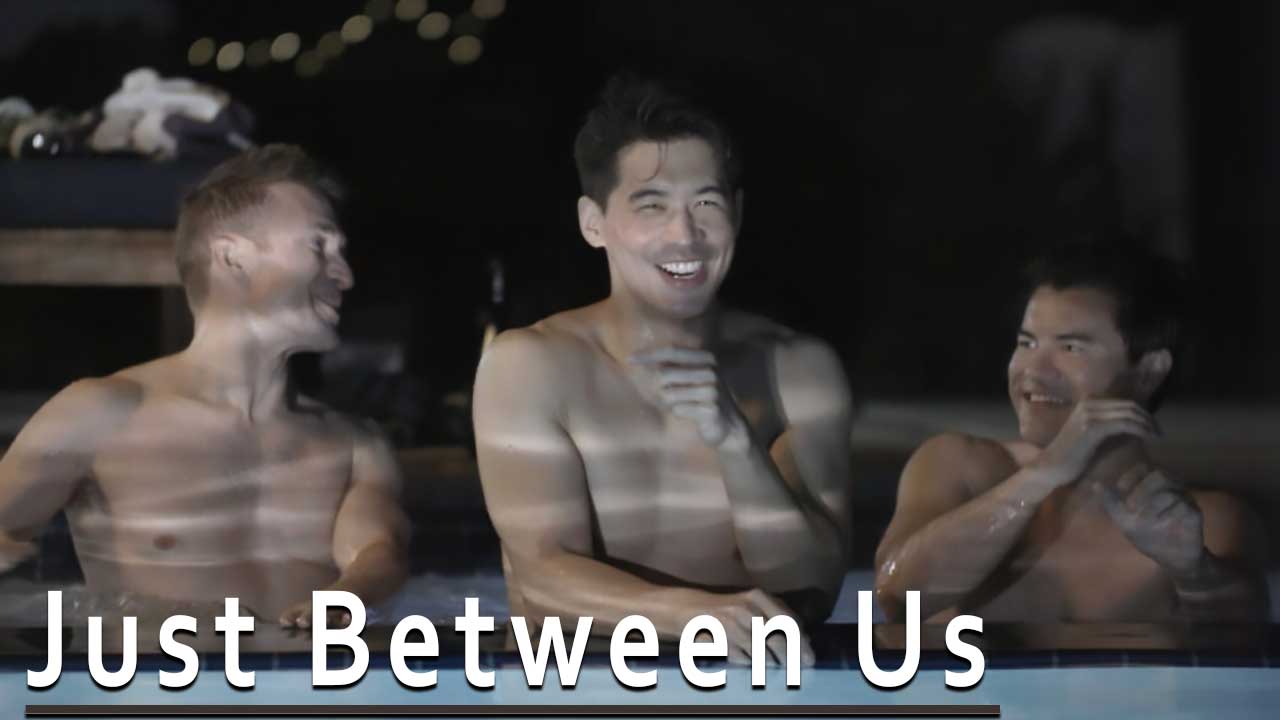
Eddie Liu, as Brayden, brings exactly the right kind of trouble. He is not a villain. He is not a threat in the melodramatic sense. He is simply attractive, available, flirtatious, and very aware of the effect he has when he smiles. The film uses him well because he represents temptation, but not destruction. The real question is not whether Sam and Dustin will be tempted. Of course they will. The question is whether they can enter temptation together without losing the thread between them.
The comedy has a light, sitcom-adjacent rhythm, especially in the moments where seduction keeps being interrupted by reality. A sexy surprise runs into a plumber situation. A romantic pool plan becomes something messier and more crowded. Bodies are ready, then emotions are not. It is all very gay, very summer, and very “we had a plan, then life walked in wearing swim trunks.”
But beneath the jokes, there is a genuinely sweet emotional center. The best scene is not the most sexual one. It is the conversation where Dustin tells Sam that he chooses him every morning. That line could have been sugary in a weaker film, but here it lands because it feels earned. Dustin is not promising that everything will suddenly become perfect. He is saying that love is not one dramatic choice made at the wedding and then left untouched forever. It is a daily decision. Sometimes it is sexy. Sometimes it is dishes, anxiety, plant-watching, bad timing, and sitting beside the person who knows exactly how you fall apart.
For a 16-minute short, *Just Between Us* manages to say quite a lot without pretending it has solved the entire philosophy of modern relationships. It is about communication, but not in that boring brochure way where everyone speaks like they just came from therapy homework. It is about two men trying to make their own rules, then realizing that even custom rules need care.
The film’s real charm is that it lets Sam and Dustin be adults without making them dull. They are sexual, silly, insecure, loving, and occasionally ridiculous. In other words, they feel alive. Their marriage is not interesting because it is open. It is interesting because it is theirs.
And maybe that is the point hidden inside all the flirting and pool water: the arrangement matters less than the attention. Whether a couple is monogamous, open, or somewhere in the wild middle, the question is still the same. Are you still choosing each other when nobody else is watching?
In *Just Between Us*, the answer is yes. Not perfectly, not neatly, but with enough humor, heat, and tenderness to make it feel real.