


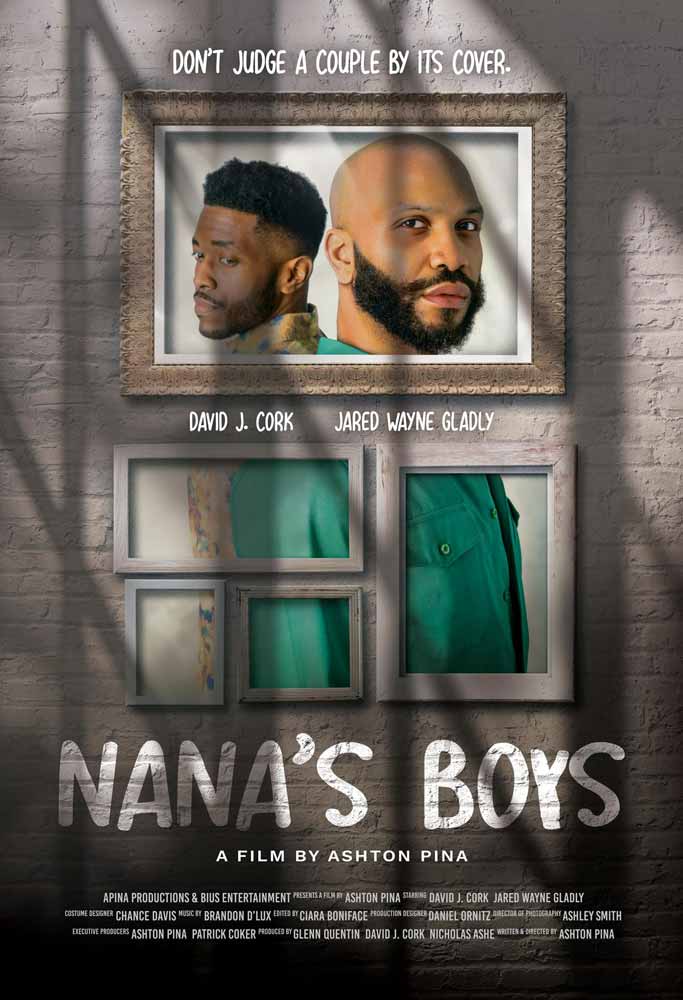
Nana’s Boys (2022) – Love, Lockdown, and the Things We Avoid Saying





Two men, one apartment, and the worst birthday “surprise” imaginable
Nana’s Boys is one of those small, intimate films that feels like you walked into someone’s living room at exactly the wrong moment… and then politely stayed, because leaving would be rude and also you’re emotionally invested now.
We start on Amari’s 30th birthday. Q is in full “I planned this down to the napkins” mode – breakfast, party, guests, a weekend getaway, the whole grown-up-couple checklist. Amari, on the other hand, is stuck in that quiet fog of “I should be happier than I am” – job stress, purpose stress, life-is-moving-and-I’m-not stress. The vibe is sweet, but you can already hear the glass cracking under the romance.
And then the city throws a brick through the window.
The lockdown setup is simple… and that’s the point
An explosion hits New York (Times Square), the mayor orders a mandatory lockdown, and suddenly everything goes dark – no power, no phones, no internet. Their plans get erased in one ugly minute. They’re stuck inside with candles, anxiety, and whatever they’ve been avoiding saying to each other for a long time.
This is basically a two-hander: two people, one space, one day, and a relationship that can’t hide behind brunch, work schedules, or “we’ll talk later.” It’s a pressure cooker movie, but not the screaming-plates kind. More like the “we’re being polite while bleeding internally” kind. Which is honestly worse.
Q and Amari: love is there… but so are the receipts
What I liked right away is that the film doesn’t pretend love is enough. Q loves Amari. Amari loves Q. Great. Now what? The real story is how they love – and what they do when fear shows up and starts rearranging the furniture.
Q is the planner. He’s the “decide who you’re going to be, then be it” guy. He talks like a man who has a calendar for his calendar. He also has that nervous need for things to make sense – a plan, a goal, a neat narrative where everything becomes successful eventually.
Amari is softer, more drift-y, more complicated. He’s dealing with grief (his Nana), self-worth, and that specific kind of anxiety that hits when you realize adulthood isn’t a door you walk through – it’s a treadmill someone turned on while you were tying your shoes.
They’re a believable couple because they’re not caricatures. They’re not “perfect gays” or “tragic gays.” They’re just two guys trying to stay kind while the relationship is asking for a truth audit.
The real explosion is what they never said out loud
Once the world outside becomes unsafe, the world inside gets honest. And this is where Nana’s Boys gets brave.
The film goes straight into the stuff couples hate talking about because it doesn’t come with a cute solution:
- grief that one partner understands and the other can’t fully reach
- sex – not as “spice”, but as emotional weather
- health fear, and how it changes intimacy
- secrets, especially the kind that start with “I didn’t want you to overreact”
- faith vs skepticism, and what people cling to when everything collapses
There’s a moment where a medical scare becomes part of the relationship math. Not as melodrama, but as a real reason someone could pull away physically and emotionally – and then feel guilty about it, and then get defensive about feeling guilty, and then spiral. You know. Normal couple stuff. Just with higher stakes.
And then there’s the trust conversation. The film doesn’t play it safe with vague hints. It goes into the messy territory: what counts as betrayal, what counts as survival, what you can forgive, and what you can’t un-know once it’s said.
“Nana’s Boys” isn’t just a title – it’s the emotional backbone
The Nana element could’ve been a cheap “aww” button, but it’s actually the soul of the movie. Both of them were raised by their grandmothers, and you feel how that shapes them – the love, the pressure to make her proud, the “don’t waste your life” voice living in your head even when she’s gone.
It also adds this quietly beautiful layer: even when the relationship is falling apart, there’s still a shared origin story. A shared language of being loved by someone older who held the world together with prayer, humor, and stubbornness.
And yes, the film lets Nana be funny. There are lines that cut the tension just enough to keep you breathing. That kind of humor feels earned here – like a coping mechanism, not a sitcom punchline.
What works best: intimacy, pacing, and the “stage play” feel (in a good way)
This movie is minimal, but not empty. The camera stays close, and the performances do a lot of heavy lifting. You’re watching micro-reactions, not big speeches. A glance, a pause, someone choosing the wrong word and then trying to pretend it was the right one.
Because it’s so contained, it sometimes feels like a stage play. And honestly, I mean that as a compliment. It’s dialogue-driven, emotional, and focused. When it hits, it hits because you’re trapped in the room with them, same as they are.
The pacing is patient too. It lets awkwardness sit. It lets silence do work. It doesn’t rush to “resolution” because some relationships don’t resolve – they just arrive at a truth and then figure out what to do with it.
Any weak spots?
If you need constant plot movement, this will feel slow. The lockdown is mostly a frame – the real action is emotional. Also, some lines are a little too polished, like the characters briefly become aware they’re in a movie and want to say something quotable. But the performances usually pull it back into reality before it turns into a monologue contest.
And the biggest “warning” (not a criticism) is that this is not comfort viewing. It’s not “date night, cute gay romance.” It’s “date night, and then you both stare at the ceiling afterward like… so, um… are we okay?”
So, should it go on Orvel.me?
Absolutely. Nana’s Boys is queer cinema in a very human register – intimate, specific, and emotionally honest. It’s about love, but also about the cost of not being honest inside love. If you like films where the drama isn’t manufactured by villains but by fear, grief, and miscommunication, this one is worth your time.
And if nothing else, it’s a strong reminder that planning a perfect birthday is cute – but the real gift is being able to sit in the dark with someone and still tell the truth.