


Down in Paris (2021): Gay Filmmaker, Long Night, No Easy Answers


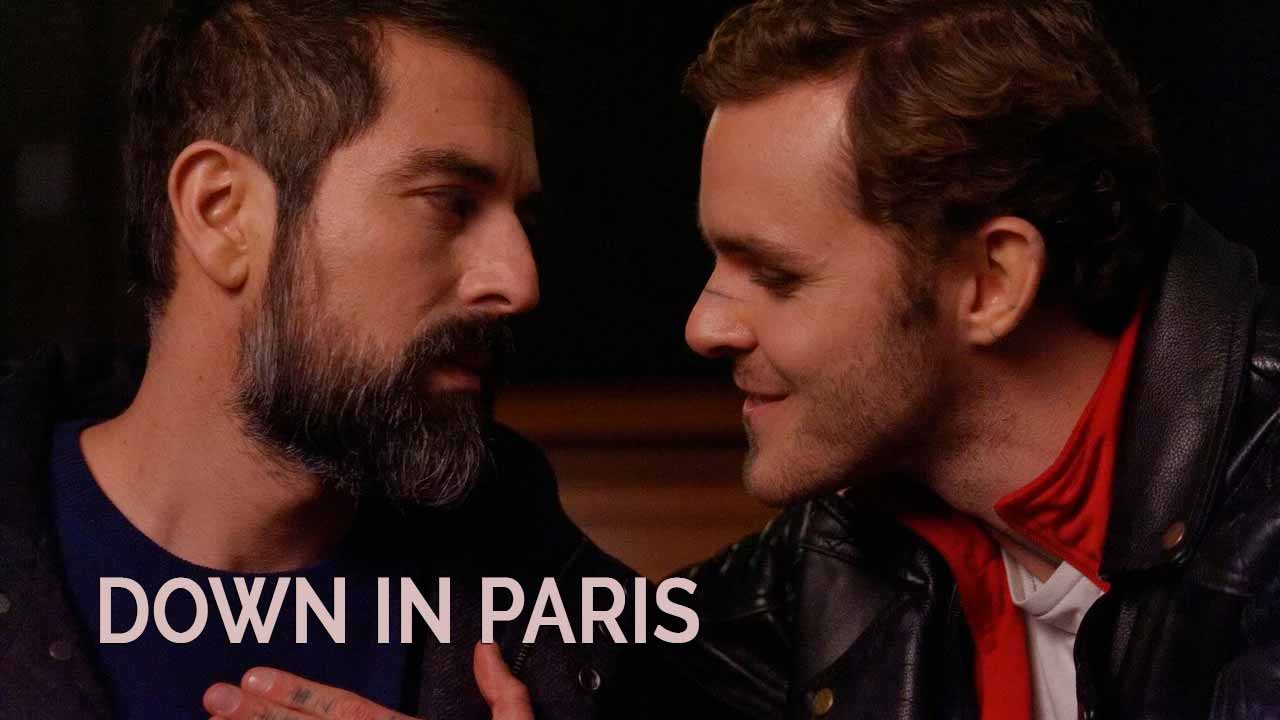
Down in Paris (2021) is one of those films that look very simple on paper – a filmmaker walks through Paris at night – but if you have ever had a proper midlife or creative meltdown, this will hit a little too close to home. This is not a “tourist Paris” movie. It is a film about being stuck in your own head while the city moves on without you.
When the scene – and your life – stop working
The film opens on a film set. Richard, a forty-something director, is trying to shoot a scene and everything feels wrong. The actors are fine, the crew is there, but something in him simply snaps. He calls for a break, walks away from the camera, and… just does not come back. It is not a diva tantrum, it is a quiet collapse. He realises he no longer believes in what he is making, and that is basically death for a director.
From that moment, the narrative turns into a long, sleepless walk through the city. Richard leaves the comfort of the set and wanders into a Paris that is not romantic but strangely empty, a bit hostile, and very honest. What follows is less “plot” and more a chain of encounters – people who, one by one, peel off the layers he has been hiding behind.
Small encounters, heavy truths
First we see him in the back of a car, listening to the driver talk about leaving a toxic, violent relationship. The story is messy, contradictory and painful, and Richard does what he will do all night – he listens, but also gently redirects the conversation away from the worst details. It is his way of admitting he knows something about fear and control, without actually saying it out loud.
Then there is the visit to the fortune teller. This could have been a silly scene, but it is one of the sharpest in the film. She reads him very quickly – the dead father, the wrong man he invested his heart and time in, the stuck feeling that comes when grief and love are all tangled together. She is blunt, almost rude, but you can see on his face that every word lands exactly where it hurts. It is like watching someone’s therapy session compressed into a few minutes.
Later he enters a church, looking for some kind of peace, and gets the opposite. The man he finds there is not comforting at all. He basically calls Richard out as an egocentric artist who hides behind his “work”, hungry for attention, applause and a red carpet to walk on. Underneath – he says – there is just a man who wants love and is terrified of being ordinary and alone. It is harsh, but again, not wrong.
In between, the film throws in scenes that remind us of the world outside Richard’s bubble: a racist outburst in a fast food place, a young migrant who is humiliated for having the wrong face in the wrong country, tired workers who just want to survive the night shift. Richard steps in, tries to defend, tries to understand, but also has to face the fact that his own problems, while very real, are still problems of a man with a passport, a flat and a career.
Queer history and old wounds
Down in Paris is a queer film, but it refuses to make a spectacle of that. Richard is a gay man, and the biggest emotional wound of the night comes from an old friend, Mathias. Years ago, Mathias was beaten up while Richard was in a relationship with the abusive Frédéric. When they meet again, the hurt is still there, and it is not about romance – it is about abandonment.
Mathias tells him, in his own quiet way, that the violence did not stop at the attack. The real violence was the silence that followed. Richard did not show up, did not stay, did not stand next to him while he healed. That conversation is one of the most honest in the film, because it talks about something gay cinema often skips – the damage done by people who are themselves victims, but who still hurt others by disappearing when things get difficult.
Down in Paris – The city that does not care if you fall apart
One of the strongest elements of the gay film is Paris itself. This is not the postcard city with soft focus and Eiffel Tower kisses. It is a city where the metro is late, the night air is cold, people are tired, and nobody really cares that one director is having a crisis. The canals, the bridges, the bars and side streets all feel real, slightly dirty, a little indifferent. The city does not hug Richard – it just gives him space to finally look at himself.
There are small, almost tender moments: a divorced woman in a bar trying to rebuild her life, a sex worker with more emotional intelligence than half the men in Richard’s past, a young boy by the canal who talks about fathers and fear with surprising clarity. Every encounter forces Richard to see another version of adulthood – some broken, some brave, all painfully human.
Falling apart to find a new frame in Down in Paris
By the time a cyclist literally crashes into him – the charming Claude, because of course the cute guy arrives via accident – Richard is exhausted but different. It is not a magical redemption. His problems are still there. His father is still dead. His past relationships are still complicated. Mathias will not forget the years of silence just because of one conversation.
But something shifts. When his assistant finally picks him up and they talk about the film again, he suddenly knows what is wrong with the project. He wants to strip away the fake drama and bring in the night he just lived – the real spaces, the honesty, the uncomfortable parts that do not fit into a neat three-act structure. His breakdown becomes material. His wandering becomes a new way of looking, and that is the closest this film gets to a happy ending.
Down in Paris is not for viewers who need clear answers and clean character arcs. It is for anyone who has ever stepped outside at night because staying at home with their own thoughts felt unbearable, and then discovered that the city, in all its noise and ugliness, is sometimes the only mirror that tells the truth. It is messy, talkative, occasionally heavy handed, but also strangely comforting – a reminder that you can be completely lost for a few hours, and still, somehow, find a way back to yourself.