Now It’s Different (2025): When a Love Letter Changes Everything





Now It’s Different (2025): When a Love Letter Changes Everything
Sometimes adulthood does not feel like a level up, it feels like getting dropped in a city you do not know with a dead phone and no map. In Now It’s Different our guide through that confusion is Josh, a soft spoken romantic who somehow ended up living the classic LA life: bad job, random hookups, and a quiet feeling that he left his real self somewhere behind.
He is not lost in space, he is lost in his own story. Once upon a time he believed in boy meets boy, boy falls in love, the end. Now it is more like boy meets app, app sends location, everybody leaves before sunrise. He plays along, but something in him is tired of all action and no conversation.
So he does something that feels almost old fashioned. He writes a letter.
The letter is addressed to a man he has been seeing for months, always in the dark, always without questions. Josh knows almost nothing about him except one detail that hit straight into his heart: the man once lost his dog. That tiny piece of grief is enough to connect them. In the quiet of those nights Josh feels seen, but never really known.
The monologue that runs through the film is basically Josh arguing with himself. Has growing up turned him into someone he does not recognize, or is he allowed to still want a love story even after life has disappointed him a few times? Reinventing himself was supposed to be progress, but it started to look more like erasing the parts he actually liked.
He realises that change should be about accepting, not deleting. You can let go of what no longer belongs to you, but the core of who you are is not negotiable. In his case that core is painfully simple: he still believes in love, and he still believes that words matter.
What the film does well is show how easily queer lives in big cities slip into a kind of autopilot. Apps, swipes, coded messages, the usual routine. You go to someone’s place, you spend an hour or two, and you leave knowing almost nothing about them except their body and maybe their taste in sheets. It is not shown as dirty or shameful, just empty.
Josh is not judging anyone, least of all himself. He is just tired. Tired of being a silhouette. Tired of performing intimacy instead of feeling it. So in his letter he dares to ask for something outrageous by modern standards: one actual meeting, in the real world, where faces are visible and names are spoken out loud.
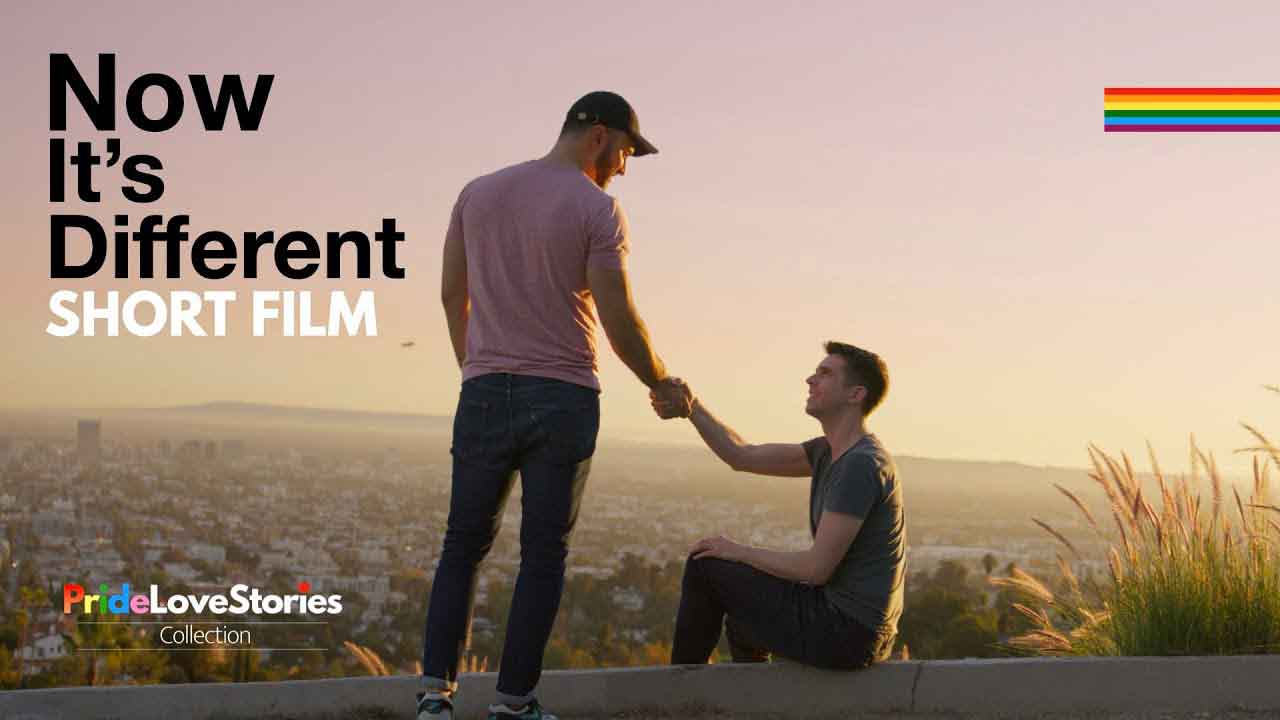
He draws a little map, chooses a scenic spot above the city, and invites the man from the dark to meet him there at sunset. It sounds cheesy, but the film treats it with sincerity. This is not about grand gestures, it is about risking rejection in a world where ghosting is easier than a simple “no”.
The last part of the film is pure quiet tension. Josh climbs what feels like an endless number of stairs, carrying not only his body but all his expectations. We see the view, the empty path, the soft LA light. It is the kind of place where two people could kiss in a movie poster and we would all sigh.
For a moment it looks like he might stand there alone, and the film knows exactly how that fear feels. What if the letter was too much? What if honesty scared the man away? What if this was just another one sided conversation?
Then, finally, he appears. The man from the dark steps into the light, slightly out of breath, slightly shy. His name is Dexter. He looks at Josh and simply says that he liked the letter. No fireworks, no declarations, no instant soulmates. Just two men who decided that maybe they deserve something a little more than anonymous shadows.
Now It’s Different works because it understands a very specific kind of queer loneliness. Not the dramatic kind with breakups and slammed doors, but the quiet ache of being surrounded by bodies and still feeling invisible. The film never mocks romance, even when it shows how naive it can be. Instead it gently suggests that hope is not childish, it is necessary.
Josh does not solve his life in thirteen minutes. He does not suddenly stop being confused or insecure. What changes is something smaller and more powerful. He allows himself to be seen, and he gives Dexter the same chance. The rest of the story, whatever it might be, begins after the credits.
If you have ever pretended that you are fine with shallow connections while secretly waiting for someone to read you like a letter, this little film will feel uncomfortably close. It reminds us that growing up does not have to mean giving up on love. Sometimes it just means climbing a few hundred stairs to meet it halfway.

A stoner psychic who talks to the dead gets roped into helping a murdered, closeted cop find a serial killer targeting gay men. When the mystery points straight to his own deranged family, things get hilariously messy and bizarrely touching.