


A straight cop and a gay clerk go undercover as a couple to catch a killer. It sounds bold, even smart. Then 1982 walks in, drops a joke, and dares you not to flinch.


Some movies age like fine wine. Partners ages like a neon cocktail left in the sun: still kind of interesting, slightly sticky, and you’re not sure you should be drinking it.
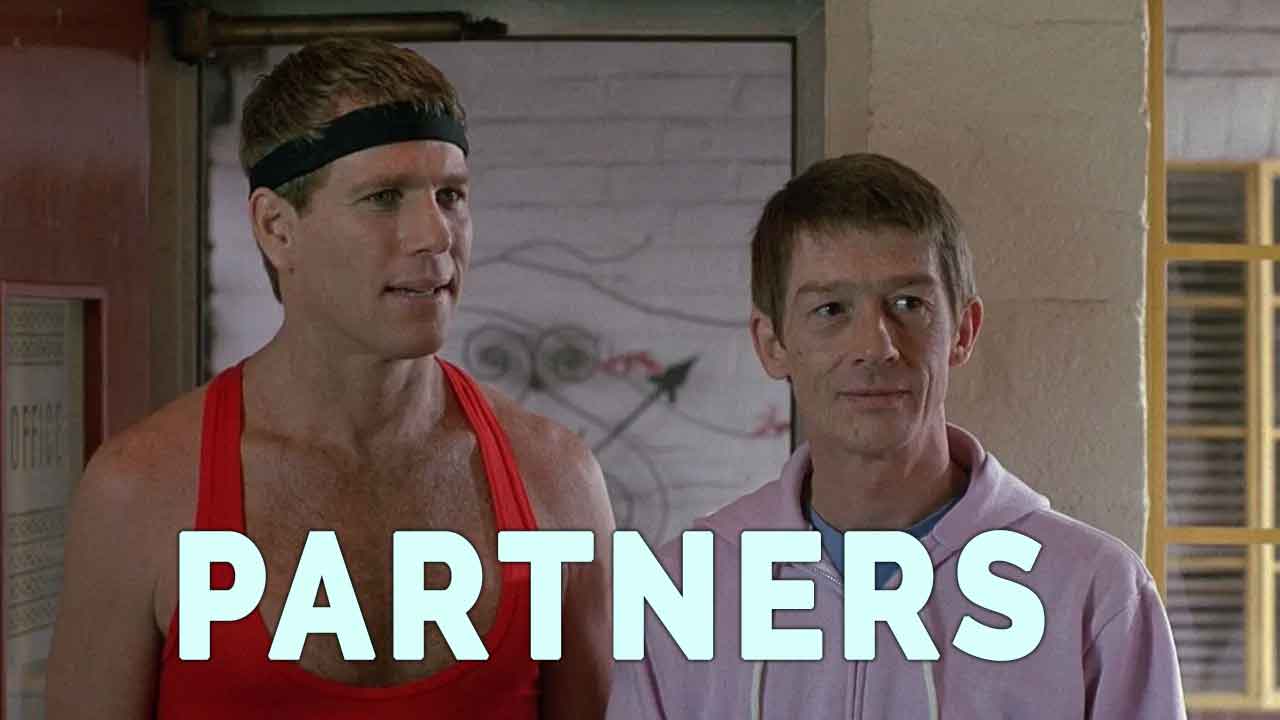
On paper, it’s a slick buddy-cop setup. A string of murders hits LA’s gay community, and the department decides the smartest move is to send a straight, macho detective (Ryan O’Neal as Sgt. Benson) undercover with a gay police clerk (John Hurt as Kerwin). The twist is the disguise: they’re not just “partners” on the case – they’re supposed to play a couple.
A premise that wants to be brave
You can feel what the film is trying to do. It wants to look mainstream and fearless at the same time. It wants the audience to laugh, but also to accept that gay people exist outside of punchlines. And for 1982, the fact that a studio movie even built a plot around an undercover couple in the gay scene probably felt like a small earthquake.
Then the movie opens its mouth.
The laughs: some land, some punch down
The comedy mostly comes from Benson’s discomfort. He’s tense, defensive, and constantly trying to “prove” he’s straight even when nobody asked him to submit paperwork. That discomfort is the engine of the jokes, and that’s where the film starts to wobble. When it’s poking fun at Benson’s fragile masculinity, it can be sharp. When it’s poking fun at gay men as a group, it slips into stereotypes so old they should qualify for a pension.
John Hurt, though, is the reason this doesn’t completely collapse. Kerwin could have been written as a cardboard “sassy sidekick” and nothing more. Hurt plays him with intelligence and restraint, like someone who’s spent years surviving a workplace that tolerates him only when he stays small. Even when the script goes broad, he tries to pull the character back toward something human.
The crime plot: functional, not thrilling
As a mystery, Partners does the job. You get suspects, red herrings, and an investigation that moves through clubs, media offices, and social spaces where the film clearly wants to look “in the know.” It’s not a nail-biter, and it’s not especially elegant, but it keeps moving, and that matters. The film is short enough to avoid overstaying its welcome, which is a polite way of saying: thank God it’s not two hours.
So why watch it now?
If you’re looking for a “good” queer film, this is not where I’d start. But if you’re curious about how Hollywood tried to handle gay representation in the early 80s, Partners is a weirdly useful artifact. It’s the sound of a mainstream movie trying to be progressive while still clinging to safe, familiar jokes. It’s clumsy, occasionally mean, occasionally sincere, and often revealing in ways it probably didn’t intend.
In the end, Partners isn’t a lost classic. It’s a conversation starter. And sometimes that’s enough: not because it gets everything right, but because it shows you exactly what “right” used to look like when the bar was sitting on the floor.