



In Pine Apple, nothing is said directly. It’s all heat, glances, and the kind of love you’re taught to fear before you even learn how to name it.


Red Dirt is a slow Southern burn that sticks to your skin
Some movies open with a bang. Red Dirt opens with weather. Not the cute kind. The kind that sits on your shoulders and makes every thought feel heavier than it should. “Heat. Heat.” is basically the film’s pulse, and once you’re in that Mississippi air, you understand why nobody in Pine Apple talks fast, loves out loud, or makes clean decisions.
This is a small, quiet story about a 20-year-old guy named Griffith, and the way a life can feel decided for you before you even get a vote. He’s stuck caring for his aunt, stuck inside family history, stuck inside a town where leaving feels like betrayal and staying feels like slow suffocation. And then a stranger shows up, and the whole place shifts by half a degree. That is all it takes.
Pine Apple, Mississippi: where silence has its own soundtrack
What I love about Red Dirt is that it doesn’t rush to “the plot.” It lets you sit in the house, the porch, the barn, the roads, the heavy pauses between sentences. You hear the insects. You feel the space. People here don’t confess things, they circle them. They joke, they nag, they sing, they snap, they stare out the window like the answer is hiding in the trees.
Griffith isn’t written as a slick, self-aware protagonist. He’s young, emotionally underfed, and kind of stunted by duty. He knows he wants “out there,” but he doesn’t know what “out there” even looks like. That’s the tragedy and the realism. When you grow up in a place that tells you to shrink, you don’t suddenly become brave because the script says so.
Lee Todd arrives, and suddenly the air has electricity
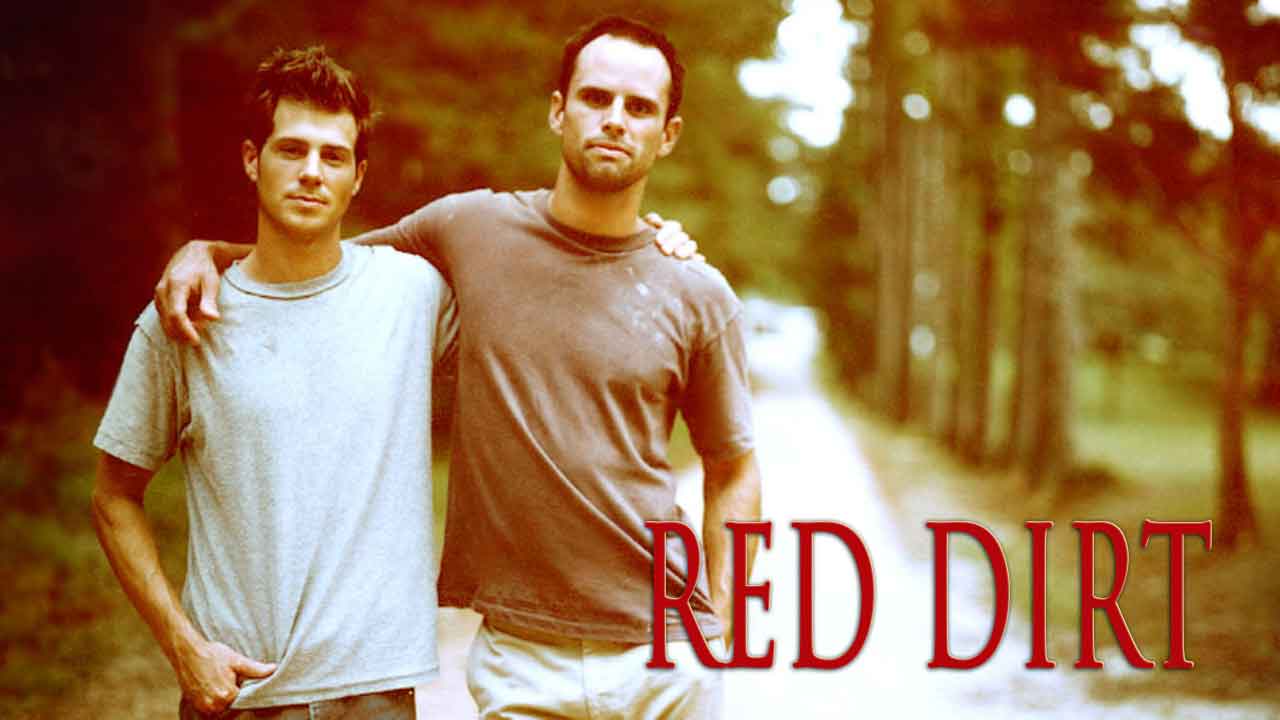
Enter Lee Todd, a drifter type with oil-rig energy and that calm confidence that makes everyone else look like they’re standing still. He rents a place, fixes things, moves through the town like he’s not afraid of it. And Griffith, who has been living in a bubble of obligation, starts orbiting him.
It’s not a loud romance. It’s not even a clearly labeled one. It’s that feeling you get when you meet someone and your body reacts before your brain can organize a speech. Their connection builds in glances, chores, little jokes, that shared “we’re not talking about it” tension. The film understands that in certain towns, desire doesn’t show up wearing a rainbow flag. It shows up as a long stare and a swallowed sentence.
There’s a great stretch where the two of them fall into a kind of friendship that looks innocent if you want it to, and looks dangerous if you’re honest. The barn, the climbing, the laughing, the “howl like a wolf” stupidity. It’s the kind of joy that feels illegal in a place built on repression.
The women in this film are not background furniture
If you think Red Dirt is only “a gay rural story,” you’re missing half the movie. The women here are a storm system all by themselves. Summer is volatile in that way where you can feel a lifetime of pain under every word. Lynn carries the kind of guilt that has settled into the bones of the family. And Emily is the human representation of what the town expects Griffith to choose: normality, stability, the path that keeps everyone comfortable.
But comfort is exactly the problem. Because the town is full of old secrets, and this is one of those stories where the past isn’t past. It’s in the silence, in the way people say “we don’t talk about that” as if it’s a prayer.
And here’s what the film does well: it doesn’t turn the women into villains just because a man is waking up. Emily’s fear and jealousy aren’t cartoonish. Summer’s instability isn’t played for cheap laughs. Lynn isn’t framed as a monster. Everyone is trapped in the same hot air, just in different rooms of the same house.
“Red dirt” as a metaphor, and as a stain
The title isn’t poetic for the sake of it. The “red dirt” is the place itself: beautiful, sticky, and impossible to fully wash off. There’s even a moment where someone comments that Griffith’s hair matches the color of the earth outside. It sounds like a flirt, but it lands like a sentence. You are from here. You look like here. You belong to the soil whether you want to or not.
And that’s why Lee matters. He represents motion. He represents “west” and “maybe Atlanta” and the idea that your life can be bigger than the family story you inherited. He doesn’t promise paradise. He just proves that leaving is a real option, not a fantasy.
Love without a label, and the fear that screams louder than desire
Red Dirt is a film about love that people can’t say out loud because the town has trained them not to. It’s about the kind of fear that turns into anger, the kind of longing that turns into denial, the kind of tenderness that has to hide behind “friendship” so it won’t get punished.
Near the end, Griffith finally articulates what this whole movie has been building toward: he doesn’t want to live a life where he loves someone deeply but fears it even more. That line hits because it’s not romantic in a shiny, movie way. It’s romantic in a bruised, human way. Like someone choosing honesty even if it costs them everything they’ve ever known.
So, is it worth watching?
Yes, if you like films that breathe. If you need constant plot and loud payoffs, this will feel slow. But if you enjoy character-driven cinema, Southern atmosphere, and stories where the most important thing is what people can’t say, Red Dirt is a quiet little gem.
It’s not a fairytale. It’s not a neat “and then they ran away together” fantasy. It’s something more believable: a young man standing at the edge of his own life, finally realizing that staying safe is not the same thing as being alive.
Watch it late at night. When the room is quiet. When you can actually feel the heat the movie keeps whispering about.