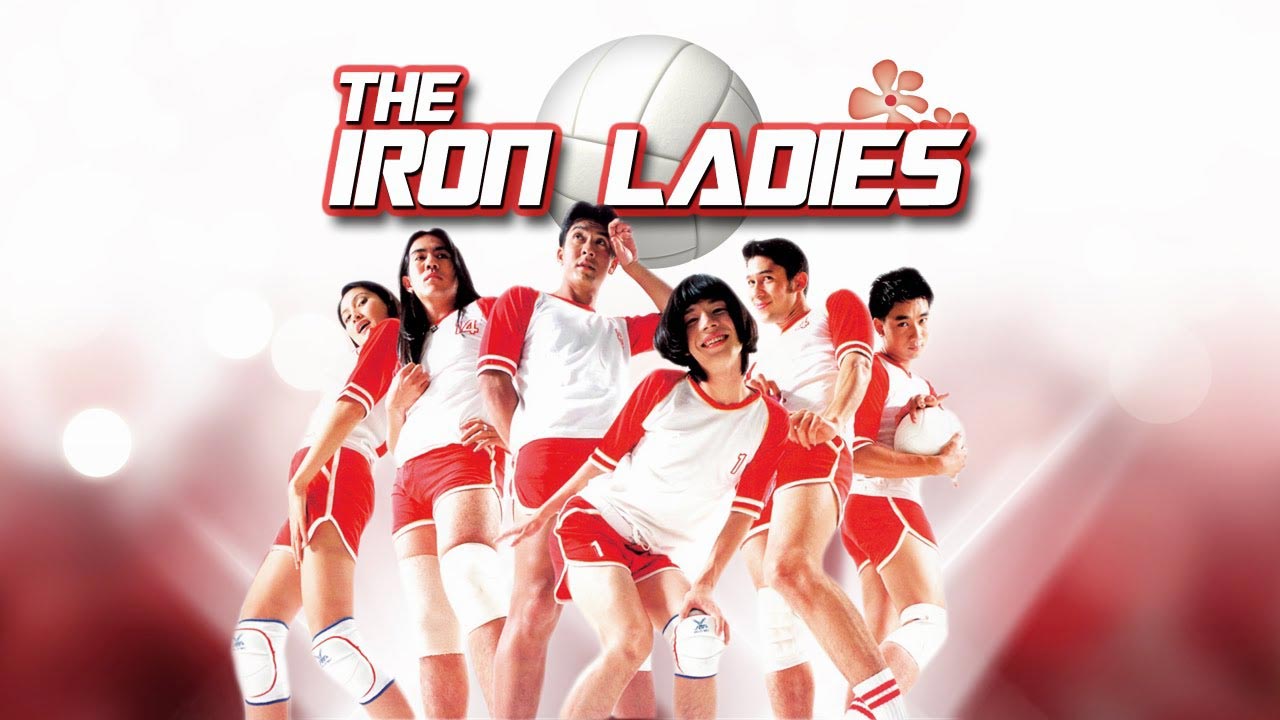




A bunch of players nobody wanted on a “men’s team” walks onto the court and refuses to shrink. The laughs come easy, but the best part is watching the world slowly run out of excuses.


The Iron Ladies (2000): Volleyball, glitter, and that sweet moment when the crowd shuts up and watches
The Iron Ladies (2000), also known by its Thai title Satree lek, is one of those films that looks like a light sports comedy, then slowly reveals it has teeth. It is funny, loud, and proudly crowd-friendly, but it is also built around something real: what it feels like to be talented, motivated, and still treated like a walking problem because you do not match what “a men’s team” is supposed to look like.
The story is set in 1996 and follows a men’s volleyball team from Lampang, a northern Thai city where everybody seems to know everybody, and everybody has an opinion about everybody. The film is based on true events, but it does not try to act like a documentary. It does what good mainstream comedies do: it uses charm, exaggeration, and momentum to get you invested, then it hits you with the uncomfortable bits when you are already rooting for the underdogs.
The setup: a team rebuilt out of the people society keeps rejecting
At the center of the film are Mon and Jung, two queer players who are talented enough to belong on the court, but constantly treated as a problem off it. When they join the local volleyball team, the reaction is immediate and predictable: a big chunk of the existing players quits. Not because the new players cannot play, but because the old players cannot handle the idea of sharing a “men’s space” with people who do not perform masculinity the way the neighborhood expects.
This is where the film’s engine kicks in. Coach Bee, instead of begging for approval, decides to rebuild. And the rebuild is not polite. It is not quiet. It is a full-on “fine, we will make our own team” moment. Mon and Jung start recruiting friends and acquaintances who are also tired of being told to stay in the background. The tryouts become less about finding perfect athletes and more about gathering the people who have something to prove, whether they say it out loud or not.
That lineup includes Wit, who is still keeping parts of his life carefully hidden, especially from his fiancée. It includes Pia, a dancer with stage confidence and zero patience for anyone’s fake politeness. And it includes Nong, a gay army officer who has his own reasons for playing it tough. The point is not that they are all the same. The point is that they are all used to being judged first and understood never.
Comedy that actually comes from character, not cruelty
Let’s be honest: queer sports comedies can sometimes slip into lazy jokes, especially older ones. The Iron Ladies does flirt with broad humor, but its best moments are the ones where the comedy comes from personality, not humiliation. You laugh because the team is chaotic, because their confidence is sometimes bigger than their planning, because they argue, flirt, panic, and hype each other up like real friends do.
What helps is that the film keeps the characters active. They are not props. They make choices, they mess up, they recover, and they keep moving. Even when the film turns the volume up, it still treats the team like a group of people with pride, dignity, and stubbornness, not just a “message.”
From side-eye to applause: the tournament arc
Once the competitions begin, the prejudice stops being background noise and turns into obstacles. Match officials complain about appearance. Opponents smirk. People look for excuses to disqualify them. It is that classic sports-movie pattern, but with a twist: the threat is not just “they will lose the match.” The threat is “they will be erased before the match even starts.”
And then, slowly, the film plays its favorite card: performance. When the team starts winning, the audience starts changing. The crowd does what crowds do. At first they come to stare. Then they stay to cheer. Then they start defending the team like it is their team. It is messy and maybe a little too optimistic, but it is also satisfying because it shows something that happens in real life too: sometimes the world only respects you after you refuse to disappear.
Why it works: it is a sports movie first, and that is the whole trick
The smartest thing The Iron Ladies does is that it commits to the sports-movie structure. Training, setbacks, teamwork, rivalry, big games, big emotions. That structure is familiar, which makes the film accessible even to viewers who do not come in for LGBTQ themes. And once you are inside that structure, the film can show you the uglier parts of social prejudice without turning into a lecture.
It also gives the team a real chemistry. The friendships feel like friendships. The conflicts feel like real tension, not just plot machinery. And the victories feel earned because you have watched them fight for the right to even stand there.
The heart of the film: visibility, confidence, and the cost of being yourself
Under the jokes and the fast pace, the film keeps returning to one idea: visibility is expensive. Being openly queer, or visibly gender-nonconforming, is not just a personal trait in a conservative environment. It becomes a public argument. It becomes a reason for strangers to police you. It becomes an excuse for gatekeepers to say “rules are rules” when what they really mean is “we do not want you here.”
And yet, the film also celebrates the power of confidence. Not fake confidence, not performance for approval, but that deep internal decision to stop begging. The team does not ask for permission to exist. They just show up, play, and force everyone else to deal with it.
Final verdict: funny, uplifting, and still surprisingly sharp
If you want a film that is easy to watch but not empty, The Iron Ladies delivers. It is warm, fast, and entertaining, with enough bite to make it more than a simple feel-good comedy. It has the classic underdog rush, but with a queer heart that never apologizes for itself.
Yes, it is a mainstream comedy, so sometimes it goes broad. Sometimes it leans into big moments. But even when it exaggerates, it does not lose the core: a group of people who are tired of being treated like a punchline, stepping onto a court and taking their space anyway.
In short: if you like sports movies, you will probably enjoy it. If you like queer cinema, you will definitely recognize why it matters. And if you have ever been told you “do not fit,” this one feels like a small, loud victory.