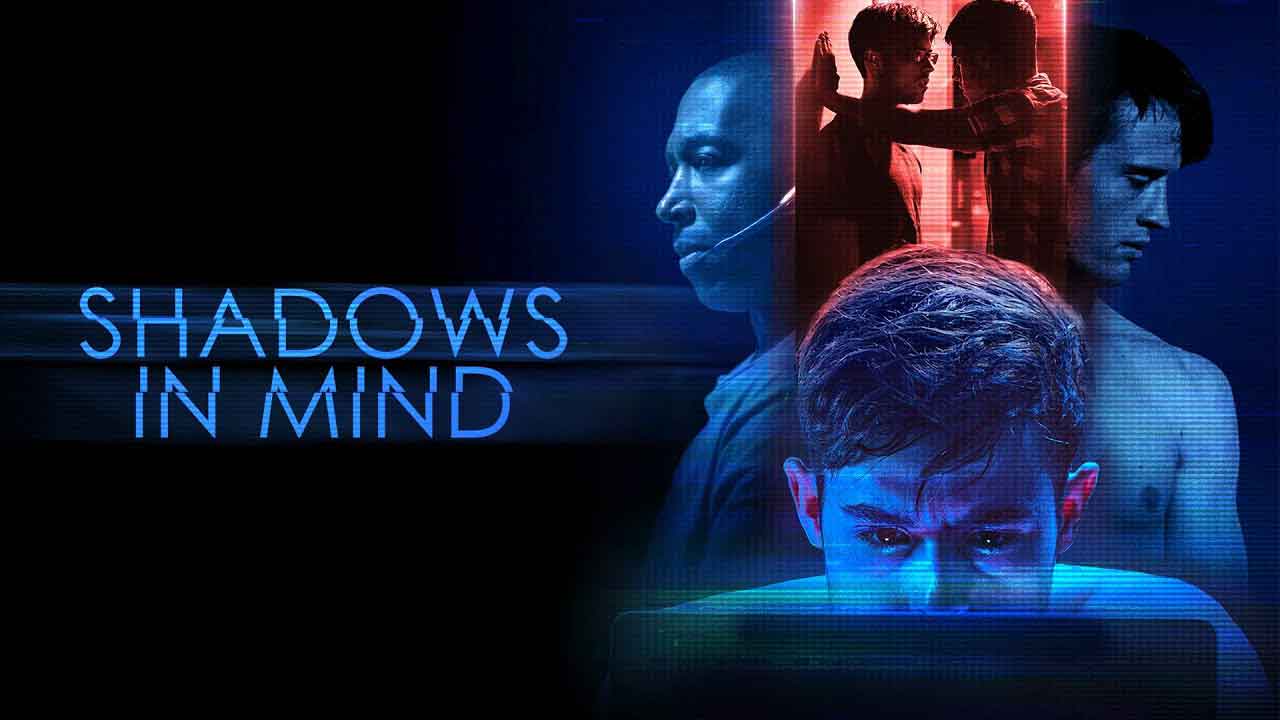





“Shadows in Mind” (2023) starts quietly, almost deceptively. A phone ringing. A tired voice on the other side. Simon works at an LGBT crisis hotline and he has the posture of someone who already thinks he has seen it all. He is new, barely a week into the job, and you can feel that early-stage burnout creeping in. Too many prank calls, too much emotional noise, not enough real danger.
Then Danny calls. Calm. Polite. Almost relaxed. He says he is taking oxycodone. Not panicking, not crying, just stating facts. And suddenly this is no longer another anonymous shift for Simon. This is a ticking clock.
From the very beginning, the film traps you inside that conversation. You don’t watch events unfold. You listen to them. You lean forward, just like Simon does, trying to catch tone changes, pauses, small verbal cracks that might mean hope or finality.
A Suicide Call That Isn’t Just a Suicide Call
At first, everything points toward a familiar structure. Hotline worker tries to keep the caller talking. The caller resists giving details. Names, locations, anything that could bring help. Danny doesn’t want rescue. He wants control.
What slowly becomes clear is that Danny is not calling to be saved. He is calling to be heard. And more than that, he is calling to confess.
The story turns sharply when Danny admits this is not only about his own death. He plans to kill others as well: Kyle, his boyfriend, and Lance and Christian, a wealthy married couple who orbit Kyle’s life like untouchable gods with money and connections.
In that moment, the hotline stops being a safety net and becomes a courtroom. Simon is no longer just a listener. He is the only witness Danny has chosen.
Love, Power, and the Price of Entry
Danny’s memories unfold in fragments, but they feel painfully recognizable. Dating apps. The thrill of attention. Being pulled into a lifestyle that looks glamorous from the outside. Kyle is charming, confident, already comfortable in that world. Danny is not.
Lance and Christian sell freedom as a philosophy: no jealousy, no rules, no limits. On paper, it sounds progressive. In reality, it’s power dressed up as liberation. Danny is young, lonely, eager to belong. He wants love. They want access.
The film is careful not to paint this as cartoonish evil. That’s what makes it unsettling. Everything is presented as normal. Casual dinners. Casual drugs. Casual sex. And slowly, consent becomes something everyone assumes instead of something anyone asks for.
When Trauma Becomes Evidence
The darkest moment of the film is not violent in a traditional sense. It’s administrative. Danny sends Simon a zip file and forces him to open it: videos, documents, proof.
This is where “Shadows in Mind” makes a smart and brutal choice. It refuses to sensationalize. There is no erotic framing, no indulgent camera work. The footage exists only as Danny’s weapon and his wound: trauma turned into evidence because he cannot carry it alone anymore.
The dark web subplot is not really about technology. It’s about entitlement. The belief that money and infrastructure can erase accountability. The villains don’t think they are evil. They think they are safe.
Simon as the Silent Battleground
Simon is the emotional core of the film. He begins detached, sarcastic, slightly cruel in the way people get when they handle pain for a living. But Danny’s story forces him into a moral corner.
He cannot save everyone. He cannot rewrite what already happened. All he can do is stay present while being psychologically dragged through someone else’s collapse.
The real question the film asks is brutal and honest: what does “doing your job” mean when the person on the line refuses to be saved? Is listening enough, or is it just another form of helplessness?
No Clean Ending, No Easy Comfort
“Shadows in Mind” does not offer a clean catharsis. It doesn’t reward the audience with simple justice or emotional closure. Instead, it leaves you with discomfort, exhaustion, and the lingering sense that this story could happen again tomorrow, with different names and the same dynamics.
This is an indie thriller, but it plays more like a confession booth for modern exploitation: loneliness, power, and how easily desire can be weaponized when one side holds all the cards.
It’s not an easy film. But it’s a necessary one. And once it’s over, it stays in your head longer than you’d like, which is probably the point.