

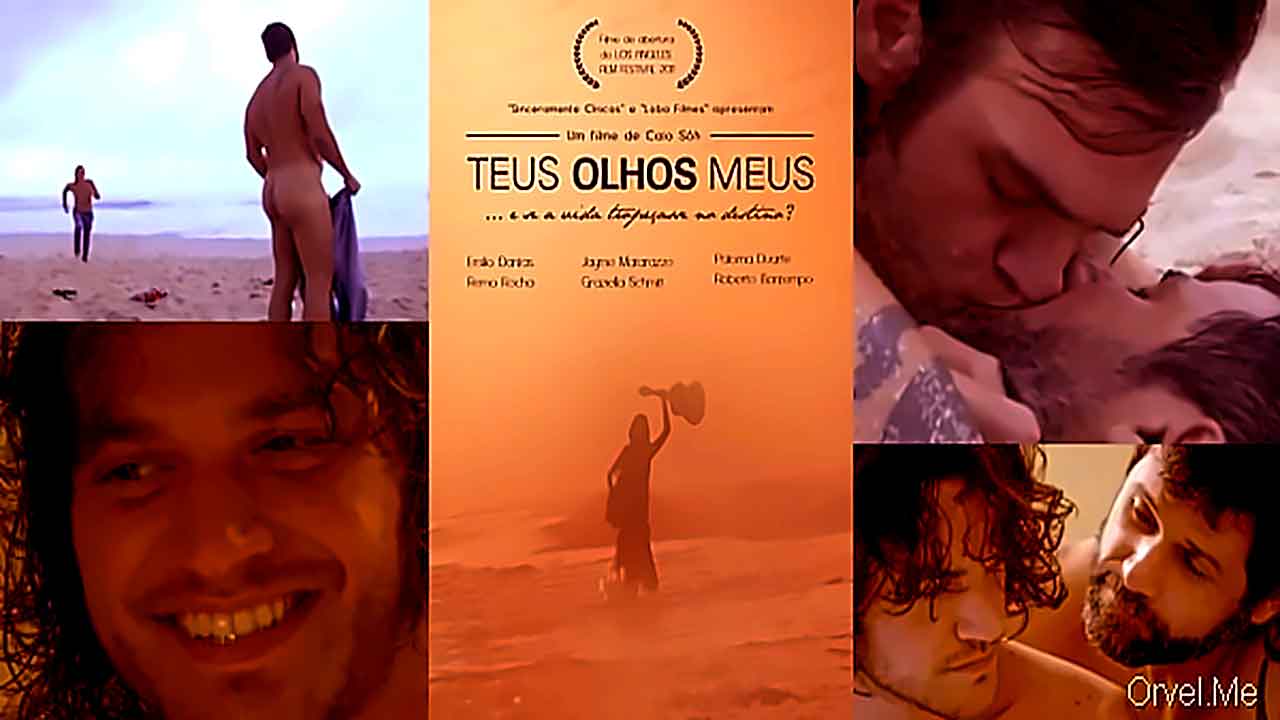




Some people enter our lives as shelter, not as a solution. Soulbound is about those fragile connections that feel like love, even when they are built on loss, silence, and unfinished lives.


Soulbound (2011) - Teus Olhos Meus
Some films arrive quietly and stay that way. Soulbound is not interested in being loud, dramatic, or neatly explained. It simply opens a door, lets you watch a few people collide emotionally, and then leaves you alone with the consequences.
Gil is young, restless, and already tired of home. His life is shaped by arguments, alcohol, and the kind of emotional neglect that does not leave visible scars but slowly eats away at you. He writes poetry, plays guitar, and dreams of something else, though he cannot quite name what that “something” is. After a violent argument with his father, Gil leaves without a plan, without money, and without a clear destination. The road becomes both escape and punishment.
This is where Soulbound slows down and starts observing rather than explaining. Gil drifts. He meets people, plays music, sleeps where he can, and lives in that fragile space between freedom and vulnerability. Then he meets Otávio, a music producer who is older, calmer, and clearly carrying his own unfinished emotional baggage. Their connection feels immediate, but not in a romantic movie way. It feels hesitant, cautious, and quietly charged.
The relationship between Gil and Otávio is the emotional core of the film, and it is handled with restraint. There are no grand declarations, no big cinematic gestures. Instead, the film focuses on glances, silences, shared moments, and the uneasy awareness that both men need something the other may not be able to give. This is not a fantasy romance. It is a temporary shelter built from mutual loneliness.
Emilio Dantas gives Gil a raw, almost uncomfortable authenticity. He feels young in the way real young people feel, impulsive, wounded, and often unable to articulate what hurts. Remo Rocha’s Otávio is quieter, more guarded, and emotionally worn down by experience. Together, they create a dynamic that feels believable precisely because it is unbalanced. One is still becoming someone, the other is already tired of becoming.
Visually, Soulbound leans into intimacy rather than polish. The camera often stays close to faces, hands, and bodies, creating a sense of emotional proximity. Some scenes feel fragmented, almost unfinished, as if we are only allowed to witness parts of these characters’ lives. That approach will frustrate viewers looking for a clean narrative arc, but it fits the film’s emotional logic. Life rarely explains itself while it is happening.
Music plays an important role, not just as background but as an extension of Gil’s inner world. His guitar and songs are not decorative. They are how he processes pain, attraction, and uncertainty. The soundtrack blends naturally into the story, reinforcing the feeling that this is less a plotted drama and more a slice of emotional experience.
The film’s final act is where Soulbound divides its audience. Without giving anything away, the story takes a turn that feels abrupt, even cruel. Some viewers see it as shocking or frustrating. Others recognize it as honest. Not every connection is meant to last, and not every moment of love arrives at the right time. Sometimes people meet simply to change each other, not to stay.
What makes Soulbound linger is its refusal to comfort the viewer. It does not promise healing, redemption, or clarity. It understands that for many queer people, especially young ones, love can be both salvation and risk. It can offer warmth while quietly leading you somewhere you are not ready to go.
This is not a film for everyone. If you need clear answers, tidy endings, or easily labeled emotions, Soulbound will test your patience. But if you appreciate character driven stories, emotional ambiguity, and films that trust silence as much as dialogue, this one has a quiet power.
Soulbound is about encounters that feel necessary even when they hurt. About people who meet at the wrong moment and still leave marks that never fully fade.










1 comment