



A Love That Was Never Named: The History of Sound (2025)
The History of Sound is not a film about running away. It is about leaving and living with what that decision does to you. Quietly, patiently, without excuses.
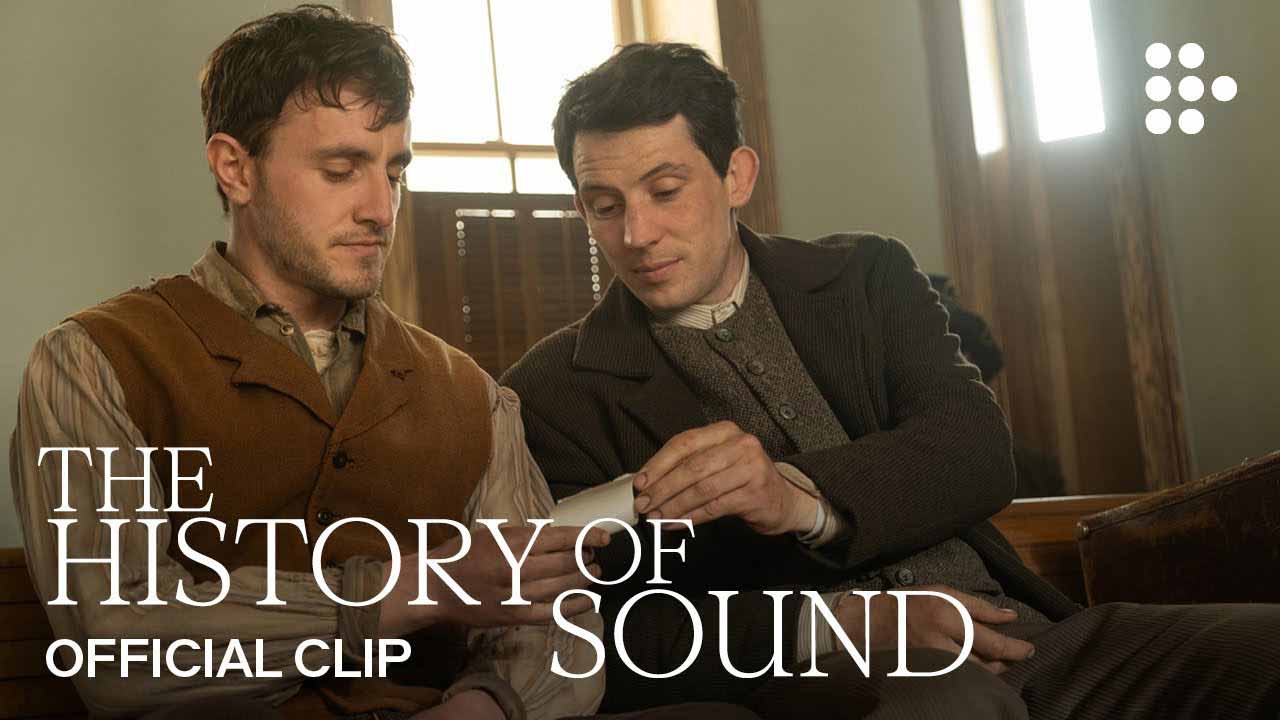
Set during and after World War I, the film follows Lionel Worthing, a man whose life is shaped by sound, memory, and a single choice that never fully stops echoing. Music brings him together with David, another young man attuned to old songs and disappearing voices. What begins as shared curiosity slowly turns into something deeper, not declared, not claimed, but deeply felt.
Listening instead of speaking
Lionel comes from rural Kentucky, surrounded by folk songs that exist only because someone remembers them. David comes from elsewhere, more educated, more composed, emotionally guarded. Their bond is built not through romance, but through listening. They hear the same things in songs, the same weight in voices that history rarely bothers to preserve.
Their journey to record folk music is practical on the surface, but emotionally it is something else entirely. They are trying to save what is already disappearing. Voices. Moments. A version of themselves that exists only in that narrow space where nothing has yet been decided.
Leaving, and what follows
When the war intervenes, the connection is interrupted without ceremony. Later, Lionel returns home, not triumphantly, not defeated, just changed. His mother looks at him and notices what matters most: that he isn’t happy. She tells him, simply, that things might have been different if he had stayed.
In that moment, the film briefly stops being historical and becomes painfully present. It opens the door to every life not lived, every person left behind, every version of ourselves that exists only in memory. The film doesn’t answer that question. It lets it sit there, unresolved exactly the way it does in real life.
A man who does not run
This is where The History of Sound makes a crucial distinction. Lionel does not run from his life. He doesn’t rewrite the past or invent justifications. He moves forward, but he carries what he has done with him.
He builds a life. He works. He connects with people. For a while, someone even walks beside him. But the film never pretends that proximity equals presence. Lionel is there, emotionally honest, open, trying yet his heart remains tuned to a frequency set years earlier.
When that later relationship ends, it isn’t because Lionel is distant or cruel. It ends because the other person carries a fear that predates him. He doesn’t argue. He doesn’t defend himself. He absorbs it, the way he absorbs everything else in this film.
Memory as sound
Music becomes the only place where Lionel allows himself to fully return. Songs carry what words never did. Letters are written and left unanswered. Time passes. Life continues. But the sound remains.
Director Oliver Hermanus lets scenes breathe. Silence matters. Voices recorded once and never again are treated with reverence. The film understands that memory doesn’t announce itself loudly, it hums underneath everything, shaping who we become.
The life that stays with you
The History of Sound is not about regret as spectacle. It is about the quieter ache of acceptance. About knowing that some choices define you not because they were wrong, but because they mattered.
Lionel doesn’t flee his past. He lives with it. And that, the film suggests, is sometimes the hardest form of courage.