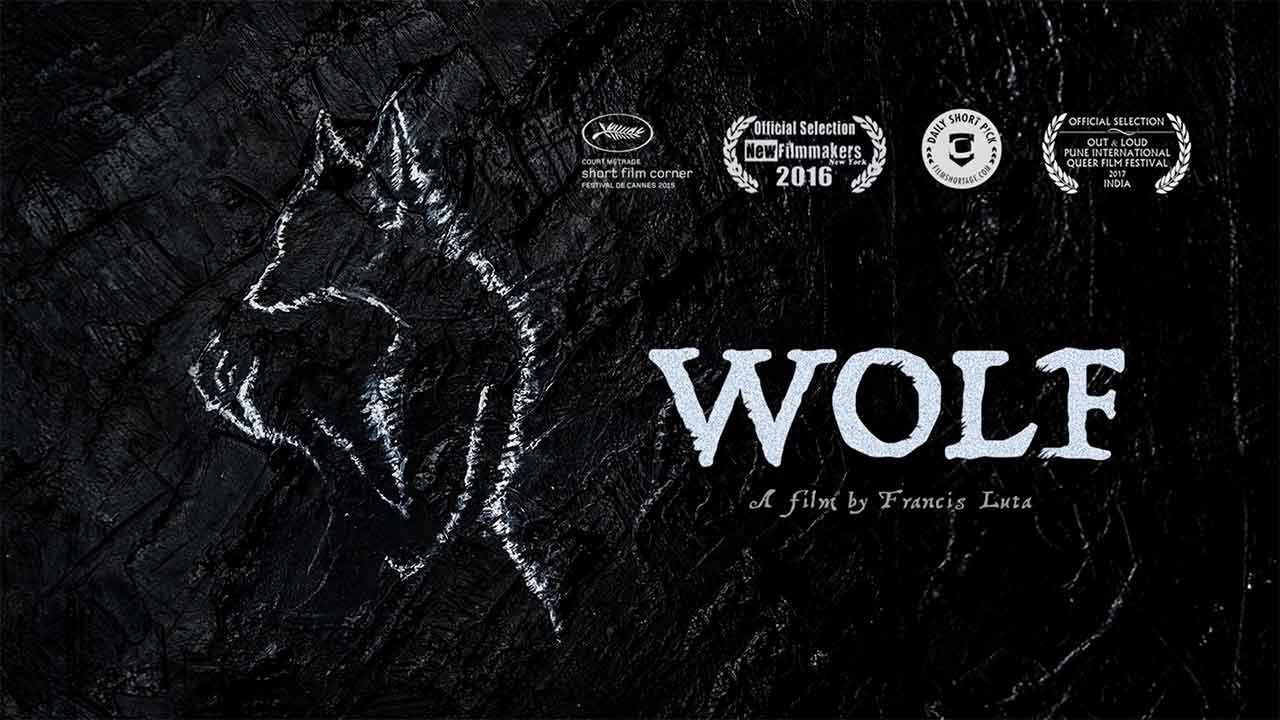




Wolf (2015) is one of those short films that walks in like “just another night” and leaves you with that small, annoying feeling that something in you got poked on purpose. It’s only about 18 minutes, but it packs a whole messy emotional suitcase: work you don’t own, people you don’t click with, a party where everyone is offering something, and a kiss that lands like a confession instead of a romance.
The film doesn’t dress it up. It doesn’t go “aww, poor artist boy.” It goes: here, look at him trying to stay composed while his inside voice is screaming.
“It’s not my piece” and that quiet kind of suffocation
We start with small talk that’s not really small talk. Someone asks, “So what are you doing tonight?” and the answers already tell you everything about this world. One person is going to Robert’s party. Another is going to a dinner with execs because “contracts don’t always happen in an office”. Translation: even fun is networking, even breathing needs a business plan.
Our guy is Gael (Dalton Bolton), a young artist who sounds like he’s running on fumes. When he’s asked how the piece is going, he says, “It’s there.” That’s not confidence. That’s survival.
Then comes the line that basically summarizes his inner weather: “Well, it’s not my piece.” And right after that, the little knife twist: “So really, who cares how it’s going?”
That’s not laziness. That’s identity fatigue. That’s what happens when you’re making art that belongs to somebody else, orbiting a name like a moon that’s starting to hate the planet.
And the name is Rudi (Christopher Behnisch). People say Rudi cares. People say Rudi matters. But Gael’s frustration says something else: that working “for a guy like that” isn’t a job, it’s a slow swallow of your own voice.
Of course someone gives him the simple, brutally correct advice: “You’re an artist. Start working on your own shit.” Which is true, but also sounds impossible when you’re stuck inside someone else’s gravitational field.
Black paint, black mood, black everything
There’s a moment that I love because it’s simple and mean in the way real life is simple and mean. Someone looks at his work and says, “You really need to stop using black.” Like it’s a bad habit. Like it’s a style choice. Like he can just swap “black” for “light blue with optimism.”
Gael answers, “It’s what I’m made of.”
That line is not just about color. It’s about how some people live with their darkness like it’s part of the furniture. You don’t throw out the couch. You just sit on it and pretend it doesn’t smell like old regrets.
Lou, the adult-world checkpoint
Before the night fully turns, the film gives us another flavor of pressure, the polished one. Lou (Chris Beck) comes with that “adult world” energy, the kind that lives in restaurants and professional posture. There’s talk of dinners, execs, contracts. It’s the reminder that even if you don’t go to the party, you still have to perform. You still have to show up somewhere and pretend you’re fine.
Gael doesn’t seem fine. He seems like he’s trying to decide where he belongs, and whether any of these rooms will ever feel like home.
The party: where everyone is selling something
Then we hit the party energy, and the film gets sharp. Parties in movies are usually either glamorous or chaotic fun. This one feels like a marketplace. People talk, judge, offer, push. Nobody’s listening, everybody’s scanning.
Josh (Ray Chaaya) and Tyler (Vasilios Filippakis) float through the scene like they’ve seen this story a hundred times and already know how it ends. Not cruel exactly, just… casual. Like this is what nights are for. Like everyone is a little replaceable.
Then someone hits Gael with the blunt menu: “Weed, coke, molly, what do you need?” This is Turk (Sean-Michael Touchie), and the delivery is pure alley customer service: quick, practiced, no emotion involved.
Gael says no, he’s not looking for drugs. Turk answers, “That’s all I offer.”
That’s the whole vibe of the night. Not just drugs. People are offering versions of themselves. A quick thrill. A quick connection. A quick escape hatch. Nobody’s offering actual safety.
There’s also that detail that lands with a dry little laugh: Gael says, “I don’t drink.” and Turk comes back with, “You’re a drug dealer. Come on.” It’s funny, but it also shows how the party logic works. People don’t want your boundaries, they want your compliance. If you don’t play, you’re suspicious. If you don’t want it, you must be lying.
The dark room invitation and the pressure to become somebody else
The film keeps nudging Gael toward a corner, literally and emotionally. Turk asks, “You wanna go in further? It’s dark.” Then: “For some fun.”
Gael deflects with a joke that still carries a scar: “Nah, that’s a sin where I come from.” And Turk’s reply is immediate: “It’s not a sin, it’s fun.”
That exchange is doing a lot of heavy lifting. It’s not just religion. It’s shame. It’s upbringing. It’s the old internal alarm that goes off whenever desire shows up.
The film doesn’t lecture you about it. It just shows you how easily a “no” turns into negotiation: another drink, a little game, just go further in.
And here’s the key thing: the pressure isn’t only sexual. It’s social. It’s that feeling of, “If I don’t say yes, I’m not part of this world.” The art world, the party world, the adult world. The world where everyone pretends they’re fine.
Broken glass and that sudden cruelty
Then comes the line that hits like a slap because it’s so bizarre and so violent: “Have you ever swallowed broken glass?”
It’s not a random edgy question. It’s a mood. It’s the film telling you: this night is not going to be tender. Even the flirting here has teeth.
And right after that, it turns openly brutal: “Go find someone else to stick in your mouth, you fucking disease.”
That’s the moment you realize “fun” is not fun. It’s power. It’s humiliation. It’s somebody else deciding what you are, then throwing it in your face. It’s also the kind of cruelty that sticks because it’s designed to trigger whatever insecurity you already brought with you.
So if you were already feeling empty, congratulations, the party just made it official.
“Completely empty” and the honesty nobody wants
After the noise, we get the honesty. Someone asks, “Shitty night?” and Gael answers, “Completely empty.”
Not “bad.” Not “weird.” Empty. That’s a different kind of pain. That’s not heartbreak, that’s a vacuum. The kind where you can be surrounded by bodies and still feel like you’re the only person in the room.
And the reply, quietly devastating, is: “I know.”
That little exchange makes the night feel less unique and more systemic. Like this emptiness is common. Like the room is full of people who are all starving, just in different outfits.
Rudi in the studio: the unreachable center finally speaks
Rudi has been floating through the earlier conversation like a brand name, like a person who matters because everyone says he matters. “Rudi cares. A lot, of course.”
But when Rudi (Christopher Behnisch) is actually there, it’s not a grand entrance. It’s a studio kind of intimacy, not a party kind of performance. Less noise, more truth.
We get the line that could be romantic in another film, in another universe, with better timing: “I’ve always wanted to kiss you.”
And in Wolf, it doesn’t feel like a happy ending. It feels like an admission that’s been fermenting too long. Like something said because it can’t be held in anymore, not because it will fix anything.
Then Rudi offers the chemical shortcut: “Come take a hit with me.” and Gael says, “No. I want to take this in.”
That’s the first moment where Gael stops floating and decides to be present. No buffer. No fog. Just the raw moment, as-is, even if it hurts.
And then comes the line that pins the whole thing to the wall: “You’re looking for love.”
Not sex. Not validation. Not a career shortcut. Love. The simplest thing, the hardest thing, the thing nobody is actually offering at this party.
What “Wolf” actually bites into
This short isn’t interested in explaining everything. It’s interested in showing you the feeling of being a young artist caught between hunger and disgust. Hunger for attention, connection, recognition, touch. Disgust at the versions of those things the world keeps offering.
It’s also a film about how desire gets distorted when you’re lonely. When you’re working on “not your piece.” When people treat your boundaries like a challenge. When you think one kiss might finally make you feel real.
And that’s why the title works. A wolf isn’t a cute metaphor here. It’s appetite. It’s survival. It’s that part of you that keeps moving forward even when the room is dark, even when the night is cruel, even when you’re scared you’ll be called a “disease” for wanting anything at all.
Wolf (2015) doesn’t give you comfort. It gives you recognition. And honestly, sometimes that’s the more honest gift.