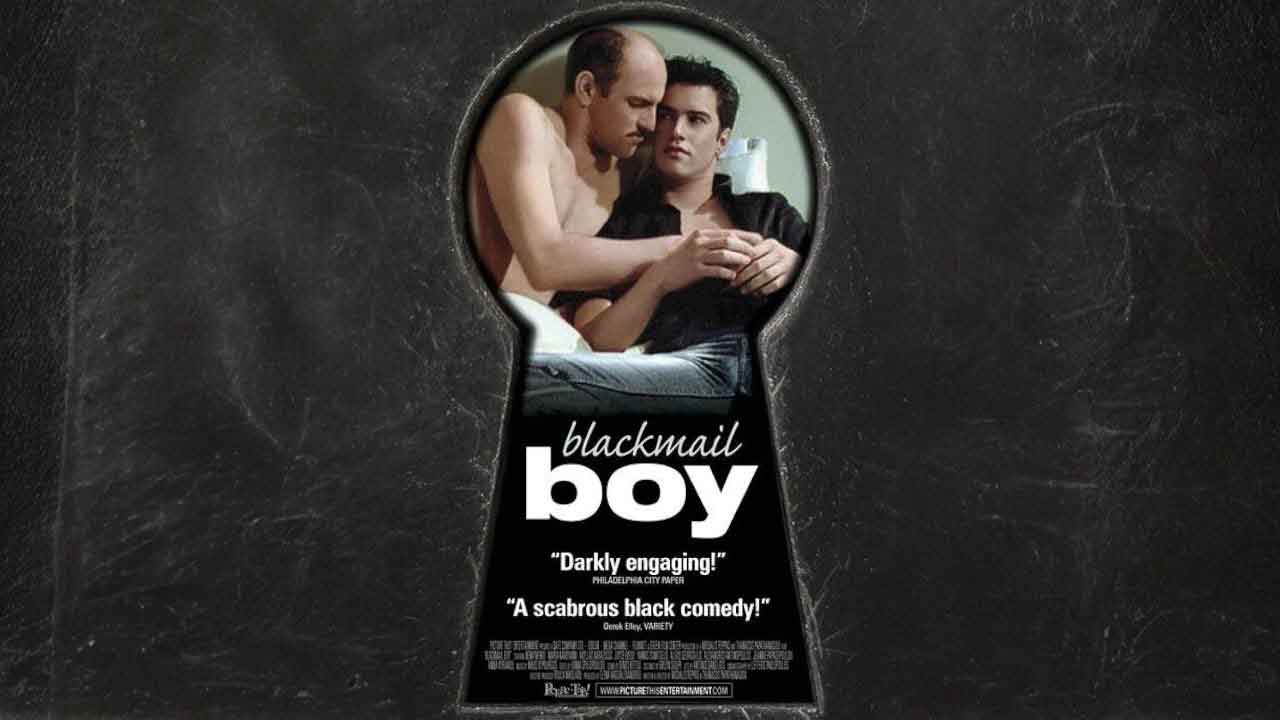



Oxygono (Blackmail Boy): Love, Politics and the Price of Survival
In a small Greek town, everybody smiles politely while holding a knife behind their back. And sometimes that knife is pointed right at the people they love.


A town where everyone pretends
I always find it amusing how small towns work. People greet you on the street, call you by your first name, and then go home and politely dissect your life over coffee. Blackmail Boy lives exactly in that space. A warm Mediterranean town where everyone acts civilised, until money, power or sex step into the room. Then the air suddenly gets thinner.
At the centre of all this is Christos. Young, handsome, restless. The kind of guy who looks like he was born to leave town... but somehow still sleeps in the same house where he grew up. His mother Magda runs a little pie shop. His sister Vicky is pregnant and permanently stressed. Her husband Stelios plays financial gymnastics and is always one wrong decision away from total disaster. A normal family, only held together with tape, habit and guilt.
The politician and the boy
Then we meet George. Respectable. Married. Important. The kind of man who never looks rushed, even when he is lying. George is also in a secret relationship with Christos. The town does not know. His wife does not know. At least officially nobody knows... yet somehow everyone always knows. That is how small towns work. People do not see, but they feel everything.
Their relationship is complicated. There is love in there somewhere, but also convenience, power imbalance and a quiet sense that something about it is fragile and temporary. George has a career. Christos has the looks. One has something to lose. The other has time. That is never a fair exchange.
When land becomes gold
Just when you think this is only a story about forbidden love, the film calmly moves the camera back. We learn about a piece of land near the old water cistern. The city plans to turn it into a park, with European funding and big speeches about progress. Suddenly everybody who owns a piece of dirt becomes a visionary investor. Including Magda's family.
Money means hope. It also means pressure. And when families are under pressure, old wounds wake up and start stretching their legs. Arguments begin, loyalties shift, and everyone quietly calculates who will get what.
The slow tightening of the noose
Christos feels trapped. He does not really fit into the town. He does not fully belong to George either. When the relationship starts to cool down, he realises he has discovered something dangerous: people with secrets are always vulnerable. And George has secrets wrapped in silk ribbon.
Is it still love when fear enters the room? Or is it already business? The film does not shout the answer. It simply lets us watch Christos sliding into a moral fog where affection, dependency and manipulation mix into one uncomfortable drink.
All the while, Magda struggles to hold the family together. Vicky cries and smiles and cries again. Stelios keeps digging financial holes hoping to climb out of them. And the town stays politely silent, like a choir trained not to sing off key.
No heroes. Only consequences.
This is not the kind of film where a big speech fixes everything. Nobody hugs it out. Nobody learns a neat lesson. Instead, the story just keeps tightening, like a rope around a ship's mast before a storm. And when the storm finally breaks, there is no epic moment of redemption. Only consequences. Some of them tragic. Some simply sad.
What remains is a quiet question: how much of ourselves are we willing to betray just to survive in a world that keeps asking for a little more?
Why it works
The strength of Blackmail Boy is in its honesty. It does not romanticise secrets. It does not punish people for being human. It simply shows what happens when love, class, ambition and shame get stuffed into the same small space. The acting is grounded. The relationships feel painfully real. And even when nothing dramatic is happening, you feel the tension like static in the air.
It is not a cheerful film. You do not finish it ready to dance. But you do leave with that quiet heaviness that comes from recognising real life on screen.
And honestly... that is sometimes exactly what cinema should do.