Daddy’s Big Girl (2008) - A Mean Little Short with a Big Reveal
Some shorts are built to soothe you. Daddy’s Big Girl is built to poke the bruise, then ask why you’re still standing there holding the ice pack like it’s a personality.
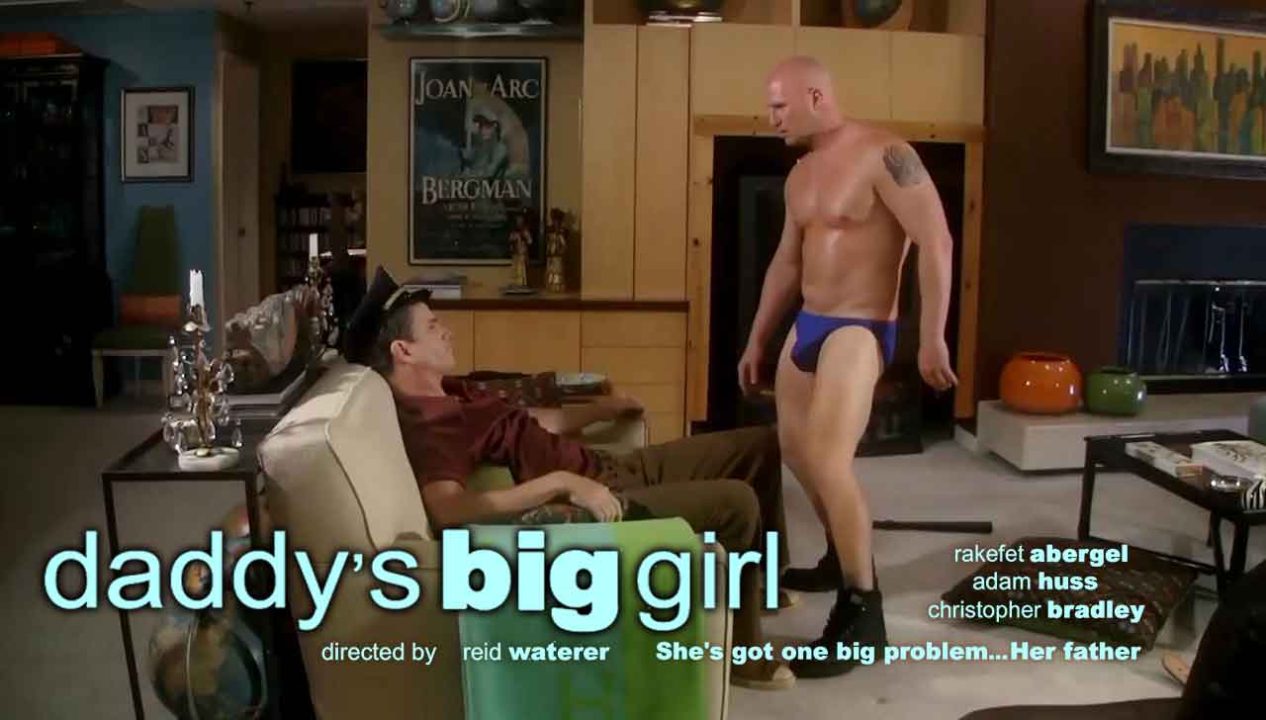
In about 17 minutes, director Rick Walker turns a simple setup into a nasty little pressure cooker: Millie shows up uninvited, her wealthy father Cliff is in a hurry, and his “personal trainer” Rick is… not exactly the warm welcome committee. The first scene alone makes the movie’s rules clear: this household runs on status, bodies, and humiliation. Millie gets labeled before she even gets a sentence in. :contentReference[oaicite:0]{index=0}
What follows is basically a family argument disguised as a comedy sketch, with the kind of dialogue that’s fast, mean, and funny in that “I’m laughing but I’m also slightly ashamed” way. Millie is broke, angry, and hungry. Cliff is rich, controlled, and emotionally unavailable. Rick is the shiny accessory who thinks confidence means saying the gross part out loud.
What it’s about (and why it stings)
On paper, Millie is the mess and Cliff is the adult. In practice, Cliff is the one who’s been emotionally running away for years. When Millie asks for help, his response is pure capitalism with a dad-voice filter: you’re grown, I’m not responsible, figure it out. :contentReference[oaicite:1]{index=1}
The film keeps flipping that dynamic. Millie is chaotic, sure, but she’s also the only one actually saying what hurts. Cliff hides behind “tough love” and a therapist suggestion like it’s a shield. It’s not guidance. It’s a polite way of staying distant.
The humor is cruel on purpose
This is not a “feel good” body-positivity short. It’s more like: “here’s what cruelty looks like when it wears nice clothes and calls itself concern.” Even the supposedly helpful suggestions come wrapped in insults, like that recurring idea of a dating site for “big girls,” which the men bring up as if they’re handing Millie a self-esteem coupon. :contentReference[oaicite:2]{index=2} :contentReference[oaicite:3]{index=3}
Millie’s reactions are sharp, defensive, and sometimes self-sabotaging. But that’s the point. When your value has been negotiated your whole life, you learn to attack first. The film gets that. It doesn’t excuse everything Millie does, but it shows where it comes from.
Then it swerves into something weirder
Halfway through, the story takes a detour into late-2000s trashy surrealism: cops, a “stakeout” vibe, and a scene that feels like a sketch from an era when “webcam culture” was treated as both joke and threat. There’s a line about “camera lights,” rules, no touching, and a guy loudly insisting he’s not gay. :contentReference[oaicite:4]{index=4}
It plays like comic relief, but it also quietly underlines the theme: men set the rules, women get judged for the results. Millie is always being framed by somebody else’s desire, somebody else’s standards, somebody else’s paycheck.
The real punchline: Cliff finally tells the truth
The film’s best move is that it stops making Millie the only “problem.” Cliff, under pressure, admits the thing he’s been sanding down into silence for decades: he loved Millie’s mom, but he wasn’t sexually attracted to her, and he knew he was gay. :contentReference[oaicite:5]{index=5} :contentReference[oaicite:6]{index=6} :contentReference[oaicite:7]{index=7}
Suddenly, the whole “body” obsession looks different. Cliff didn’t just build a life around control because he’s rich and vain. He built it because his entire adult identity was a compromise. And compromises, when they rot, don’t stay politely contained. They leak into parenting. They leak into shame. They leak into the way you treat your kid like a project you can’t quite fix.
Millie’s response is messy, honest, and human. She’s mad. She’s relieved. She’s still hungry. She’s still her. And the film earns that moment because it lets the confession land without turning it into a halo for Cliff. It’s not “brave dad.” It’s “late truth, big consequences.”
What I like (and what I don’t)
- It’s sharp. The pacing is tight, and the dialogue knows exactly when to twist the knife.
- It’s not polite. If you want gentle representation, this is not your lane.
- It’s surprisingly layered. Beneath the insults, the story is about transactional love: money as affection, self-control as morality, thinness as virtue.
- It’s also very 2008. Some jokes and framing will feel dated, especially around bodies, sexuality, and the “fetish site” idea. That datedness is part of the artifact, but it can still hit wrong.
Who should watch it
Watch Daddy’s Big Girl if you like short films that are basically a grenade in a living room: dark comedy, family dysfunction, and a queer reveal that doesn’t magically fix anything. Skip it if fat-shaming language is a hard no for you, because the film uses it as a weapon and it doesn’t always cushion the blow.
But if you can handle the rough edges, there’s something oddly satisfying here: a short film that admits people can be cruel, wounded, and funny in the same breath. And that sometimes the only way out of a family myth is to finally say the ugly truth out loud.