

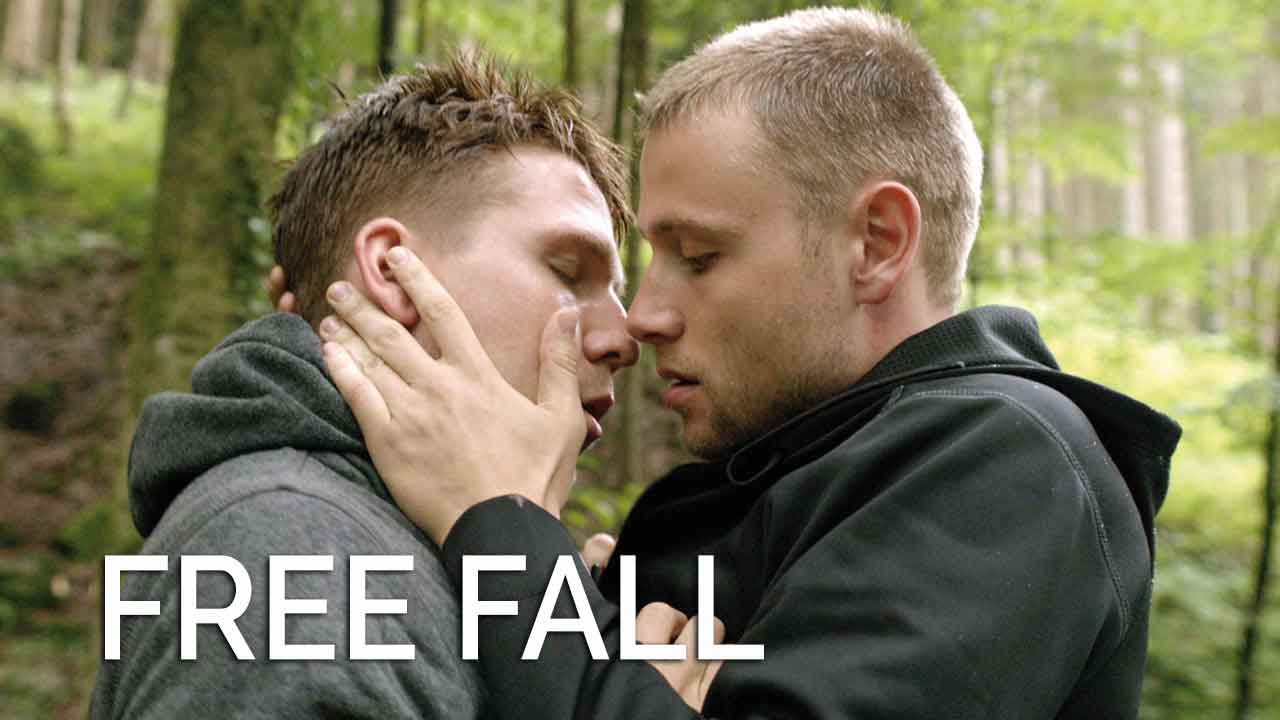



Free Fall (Freier Fall) (2013) – When Love Breaks the Uniform


Free Fall (original title: Freier Fall, 2013) is the kind of film that walks in quietly, sits next to you, and then starts rearranging your ribs from the inside. It looks like a “simple” story on paper: cop, girlfriend, baby on the way, and then a handsome colleague shows up and ruins the plan. But the way it’s told feels painfully human, which is a fancy way of saying: nobody here knows what the hell they’re doing, and everyone pays for it.
So let me tell you the story like I’d tell it to a friend who asked, “Is it good?” and I answered, “Yes, but it will also slap you a little.”
Marc: the guy who built a life like a straight line
Marc Borgmann is a police officer who has everything arranged in neat little boxes. Job: solid. Girlfriend: Bettina. Baby: incoming. Future: basically a brochure. The vibe is “I am doing adulthood correctly, please give me a certificate.”
And then he goes into riot unit training, which is basically a testosterone festival with uniforms. Everyone is loud, competitive, joking in that aggressive “buddy” way that is never really just joking. Marc tries to fit into it, because fitting in is what he’s been trained to do.
Kay arrives, and Marc’s brain starts buffering
Enter Kay Engel. Same training program, same uniform, completely different energy. Kay is confident, a bit wild, and he carries himself like a man who doesn’t need permission to exist. That alone is enough to trigger something in Marc, who has been living by the rulebook for so long he probably sleeps with it under his pillow.
At first it’s small stuff: running together, talking, being around each other more than “just colleagues” usually are. And you can feel the tension building because Marc is doing that thing where he’s enjoying himself and hating himself at the same time. That special mix of desire and panic. Delicious.
The first crack: attraction turns into something real
 The film doesn’t do the “romantic fireworks” version of falling for someone. It’s more like watching a dam develop tiny cracks. Marc tries to keep everything normal: go home, be a partner, be a future dad, be the guy who has his life together.
But Kay keeps pulling him into honesty, or at least into moments where Marc can’t hide behind the usual performance. And then the line gets crossed. Not in a cute way. In a messy, complicated, “now what” way.
Marc doesn’t suddenly become brave. He becomes worse. He becomes jumpy, secretive, defensive. He lies like he’s doing it for cardio. Bettina senses something is off because she’s not blind, and she’s not written as a villain either. Which makes everything hurt more.
Police culture: a place where masculinity eats people
One of the sharpest parts of Free Fall is how it shows the police environment as this weird cocktail of macho bonding and casual cruelty. The same guys who slap each other’s backs and make locker-room jokes are also the first ones to turn vicious when someone doesn’t fit the mold.
And Kay, whether he’s openly out or just “suspected,” becomes a target. The insults aren’t subtle. The jokes aren’t jokes. This is the kind of world where being different is treated like a personal attack on everyone else’s fragile idea of manhood.
Marc is trapped in the middle. If he defends Kay, people look at him. If he stays silent, he betrays him. So he does what closeted fear often does: he chooses silence, then doubles down with denial, then wonders why everything is burning.
The club raid: when the system shows its teeth
 There’s a major turning point involving a raid on a gay club. It’s not filmed like some glamorous nightlife moment. It’s tense and humiliating. And it’s also the scene where the film basically says: you can pretend your private life is private, but institutions have a way of dragging it into the light and stomping on it.
Marc reacts badly. Not just “confused” badly, but “angry at the person who is being honest because it threatens my mask” badly. Kay, on the other hand, finally drops the emotional truth Marc keeps choking back.
He says it. He says the thing Marc can’t say out loud without shaking: “I love you.”
Marc’s response is basically: please stop existing near me, it’s inconvenient for my life plan. Which is brutal, because it’s also real. People don’t always reject love because they don’t feel it. Sometimes they reject it because they are terrified of what it will cost.
Bettina finds out, and it’s not a cinematic reveal, it’s a real one
 Bettina doesn’t find out through dramatic music and a perfect clue. She finds out the way people actually do: inconsistencies, lies, someone mentions something that doesn’t add up, and suddenly the whole “night shift” story collapses.
When she confronts Marc, it’s not polite. It’s not pretty. It’s the kind of confrontation where a relationship dies in real time. And when she asks the obvious question, Marc does the obvious coward thing.
He denies. Not because it’s convincing, but because denial is the last tool he has left.
Kay pays the price for being visible
Kay gets hit from multiple directions: harassment, violence, isolation, the constant sense that the room is against him. The film doesn’t turn him into a saint either. Kay can be reckless, stubborn, sometimes provoking, but it never feels like he “deserves” what happens. It feels like the world is punishing him for refusing to hide.
Marc keeps trying to control damage instead of choosing a truth. He wants Kay, he wants Bettina, he wants the baby, he wants the job, he wants the respect of his colleagues. He wants everything. The universe responds by giving him: stress, guilt, and consequences.
Where it ends: no tidy bow, just raw reality
Free Fall doesn’t give you the comforting ending where love fixes everything. It gives you something sharper: the aftermath. People hurt. Trust breaks. The future becomes uncertain. And Marc finally reaches the point where he can’t keep living two lives without losing both.
The ending lands like a quiet punch because it’s not trying to impress you. It’s simply honest about the cost of fear.
Orvel Verdict
If you want a cute gay romance where the biggest problem is “will they kiss in the rain,” this is not your movie. Free Fall is tense, intimate, and painfully believable. It’s about desire, yes, but also about what masculinity, institutions, and social pressure can do to a person who never learned how to be truthful with himself.
Max Riemelt brings a fierce, vulnerable edge to Kay, and Hanno Koffler makes Marc frustrating in exactly the right way: you want to shake him, then you remember how many people live like that, quietly negotiating their own happiness like it’s a suspicious package.
Watch it when you’re in the mood for something real. And maybe not right before bed, unless you enjoy lying awake thinking about all the choices people make just to stay “acceptable.”








1 comment