




O Beautiful (2002): A Cornfield Reckoning After a Hate Attack
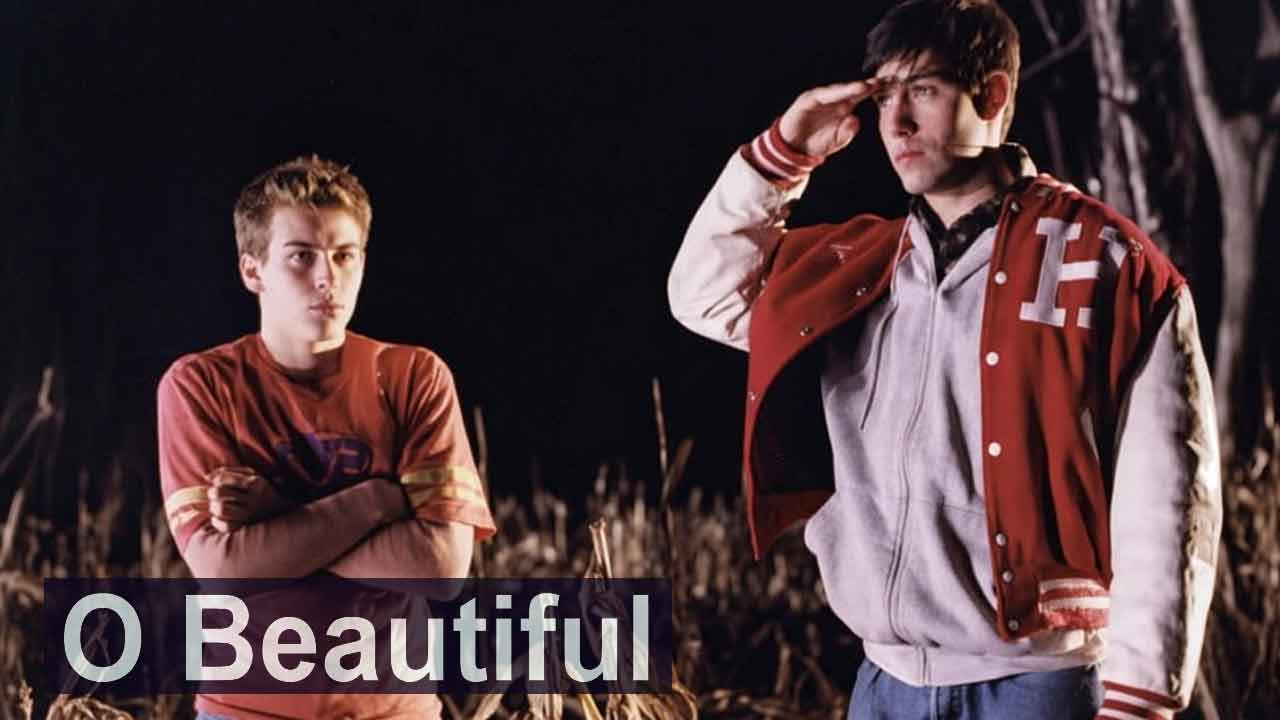
Two boys in a cornfield after a hate attack. One is bleeding, the other is breaking, and the apology comes out like a weapon.


O Beautiful (2002): After the Beating, the Conversation Hurts More
Some films don’t ease you in. They punch you in the gut first, then they start talking. O Beautiful is exactly that kind of short. It doesn’t circle the topic, it doesn’t dress anything up for a festival brochure, and it doesn’t waste time on neat explanations. Within minutes, you have Brad, a gay teenager, beaten and abandoned in a cornfield. And then you have Andy, one of the attackers, coming back alone. Not with the guys. Not to finish anything. But to try something that doesn’t really exist in real life: to undo what’s already been done.
And the film is smart enough to tell you right away: this won’t be simple. Brad is bloody, shaken, furious, and for good reason he doesn’t trust a single word out of Andy’s mouth. Andy, meanwhile, enters the frame like a kid collapsing from the inside, but with no vocabulary for it. Instead of “I’m sorry,” he offers a jacket. Instead of honesty, he offers “I wasn’t there.” Instead of truth, he tries to manage the situation like a school exercise in damage control.
A cornfield that feels like a courtroom without a judge
The most disturbing thing here isn’t only the violence that happened before the story begins. It’s the fact that the film stays at the crime scene and forces us to watch what happens when the attacker returns. Not to be punished, but simply to be present. It’s a brutal concept because it removes the comfortable distance audiences usually want. There’s no police, no parents, no adults who “handle it.” Just two teenagers, and the entire weight of a culture sitting between them.
Brad is wounded physically and psychologically. He shouldn’t have to explain who he is to anyone, yet the film corners him into exactly that. Andy interrogates him with questions that are both invasive and absurd: “Are you really gay?”, “How do you know?”, “Is it all the time or just sometimes?” This isn’t curiosity. It’s a desperate attempt to turn Brad into a theory, into a “problem” that can be corrected. Because it’s easier to attack an idea than to face the fact that a human being is bleeding in front of you.
Andy as morality propaganda in human form
Andy walks in wearing the uniform of “normal.” Christian athlete, Boy Scout, the kind of kid who loves rules and likes to sound like an authority. And that’s precisely why he’s fascinating. Once they’re alone, you see how that “normal” image breaks down into two things: fear and a hunger to control the narrative. He clings to religion, to the idea that God has an opinion about Brad’s body, to that fake concern packaged as advice: “Be something else,” “Find a hobby,” “Be productive.” As if sexuality is an extracurricular activity you can drop if it complicates your schedule.
Brad pushes back the only way he can: with sarcasm, anger, and blunt honesty. Their dialogue becomes a duel where every line lands like a punch. Andy tries to moralize, Brad holds up a mirror. Andy reaches for “Scout honor,” Brad shows how hollow that honor is when real life shows up. At times the exchange becomes darkly funny, but the humor isn’t there to relax you. It’s there because the situation is so violently absurd that laughter becomes a survival reflex.
“Hypnosis” as a way to escape your own skin
One of the sharpest turns in the film is how it shifts from the assault itself to the lies people build around it. Under pressure, Brad starts inventing stories about gay men in his world, as if throwing confetti of “gay normalcy” might make Andy back off. But then, when Andy keeps pushing, Brad pulls it all back. He admits he lied. He’s never been with anyone. And that moment doesn’t feel like a twist. It feels like a gut-level truth: sometimes the victim doesn’t have a brave, polished story ready. Sometimes the victim has nothing but shock, shame, and the instinct to hide even from the truth, because the truth can hurt like a second beating.
Andy tries to “fix” things again by offering hypnosis. As if he could hit reset on Brad’s trauma and on his own guilt. It’s pathetic and chilling at the same time. Pathetic, because you see a kid panicking. Chilling, because it’s still about control: “Close your eyes, relax, listen to me.” The film makes it clear why Brad snaps back. Violence isn’t only the punch. Violence is also the attempt to own someone else’s story.
A confession that comes too late and still hits hard
The most important moment is Andy’s confession that he never left. He was there. He watched. He wanted to stop it, but he didn’t. And that’s where the ugliest truth drops: sometimes the deepest wound isn’t from the person who hits you, but from the person who stands nearby and stays silent. The film doesn’t excuse Andy. It doesn’t turn him into a “good guy who made a mistake.” If anything, the confession makes him worse, because it proves he had a choice and chose himself.
But the film is brave enough to leave room for something painfully human. Andy is still a teenager crumbling under the weight of his own cowardice. And then he does something unexpected: he offers Brad his truck. Not as a heroic gesture, but as the last currency he has. Like he’s saying, “I don’t know how to repair this, but here is something that might help you get away.” It’s the moment when the story stops being only about violence and becomes about escape. Brad doesn’t get justice. He gets movement.
Why this short stays with you
O Beautiful doesn’t send you off with comfort. It leaves you with a bruise. It’s about how homophobia often wears the mask of “concern,” how religion can become a weapon dressed up as morality, and how “normal” can be nothing more than fear wrapped in rules.
Brad isn’t a symbol. He’s a person it happened to. Andy isn’t a horror-movie monster, but that’s exactly why he’s more dangerous. The film works because it refuses to offer easy relief. It gives you a scar that forces you to think. And honestly, that’s not a small thing to pull off in 29 minutes, in the middle of a cornfield.






1 comment