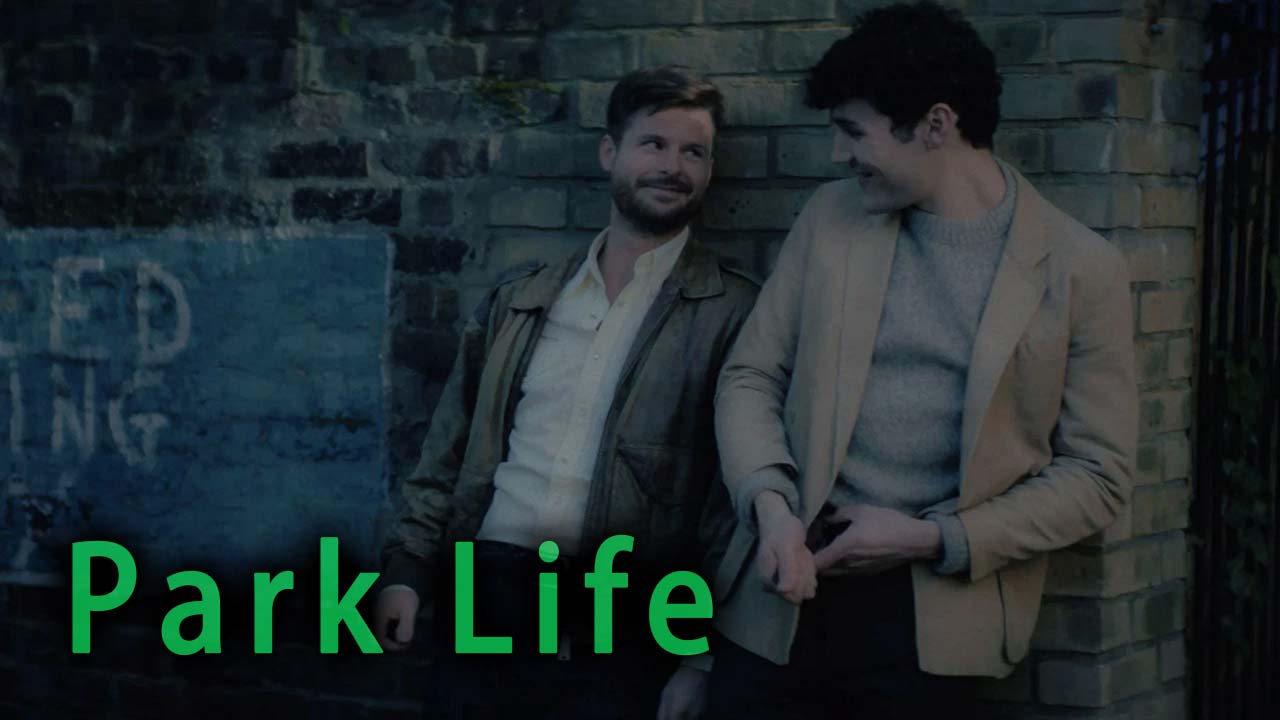
Park Life (2024) starts in a London park, in a space where romance is probably the last thing anyone expects to find. Noah and Medhi meet while cruising, and at first everything feels like it will stay simple: a quick encounter, some flirting, a few dirty jokes, then everyone goes home before the city fully wakes up.
But Medhi does not leave that easily.
He follows Noah into the quiet morning streets, half charming and half completely inappropriate, and the film slowly turns their walk into something warmer. What begins as a hookup becomes a conversation. They talk about sex, movies, open relationships, religion, family and grief. Nothing is forced, and that is why it works. It feels like two strangers saying things they might not say to people who actually know them.
The best thing about Park Life is that it understands gay intimacy without making a big speech about it. Desire is there, very openly, but so is loneliness. The jokes are sharp, sometimes filthy, but they also protect something softer underneath. Noah is guarded, trying to keep the night contained. Medhi is louder, messier, harder to ignore. Together, they create that lovely little tension between “this means nothing” and “maybe this meant more than I planned.”
The film is not trying to sell us some huge love story. It is much smaller than that: a walk, a kiss, a few honest moments before real life comes back in. And that smallness suits it. For 13 minutes, Park Life captures the strange magic of meeting the right person at completely the wrong hour.
By the end, nothing is fully promised. Maybe they meet again. Maybe they don’t. But the film leaves behind a sweet feeling that something real happened, even if it only lasted one London morning.