

Some films are too flawed to fully defend, but too wounded to forget.

Jet Boy (2001) Review
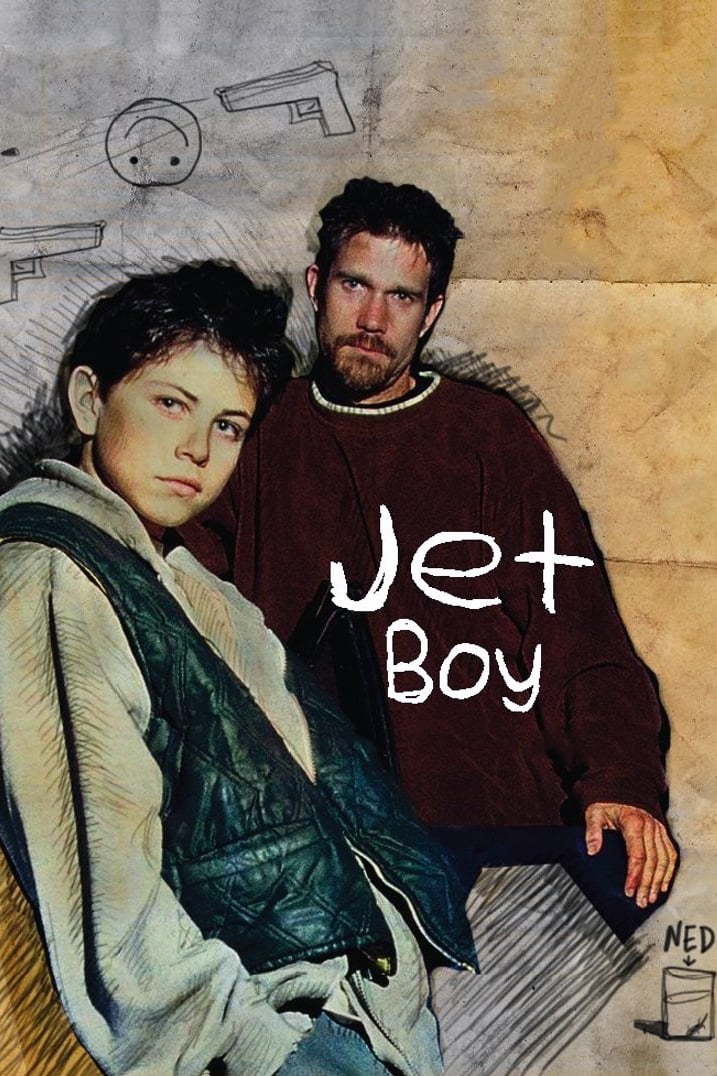
Some films are too flawed to fully defend, but too wounded to dismiss. Jet Boy is exactly that kind of film. It moves with the rough shape of a small Canadian road drama, sometimes clumsy, sometimes melodramatic, sometimes a little too convenient for its own good, but at the center of it there is a boy so desperate to belong to someone that the film becomes hard to shake off.
Nathan: A Child Forced to Grow Up Too Fast
Nathan is thirteen, although the world around him has clearly never treated him like a child. He lives with a mother lost in addiction, drifts through dangerous adult spaces, and has learned to survive by acting tougher, older and more in control than he really is. That performance, the one Nathan gives to the world, is the real tragedy of the film. He talks fast, pushes people, lies when he needs to, bargains when he has nothing else, and yet the mask keeps slipping. Underneath all that streetwise armor is a lonely kid who wants the most ordinary things in the world: a home, a parent, a safe room, someone who will come back.
A Road Trip That Becomes Something Else
The story pairs him with Boon Palmer, a drug dealer on the road to Vancouver. Their meeting has the shape of a crime-thriller setup, with Nathan forcing his way into Boon’s trip because he has information Boon needs. On paper, that could have become a hard-edged chase movie. In practice, Jet Boy is much more interested in the strange emotional negotiation between them. Nathan does not just want a ride. He wants Boon to become something. A protector. A father. Maybe even proof that adults are not all useless or dangerous.
An Uneasy but Powerful Relationship
That is where the film works best. The relationship between Nathan and Boon is uncomfortable, uneven and sometimes unbelievable, but emotionally it makes sense. Nathan clings before he has permission to cling. He invents belonging before anyone offers it. He watches Boon with the hunger of a child who has already been abandoned too many times, and Branden Nadon makes that hunger feel painfully real.
Branden Nadon’s Standout Performance
Nadon’s performance is the reason the film survives its weaker writing. Nathan could easily have become just a “damaged kid” type, the kind of character films use to squeeze sympathy from the audience. Instead, Nadon gives him sharp edges. Nathan can be manipulative, irritating, funny, brave and heartbreakingly young, sometimes all in the same scene. The film’s most devastating moments are not the big dramatic ones, but the small ones where he accidentally tells the truth about himself. When he says he just wants to be a good kid, it lands because we understand that nobody has really let him be one.
Dylan Walsh as Boon Palmer
Dylan Walsh has the less showy role as Boon, but he gives the film a necessary heaviness. Boon is not a saint hiding under a criminal jacket. He is selfish, tired, morally compromised and often cruel in the lazy way damaged adults can be cruel when a child asks too much of them. But Walsh lets you see the hesitation in him. He knows Nathan is not just trouble. He knows this kid has attached himself to him for reasons that are bigger than the drug run, bigger than the money, bigger than survival. The film is really about whether Boon will keep running from that knowledge.
Where the Film Falls Short
Where Jet Boy struggles is in its plotting. Some turns feel too neat, and some characters are drawn with thick marker instead of a fine pen. The film wants gritty realism, but it sometimes takes shortcuts that feel more like TV melodrama. There are moments when the danger becomes almost too mechanical, as if the story needs another threat to remind us how bad Nathan’s world is. We already know. The quiet scenes tell us better.
A Rough but Honest Core
Still, there is something honest beneath the roughness. The film understands that neglected children do not always look innocent in the way adults prefer. They can be loud, difficult, sexualized by trauma, and too fluent in things they should never have had to learn. Jet Boy does not handle all of that perfectly, but it does give Nathan a tenderness that never feels cheap. It sees the child under the act.
For viewers looking for a clean, polished drama, this may be frustrating. It has holes. It has emotional shortcuts. The ending asks for more belief than the film has fully earned. But for viewers who can forgive a messy film because one performance keeps cutting through the noise, Jet Boy has something real. It is not great cinema in the traditional sense. It is too uneven for that. But it has a bruised little heart, and that heart belongs almost entirely to Nathan.
By the time the film ends, what stays with you is not the crime plot or the road trip. It is the image of a boy trying to turn a stranger into family because every real adult in his life has failed him. That is the ache of Jet Boy. It is not a perfect film, but it knows the terrible sadness of a child who has learned to survive before anyone taught him how to live.