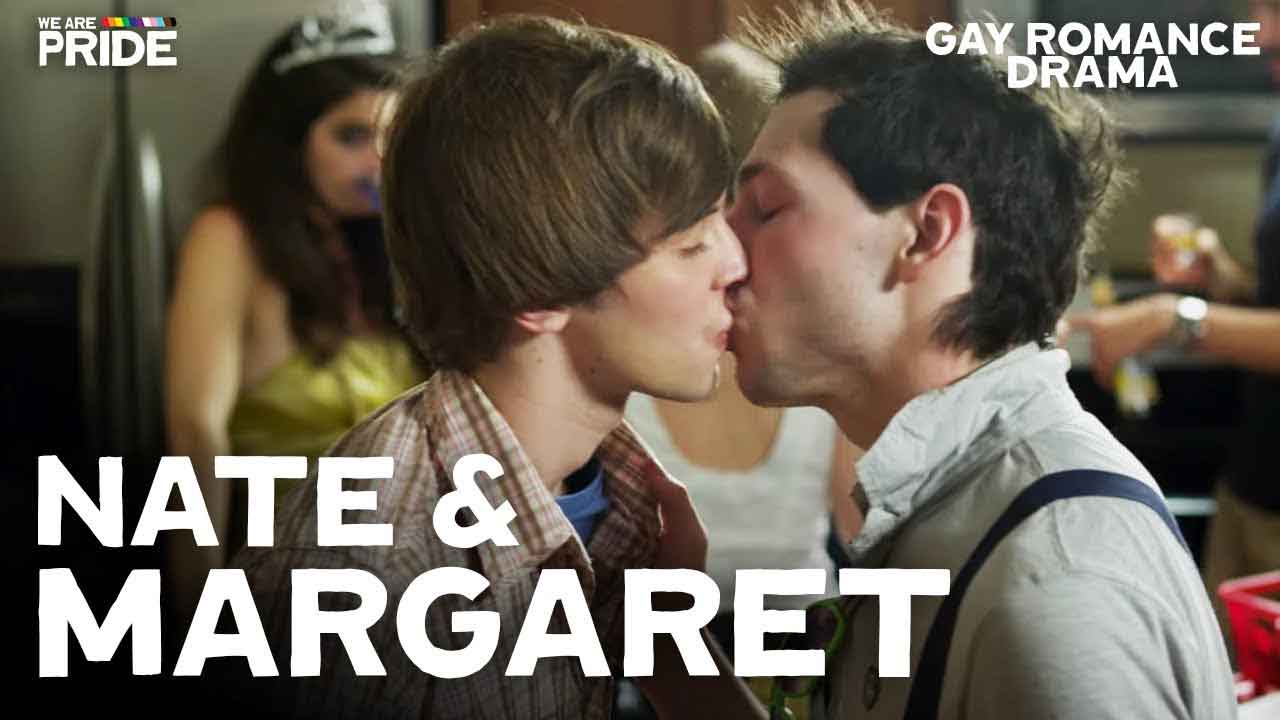




Some friendships don’t look “normal” from the outside, which is exactly why they save you. Nate and Margaret are proof that the person who gets you might not be your boyfriend. It might be your lifeline.


Nate & Margaret feels like you accidentally overheard two real people talking in a Chicago hallway, and then you realized you can’t stop listening. It’s a small indie dramedy about an unlikely friendship that works so well it almost looks suspicious. A 19-year-old film student and a 52-year-old waitress who’s trying stand-up comedy become each other’s emotional home base, until love shows up and starts rearranging the furniture.
Nate is gentle, awkward, and a little too passive for his own good. He’s the kind of guy who says “maybe” when he means “yes,” and smiles when he should set a boundary. Margaret is sharp, messy, hilarious in a way that scares people, and brave in the “I’ll joke about it so I don’t collapse” sense. Their chemistry is not romantic. It’s deeper than that. It’s the kind of bond where you can walk into a thrift store, find a chipped mug for two bucks, and treat it like treasure because the person next to you makes the stupid stuff feel survivable.
The comedy is funny, then it punches you
The film understands stand-up in a way a lot of movies don’t. Margaret’s early bits are observational and awkward, then she starts drifting into darker material. She jokes about hoarding mugs, about therapy, about life, and then suddenly she’s circling childhood trauma like it’s a campfire story she learned to tell in the dark. Nate encourages her to go there. He tells her she’s holding back. And he’s not wrong, but the movie never pretends that “being honest” is free. Sometimes honesty costs you sleep.
There’s a line Margaret drops early on that basically defines her: she can be brutal, and she can be vulnerable, and she’s learned to package both as a punchline because that’s the only way it comes out without breaking her. The humor in this movie isn’t cute. It’s survival humor. And that’s why it lands.
Nate’s boyfriend problem: James
Then James enters the picture. He’s charismatic, direct, and he has that energy of someone who’s already decided what the “right” version of you should look like. James wants Nate to be louder, prouder, more visible. On paper, that sounds healthy. In practice, it starts to feel like control dressed up as progress.
One of the most uncomfortable, most truthful sequences in the transcript is their argument about public affection. James frames it like Nate is ashamed. Nate pushes back, saying he doesn’t “wear it on his sleeve.” You can feel both sides. You can also feel the poison underneath: James doesn’t want a partner, he wants a statement. Nate doesn’t want to be a statement, he wants to be left alone long enough to figure out who he is.
And yes, the fight gets ugly. Not movie-ugly. Real-ugly. The kind of ugly where you remember what was said months later while brushing your teeth.
The robbery and the friendship fracture
Right after that relationship blow-up, Nate’s apartment gets robbed. Everything is gone. It’s one of those plot beats that sounds dramatic on a synopsis, but the film plays it in a painfully grounded way: panic, shock, and that hollow “this can’t be happening” loop.
Margaret tries to help. She returns a bottle of wine, walks in, sees the mess, starts cleaning. Nate finds out and spirals. He needs someone to blame, and Margaret is right there. He throws accusations at her, calls her passive-aggressive, basically suggests she “did it” to punish him for James. It’s awful, and it’s also heartbreakingly believable. People don’t only lash out at enemies. They lash out at the safest person in the room.
This is where Nate & Margaret stops being “a sweet odd-couple indie” and becomes something sharper: a story about how friendships can break the same way romances do. Miscommunication. Pride. Cruel words. And that specific kind of silence that feels like a door closing.
The ending earns itself
What I loved is that the movie doesn’t rush the repair. Time passes. Margaret grows. She starts getting traction with comedy and even has a manager. Nate, meanwhile, is left with regret and the slow realization that he didn’t just lose a roommate or a hangout buddy. He lost the person who knew him without demanding he perform.
When they finally reconnect, Nate apologizes properly. Not “sorry you feel that way.” Real regret. He owns the worst choices: moving out, not answering calls, choosing James, saying what he said. Margaret’s response is simple and devastating: she forgives him, and admits she missed him. Then comes the most perfect, most human capstone: brunch. Not a grand gesture. Just food, and conversation, and the decision to try again.
Orvel verdict
If you like queer indie films that aren’t just about coming out, but about living after it, this one hits. It’s about being seen, being pushed, being misunderstood, and still hoping someone will meet you where you are. It’s also about how friendship can be the main love story, even when the plot tries to convince you otherwise.
Heads up: the film includes dark jokes about abuse and an argument scene with very harsh language and accusations. It’s not “comfort viewing,” but it is honest.
In the end, Nate & Margaret is small, funny, uncomfortable, and strangely warm. Like a chipped mug you refuse to throw out because it’s part of the story.