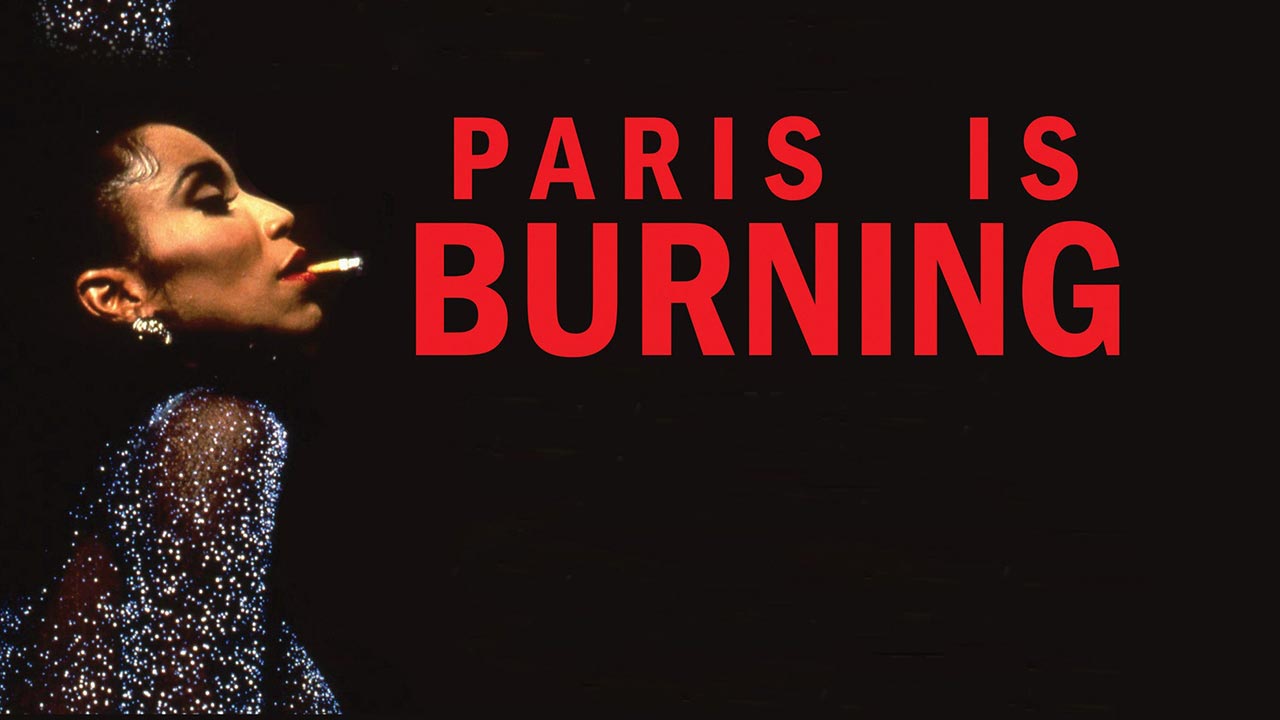
Even for people who thought they knew the New York drag scene, Paris Is Burning can feel like a revelation. What’s striking is how thoroughly the “vogue houses” are absent from the standard drag histories. Anthony Slide’s Great Pretenders does not mention them. Julian Fleisher’s The Drag Queens of New York: An Illustrated Field Guide (which came out after the film) maps out influences from Julian Eltinge to the Warhol crowd and the 1990s club scene, yet still skips the houses entirely. Even Laurence Senelick’s The Changing Room, probably the closest thing we have to a definitive book on drag performance, moves past the film quickly and gives none of the background you would expect.
From the film itself, and from articles I later found online, it seems clear that this house system goes back decades. The most visible example of a house member on film before 1990 appears to be Crystal LaBeija in The Queen (1968). That is why the biggest weakness of Paris Is Burning is also the thing you notice most once the credits roll: the lack of historical context.
Still, the film matters because it turns its camera toward a world that mainstream culture was ignoring. It is a vivid snapshot of life around 1989, not as a polished legend, but as a living ecosystem with rules, rivalries, dreams, and survival tactics. The murder of Venus Xtravaganza during filming gives the documentary a devastating gravity, but it is not the only film about trans lives that ends up colliding with real-life violence. And, in a different register, the later revelation about Dorian Corey, the mummified body found in her home, underlines how much these lives were lived under pressure, secrecy, and danger.
So yes, Paris Is Burning is historically important. But it also leaves a gap. We still need a book, or another documentary, that steps back and explains where these houses came from, how they evolved, and what they meant long before the late-1980s moment the film captures.