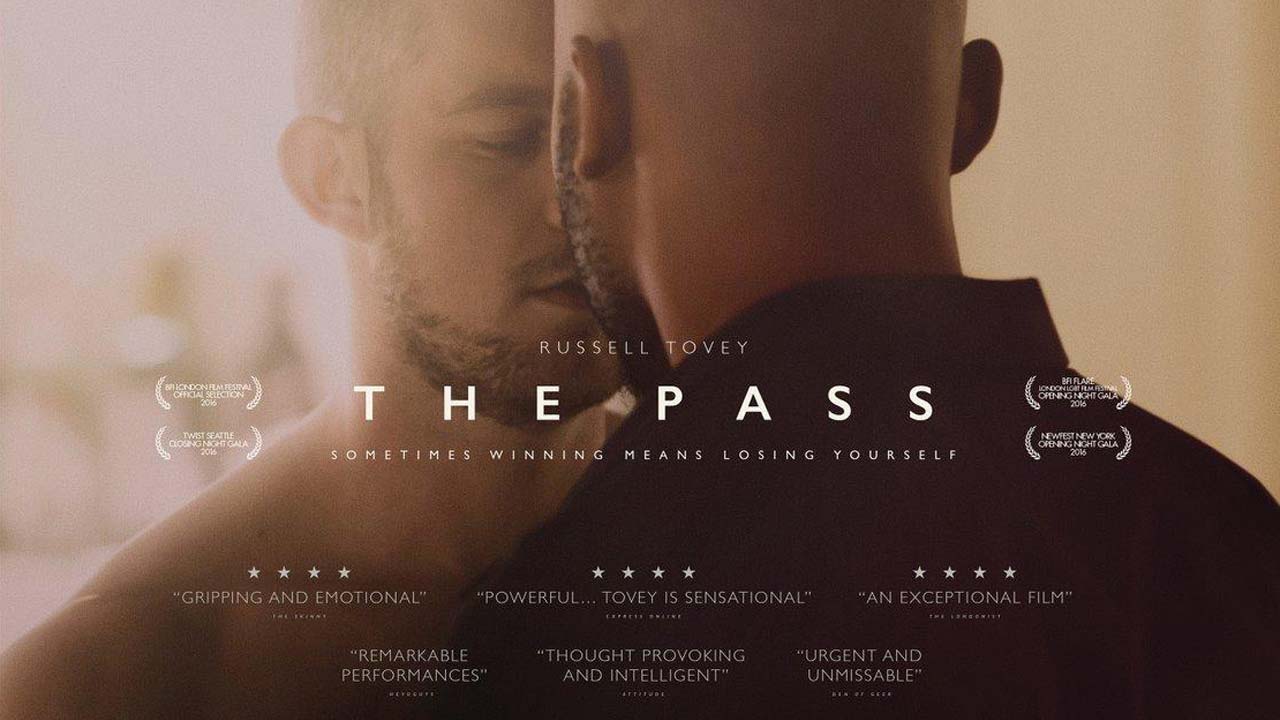



"The Pass" delves into the tumultuous lives of two aspiring footballers, Jason and Ade, as they navigate fame, failure, and the enduring consequences of a pivotal kiss. Based on a play first performed at the Royal Court, the film attempts to shed light on the hypocrisy and challenges faced by LGBTQ individuals in the testosterone-fueled environment of Premier League Football. The narrative is divided into three acts, offering a glimpse into the characters' struggles, secrets, and the impact of societal expectations on their personal identities.


The Pass (2016): three hotel rooms, one secret, and a career built on silence
If you came for a football film, The Pass will gently point you to the nearest exit. This is not about matches, trophies, or the glorious roar of a stadium. This is about the bit that happens off-camera, behind a locked hotel door, when masculinity turns into a contract you’re terrified to break.
The whole film plays like a pressure cooker in a suit. It is split into three acts, set in three hotel rooms, over roughly a decade. Same faces, different ages, different levels of success, same bruise. It’s based on John Donnelly’s play, and you can feel the stage bones underneath it, but that tightness is exactly why it works. Jason and Ade do not get to run away from the conversation. Neither do we.
Act One: a “pass” that isn’t really about the ball
We meet Jason (Russell Tovey) and Ade (Arinze Kene) as teenagers on the edge of something big. They’ve been in the academy since they were kids, they know the odds, and they know how fragile the whole dream is. They talk like young men who’ve learned the rules early: act tough, crack jokes, never look needy, never say the thing you actually mean.
Then Jason asks for a “pass” tomorrow, if he’s in a better position. It sounds like a football request, but the film makes it clear it’s really a loyalty test. A “do you have my back” question. A “if the moment comes, will you choose me” question. The title becomes a little knife: in football, a pass is simple. In Jason’s life, every pass is a dodge. Every touch is a calculation.
The first act is where the secret is born. It doesn’t arrive as a romantic confession with violins. It arrives as awkward energy, fear, attraction, and that teenage chaos where you do something before you’ve even decided who you are. Ade wants honesty. Jason wants control. And when control slips, Jason reaches for the oldest defence in the macho handbook: denial with a side of cruelty.
Act Two: success on paper, rot underneath
Years later, another hotel room, another night before another game, except now Jason is the star. The golden boy. The brand. The one with the image that must be protected at all costs. Ade, on the other hand, didn’t get the fairytale. And the film drops one of its sharpest lines without turning it into a sermon: apparently people don’t like to take orders from a black man. It lands because it’s delivered like a tired fact, not a speech.
This act is where you realise the film isn’t trying to make Jason lovable. He’s not written as a gentle victim waiting for the world to finally be kind. He’s written as a man who has turned fear into personality. He performs confidence like it’s training. He talks down to Ade. He cracks jokes that are meant to hurt first, so he can’t be hurt back.
And still, Russell Tovey sells it. He makes Jason magnetic and unbearable in the same breath. You can see why fans love him, why the club protects him, why the media polishes him into a product. And you can also see how hollow it is. Jason doesn’t feel free. He feels managed.
The “role model” excuse, or how fear wears a respectable mask
At one point, Jason basically argues that being gay has nothing to do with him because he has fans, a family, and he’s a “role model.” It’s the perfect self-justification. Not “I’m scared.” Not “I don’t know how.” Something nobler, cleaner, more marketable. Little kids have posters of him on their wall, grown adults buy shirts, and somehow that means he must keep lying.
The film doesn’t mock the fear. It shows the mechanics of it. In this world, coming out is not treated as a human moment. It’s treated as a headline that would eat your whole identity. That’s the tragedy and the poison: your private life becomes a public asset, and the easiest way to survive is to erase yourself.
Act Three: the internet, the camera, and the panic of being seen
By the time we hit the third act, the world is louder. Phones exist. “Just banter” can become a viral clip. And the film takes a grim little detour into straight performance as a shield: someone jokes about that old video of Jason with a lap dancer, like it’s a staple, like it’s proof of “normal.” It’s both funny and depressing, because you can hear what’s underneath the laugh: we all saw it, therefore you’re safe, therefore you can keep lying.
There’s also a sense that the secret never stayed in one place. It’s been travelling with them for years. It shows up in resentment. In nostalgia. In the way Ade can’t fully forgive. In the way Jason can’t stop rewriting the past to protect the version of himself he sells to the world.
Ade becomes the moral mirror here, not because he’s perfect, but because he’s stopped bargaining with himself. He’s the one who can say the truth out loud and still breathe afterward. Jason keeps bargaining. He keeps choosing the safe lie. And that is why the film hurts more than it “entertains.”
Why this one still lands
Because it’s small and it doesn’t blink. The dialogue is tight, the setting is claustrophobic, the structure is repetitive on purpose. That repetition is the point. This is what hiding looks like. You replay the same scene for years, hoping it will end differently, until you either change or you break.
The supporting performances help a lot. Lisa McGrillis, in particular, brings a grounded edge when the story brushes against Jason’s PR stunts. Nico Mirallegro pops in with a brief, oddly human moment that reminds you what normal kindness looks like in a film full of defence mechanisms.
In the end, The Pass isn’t asking “Is he gay?” It assumes you already know. It’s asking something uglier: how much of yourself will you trade for safety, applause, and a shirt with your name on it? It’s a nasty little film in the best way. Not because it’s shocking, but because it feels true.
Trailer: