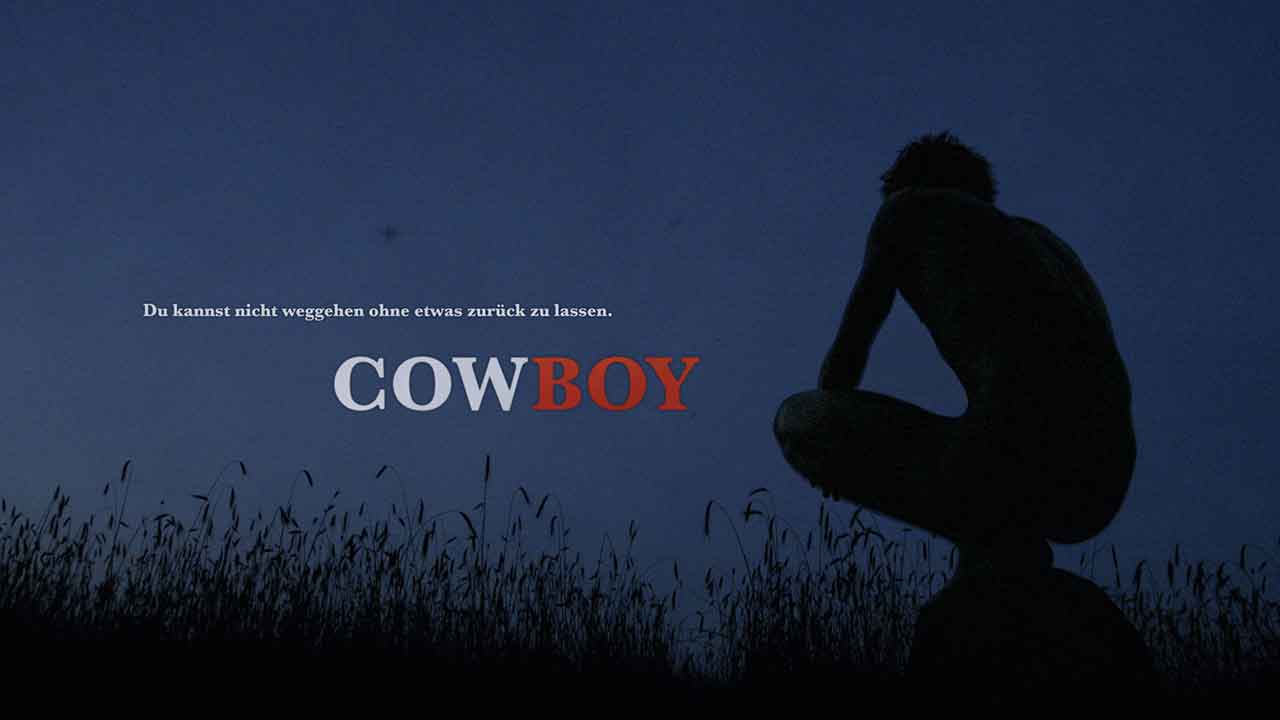
“Cowboy” (2008) starts like a flirt that accidentally wandered into the wrong village. Christian is a city guy with a clean shirt and a professional smile, driving around rural Germany for work. Real estate. Land. Deals. The kind of trip that should end with a polite coffee and a “we’ll be in touch.” Instead, it ends with a quiet, magnetic farmhand, a locked-in atmosphere, and the creeping feeling that the road back home is not guaranteed.
Here’s what I love about Kleinert’s approach: he doesn’t sell this as a “typical gay short.” In fact, he clearly doesn’t even like the idea of a community defined only by orientation, especially when media reduces gayness to party culture, grooming, interior design, and that shiny “Queer Eye” packaging. That frustration is not a side note. It’s baked into the film’s bones. “Cowboy” isn’t interested in gay lifestyle branding. It’s interested in instinct – and in what happens when instinct meets a hostile social cage.
For a good chunk of its runtime, “Cowboy” wears the mask of erotic tension. Christian meets the boy they call Cowboy, and the film lets you lean into the obvious. Desire. Curiosity. That private fantasy of escaping rules by stepping outside the city’s glare. But the smartest trick this short pulls is how gently it makes you feel confident. Like you’ve already understood what kind of story this is. Then it shifts. Not with a cheap jump scare, but with the slow realization that the real threat was never a monster hiding in the woods.
The real antagonist is the community itself – a force just outside the frame, present in the air, in the silence, in the way a place can watch you without showing its face. Kleinert once described the film as an erotic folk-tale horror, and that label fits perfectly: it feels like a rural myth that pretends to be sexy, then remembers it can be cruel. The horror is disguised, stalking both the protagonist and the viewer, offering a taste of freedom only to demand a price for it.
And yes, the bodies matter here. This film is physical in a way many “respectable” dramas avoid. There’s dirt, sweat, bruised reality, and the sense that inner conflict should not stay politely inside someone’s head. It becomes concrete. It becomes survival. It becomes a fight. That’s exactly why the ending lands as something earned. Not because it promises forever, but because it shows what it takes just to sit in a car beside someone after all the violence of escape – from others, from fear, from the invisible rules that keep people obedient.
Is it a happy ending? In the only way that counts here, yes. Not “white picket fence” happy. More like “we are finally out of the cage” happy. Whether Christian and Cowboy stay together is almost irrelevant. The point is that they’ve cracked open the prison door. The road is uncertain, but the air tastes different. And if a song on the radio suddenly feels like a reckless anthem, that’s the film’s last little joke: you can’t fully explain what happened, but you can feel the liberation in your chest anyway.
“Cowboy” is not interested in being cute, inspirational, or easily categorized. It’s a short that seduces you, then exposes the cost of desire in a world that pretends it’s just being “normal.” That’s why it sticks.















1 comment